
QFM027: Engineering Leadership Reading List - July 2024
 Source: Photo by Greg Rakozy on Unsplash
This month’s Engineering Leadership Reading List starts with look AI's transformative role in product management. The article "Product Management Will Be Taken Over By AI in 5 Years" predicts a future where AI automates up to 80% of product management tasks, emphasizing strategic oversight and creative decision-making as essential human-centric aspects that will remain. This theme of redefining roles continues with "Why Do Developers Lose 1 Day a Week to Inefficiencies?" which underscores the need for managers to align decisions with developers' needs to enhance productivity and job satisfaction.
We then take a look at management and team dynamics. "Break the “Not My Job” Syndrome With The RACI Matrix" provides practical tips for assigning roles and responsibilities to boost accountability and efficiency, while "The Importance/Difficulty Matrix: A Tool for Better Decision-Making" introduces a framework to facilitate task prioritization and decision-making. Additionally, "Introducing MX – Management Experience™" presents a new management philosophy, building on the ideas of developer experience (DevEx) that focusses on ethical practices and growth, emphasizing the importance of understanding and supporting team members.
Challenging traditional structures, "Solution – We Don’t Need Managers!" explores the potential of flat management approaches, using real-world examples to question the necessity of managers and highlight ways to enhance organizational efficiency.
On the engineering front, we explore several articles offering strategies for navigating technical complexities. "The plan-execute pattern" contrasts with the traditional 'just do it' approach, advocating for a structured separation of planning and execution to improve testing and debugging. "A Common Problem with ADR Implementations" looks at the importance of proper scoping in architectural decisions, highlighting how clear definitions can prevent conflicts and improve outcomes.
Creativity and innovation also play a role in this month's links. "Normalizing Creativity" encourages professionals to embrace creativity beyond the arts. Finally, the two-part series "Building Engineering Progression - Part I: Groundwork" and "Building Engineering Progression - Part II" provides a roadmap for creating career development frameworks that foster innovation within engineering teams, covering essential skills, expectations, and growth paths.
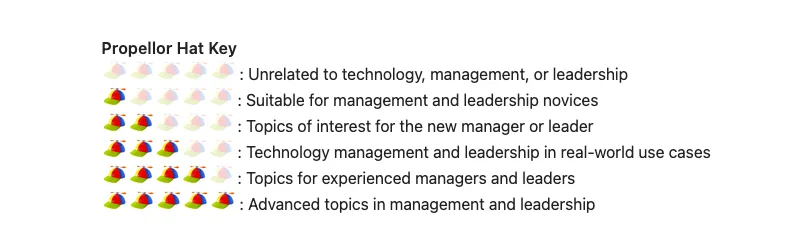
As always, the Quantum Fax Machine Propellor Hat Key will guide your browsing. Enjoy!
Links
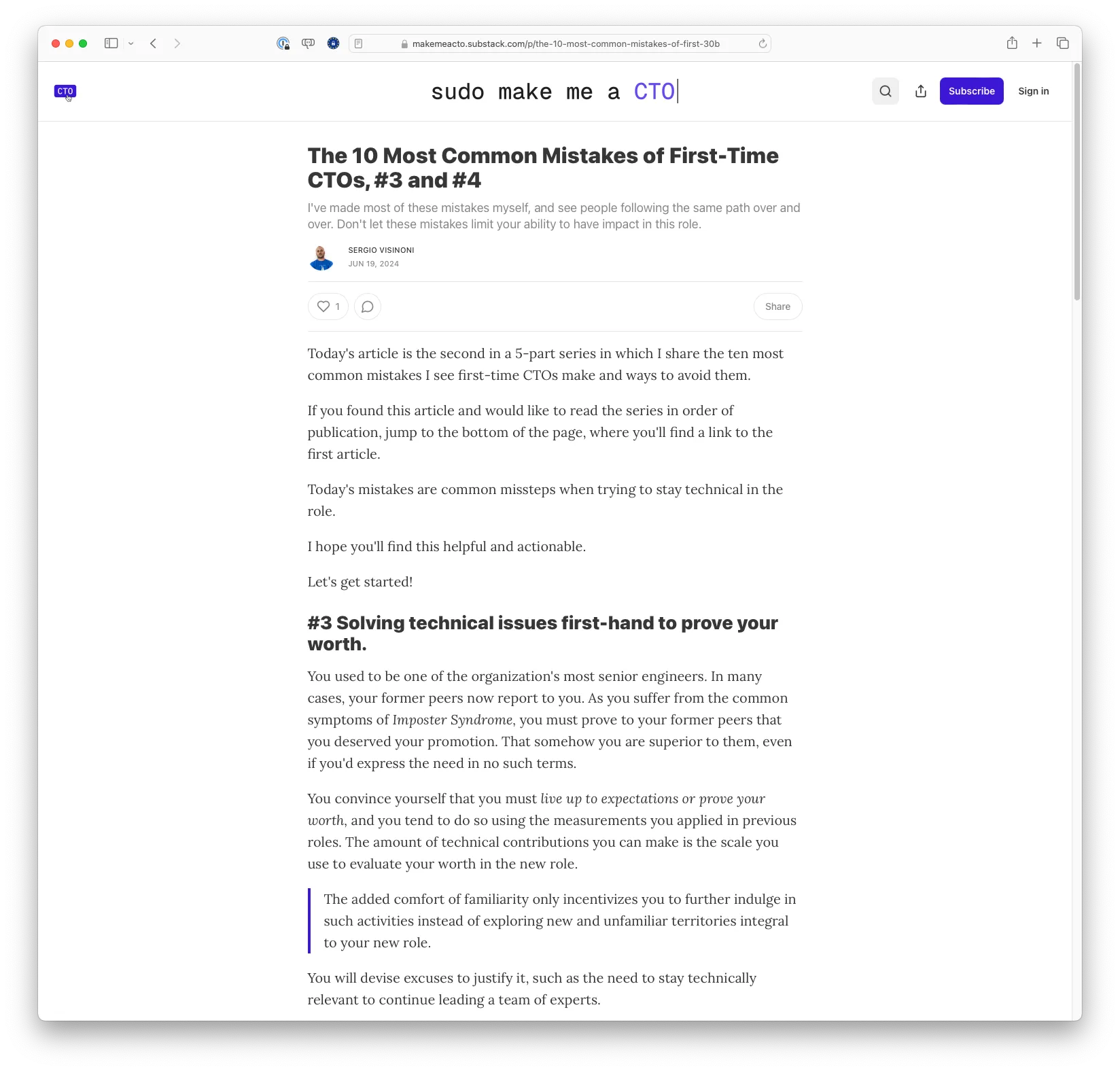
In his latest article, Sergio Visinoni outlines two common mistakes first-time CTOs often make: solving technical issues first-hand to prove their worth and coding every week to stay technical. These habits, while well-intentioned, can prevent CTOs from focusing on strategic, business-critical tasks. Sergio emphasizes the importance of leveraging other team members' expertise and staying engaged in higher-level discussions to lead effectively.
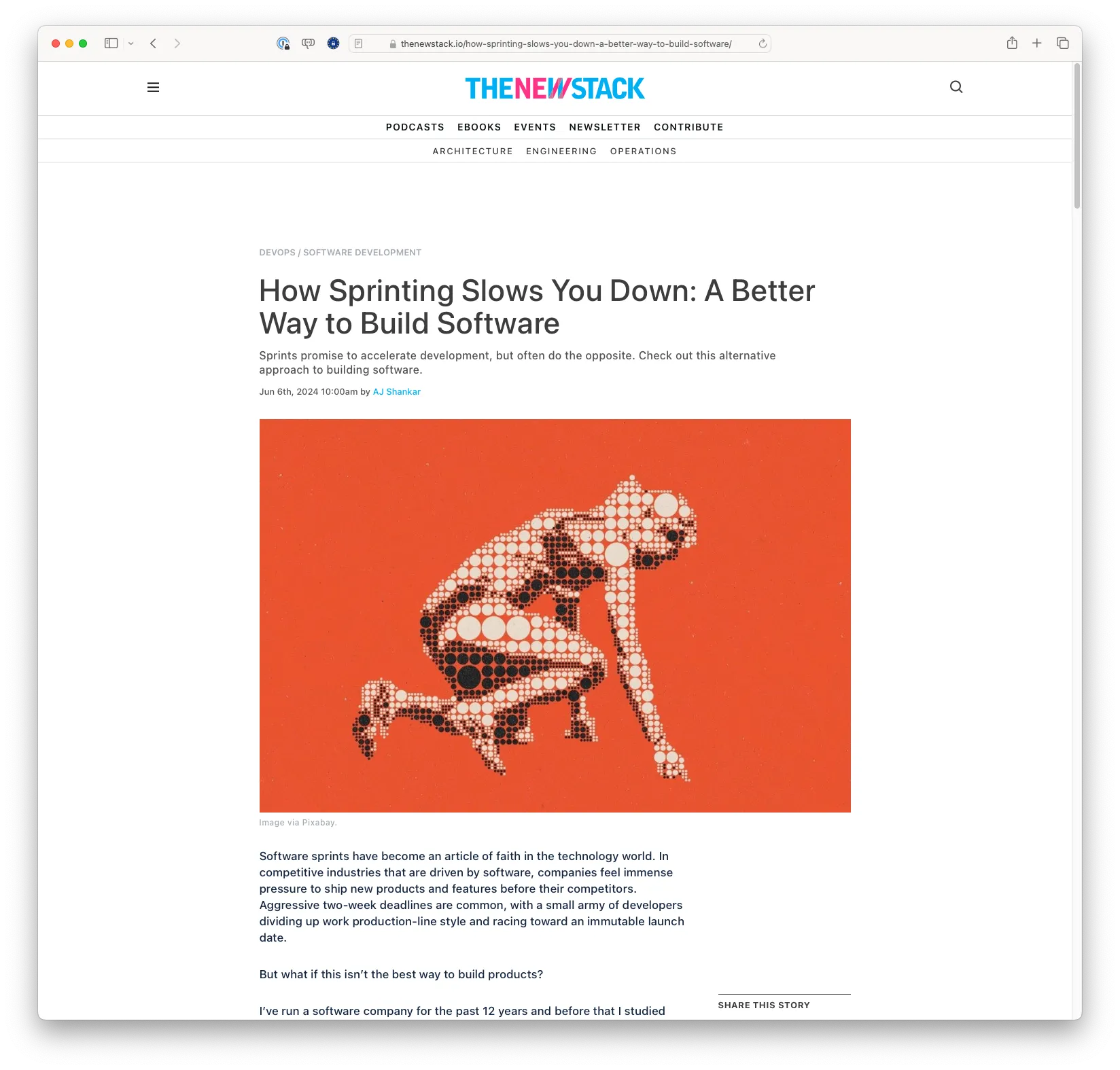
The article critiques the widespread adoption of agile sprints in software development, arguing that the practice often leads to developer burnout, lower code quality, and high technical debt. Instead, it advocates for a different approach where projects have no fixed deadlines, smaller teams are given greater autonomy, and engineers are allowed to own entire features. This methodology reportedly results in higher productivity and happier, more engaged developers.
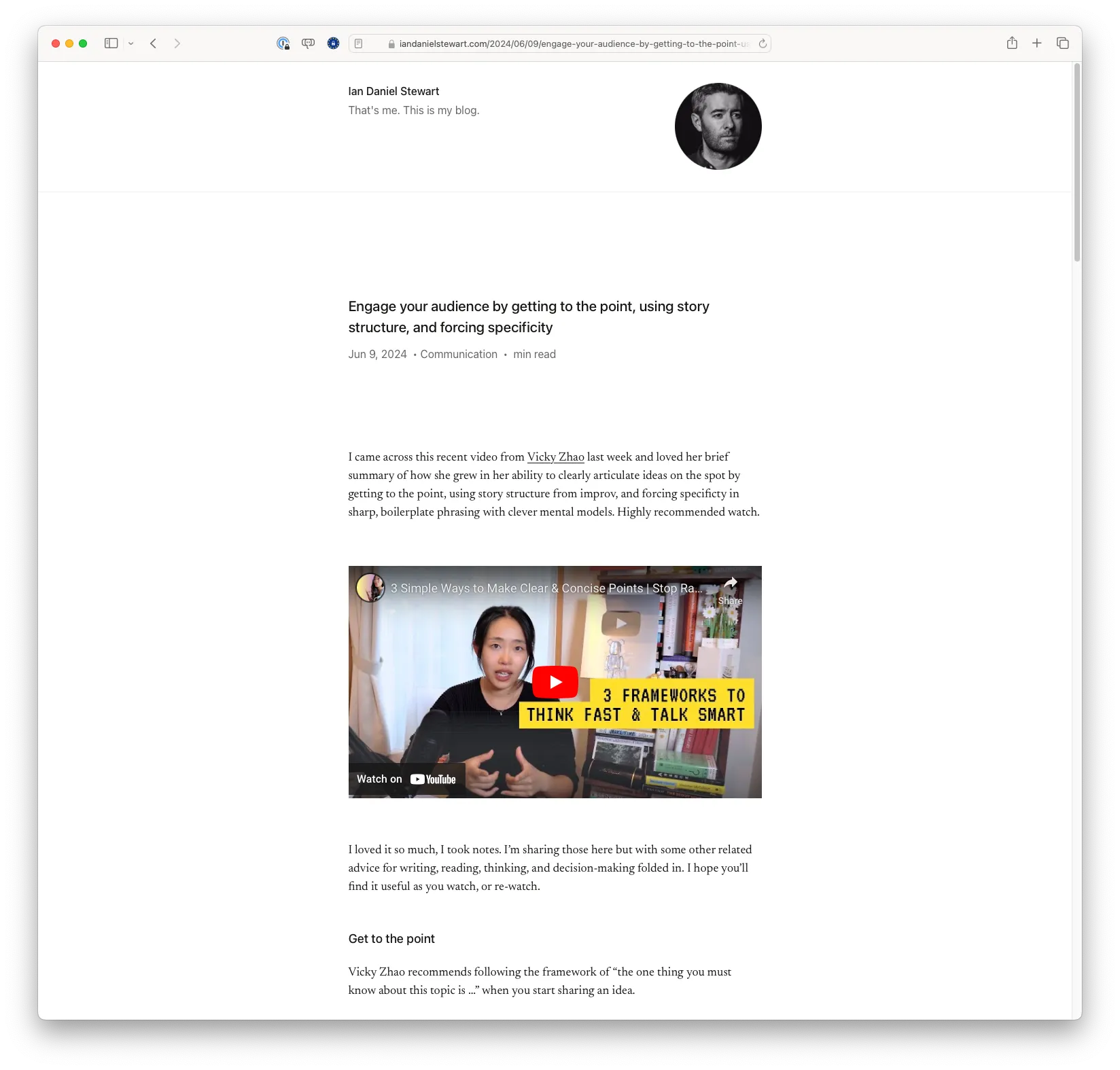
Ian Daniel Stewart shares tips on engaging your audience by getting to the point, using story structure, and being specific in your communication. He draws on advice from Vicky Zhao and others to highlight how clear and concise communication can be more effective. The post also touches on the importance of specificity and story structure for making compelling arguments.
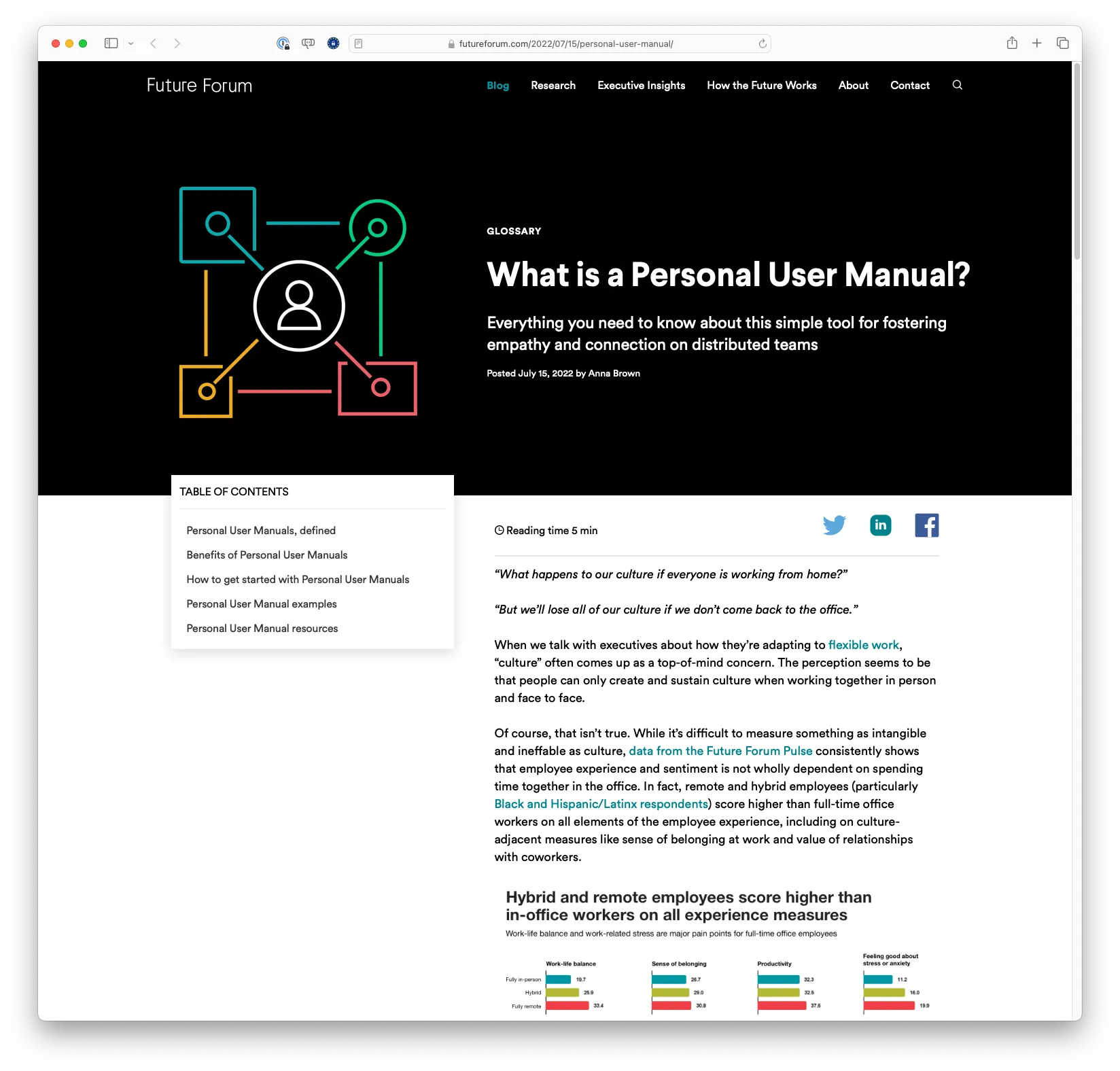
Personal User Manuals (also known as Personal Operating Manuals) are tools designed to foster empathy and connection among distributed teams. They include short descriptions of an individual's background, values, and communication style, and can greatly improve team dynamics by clarifying personal preferences and work habits. These manuals help in building psychological safety, improving communication, and fostering trust within teams, especially in flexible work environments.
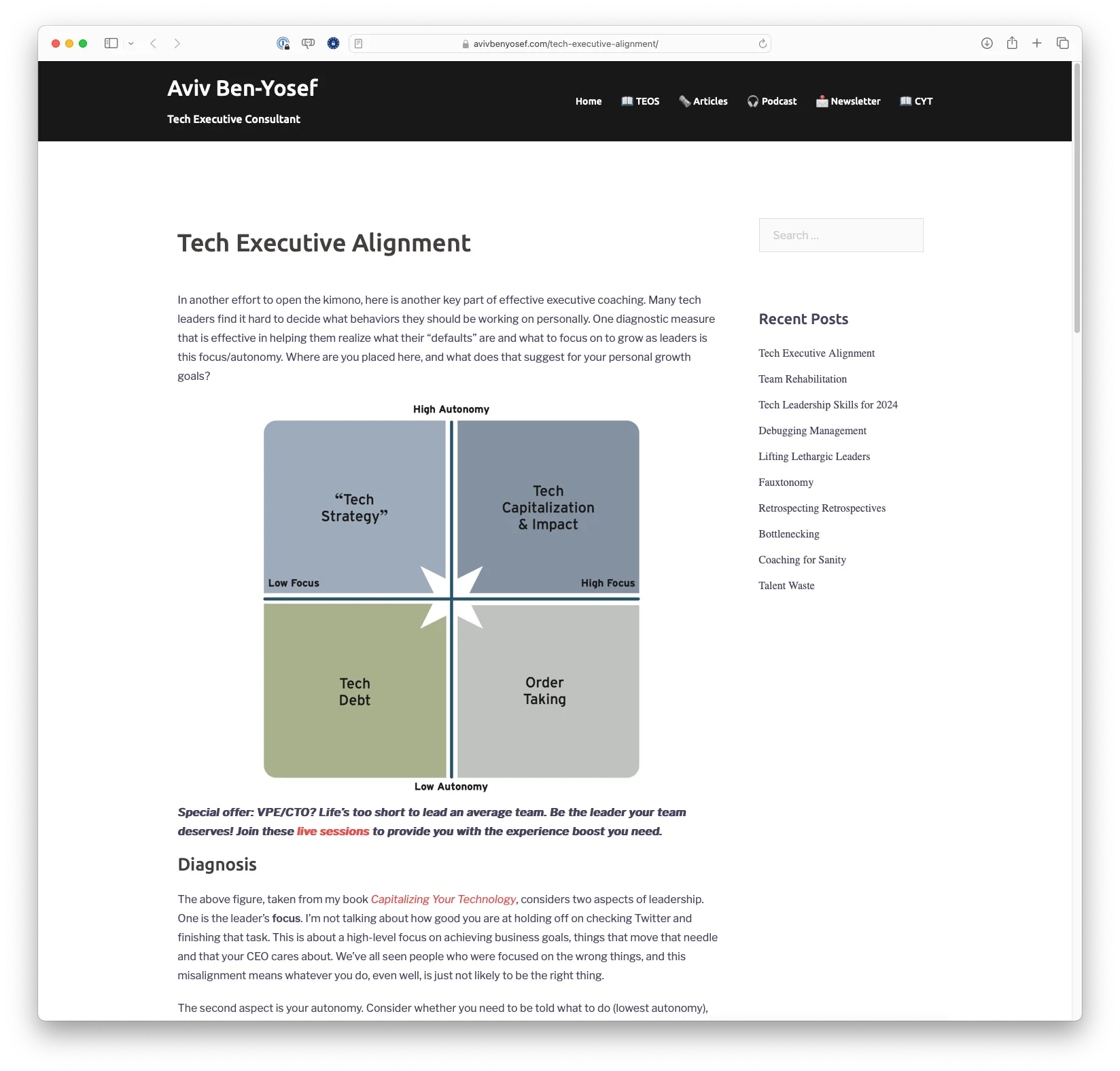
Aviv Ben-Yosef discusses effective executive coaching for tech leaders, addressing common challenges in identifying key personal development areas. The article highlights where leaders fall within the focus/autonomy spectrum and offers practical advice on improvement strategies to foster better alignment with business goals.
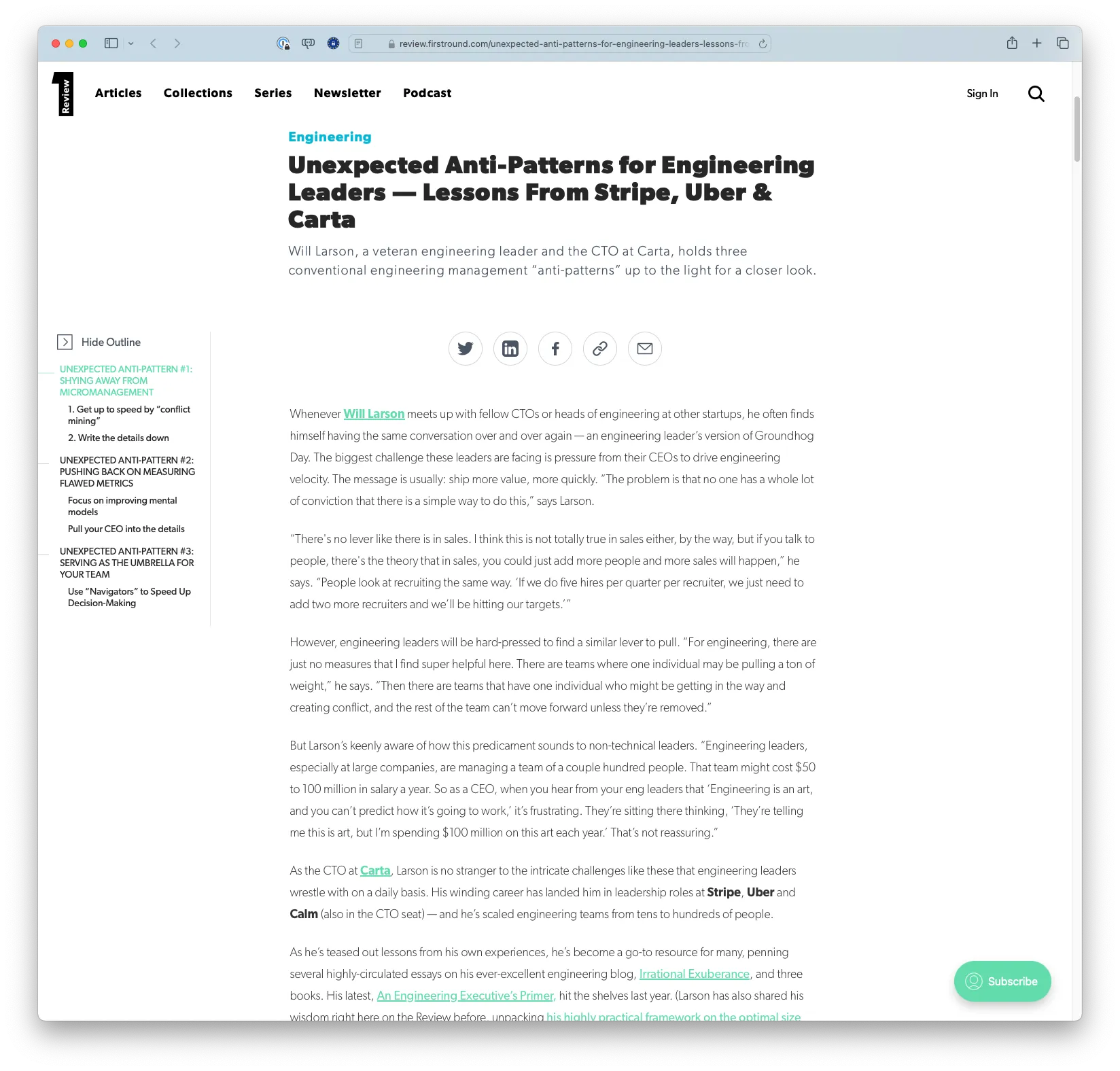
Will Larson, veteran engineering leader and CTO at Carta, discusses three common engineering management anti-patterns, offering lessons from his experience at companies like Stripe, Uber, and Calm. Larson challenges the norm by providing actionable insights for engineering leaders, emphasizing the importance of flexibility and context in decision-making. He argues that certain traditional management practices might not always apply universally and encourages leaders to think critically about when to defy conventional wisdom.
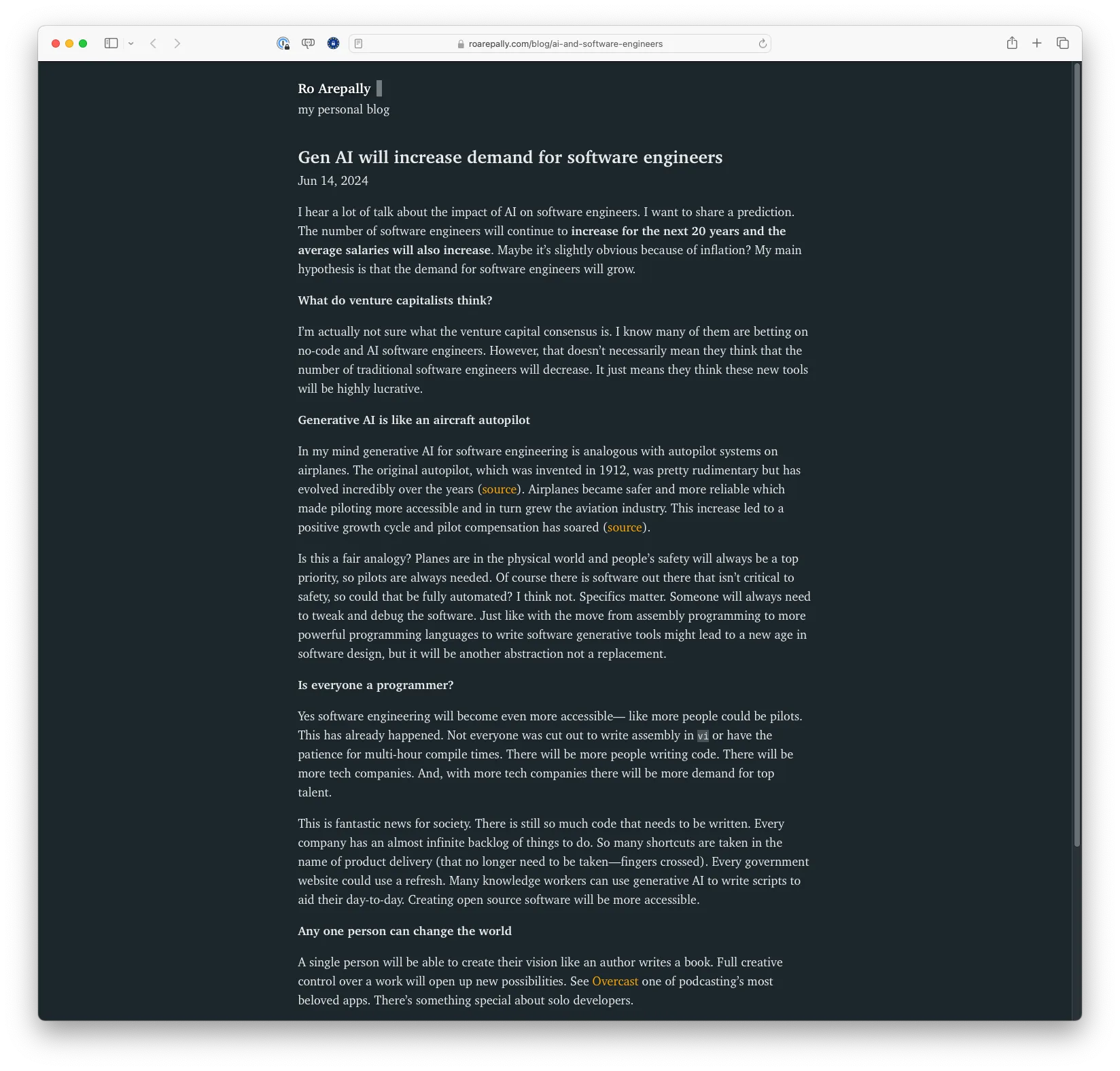
The article discusses the impact of generative AI on the future demand for software engineers. Despite advancements in no-code and AI tools, the demand for traditional software engineers is expected to grow over the next 20 years. The author draws an analogy between generative AI in software engineering and autopilot systems in aviation, suggesting that while the tools may evolve, human expertise will still be necessary.
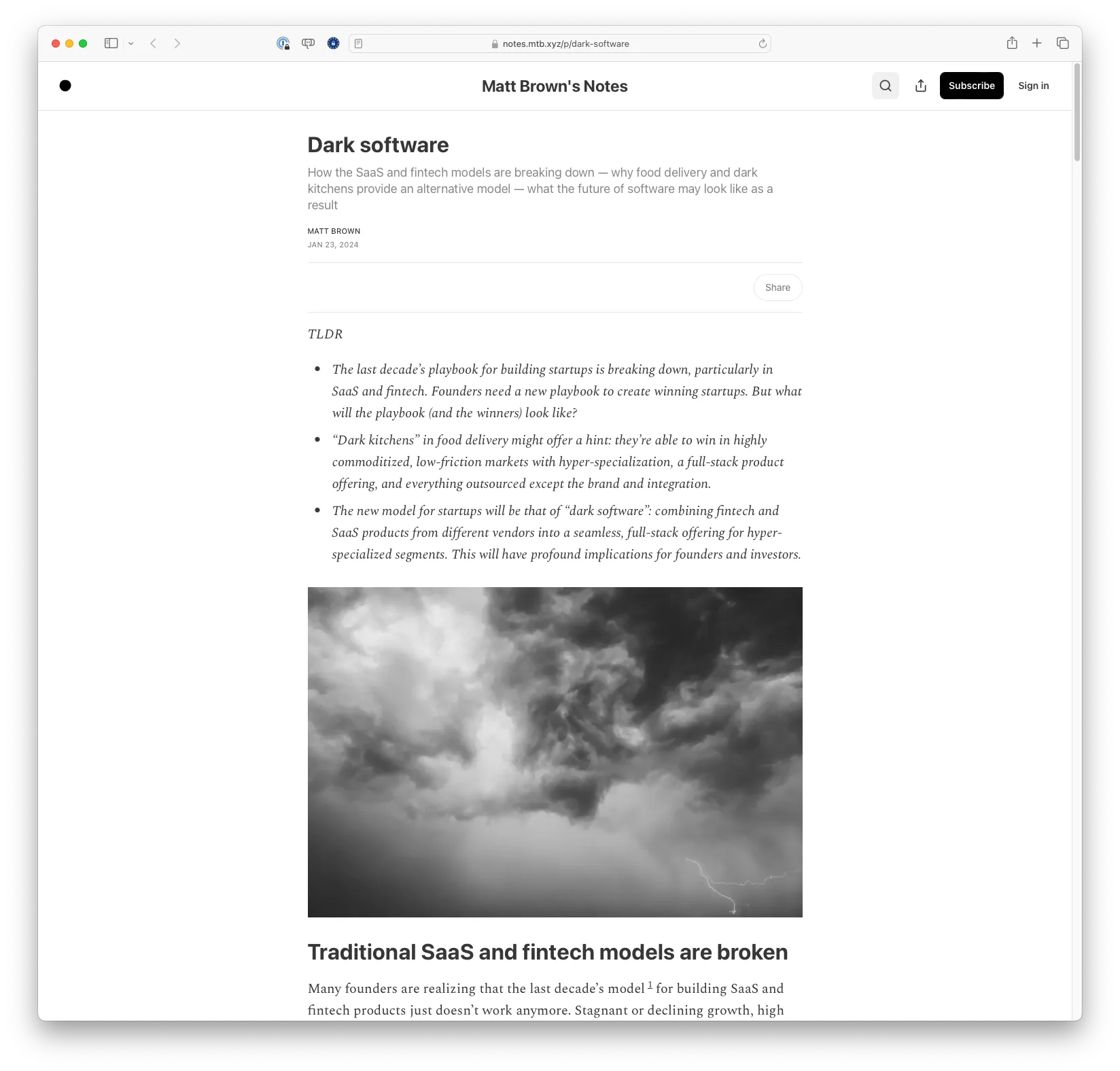
Traditional SaaS and fintech models are breaking down due to stagnant growth and high customer acquisition costs. A new model, 'dark software,' suggests bundling multiple hyper-specialized products and outsourcing non-core functions, similar to 'dark kitchens' in the food delivery sector. This approach could be a game-changer for future startups and investors.
In his article, Garry Shutler emphasizes the importance of repetition for leaders. He argues that repeating key messages is essential for ensuring that everyone hears and understands them, especially in the context of encouraging behavioral change.
In this article, Will Larson explores the nuances of creating software quality. He emphasizes that quality is highly context-specific and discusses various techniques to address different types of complexity: essential domain, scaling, and accidental complexity. Larson also delves into the different feedback loops and their impact on software quality, arguing that early developer-led testing creates quality more effectively than later QA-led testing.
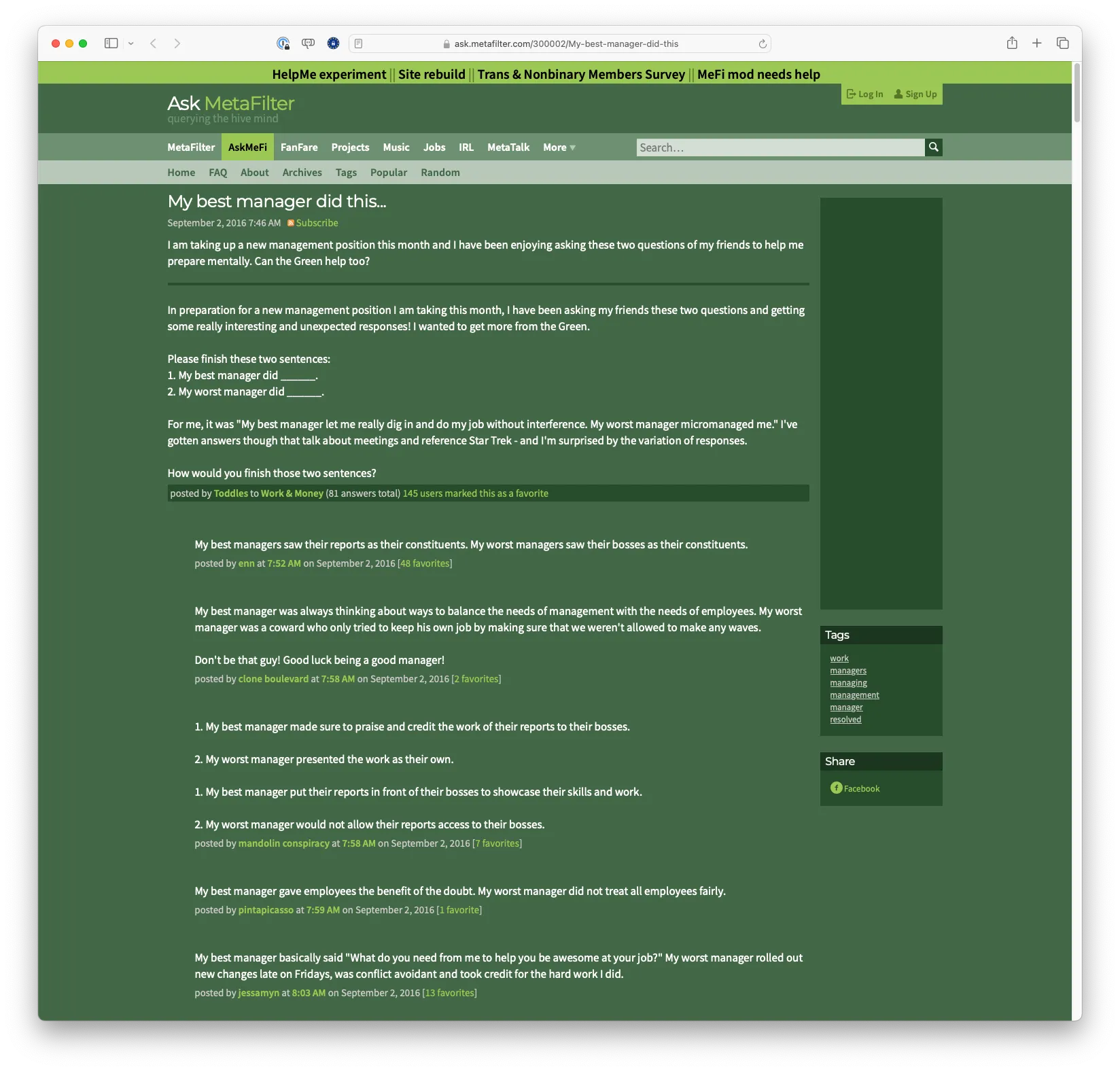
In preparation for a new management position, this engineer asked their friends to share what their best and worst managers did. This revealed a range of responses, from the best managers empowering and trusting their employees, to the worst micromanaging and failing to communicate effectively. The stories highlight key qualities that contribute to good or bad management.
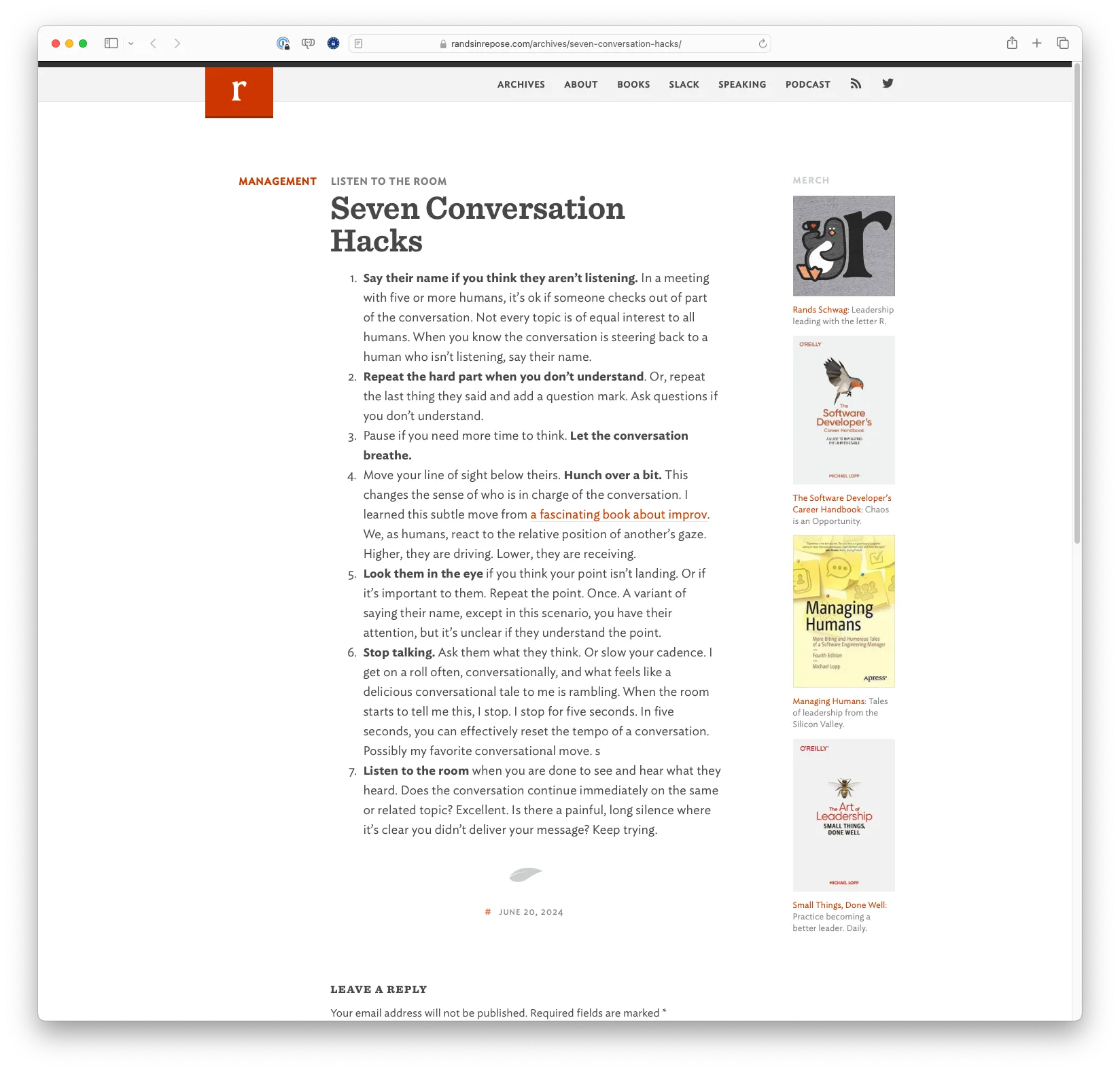
The article 'Seven Conversation Hacks' provides practical tips for improving communication in meetings. These include addressing inactive participants by name, repeating unclear points, pausing for thought, adjusting body language, making eye contact, listening carefully, and knowing when to stop talking.
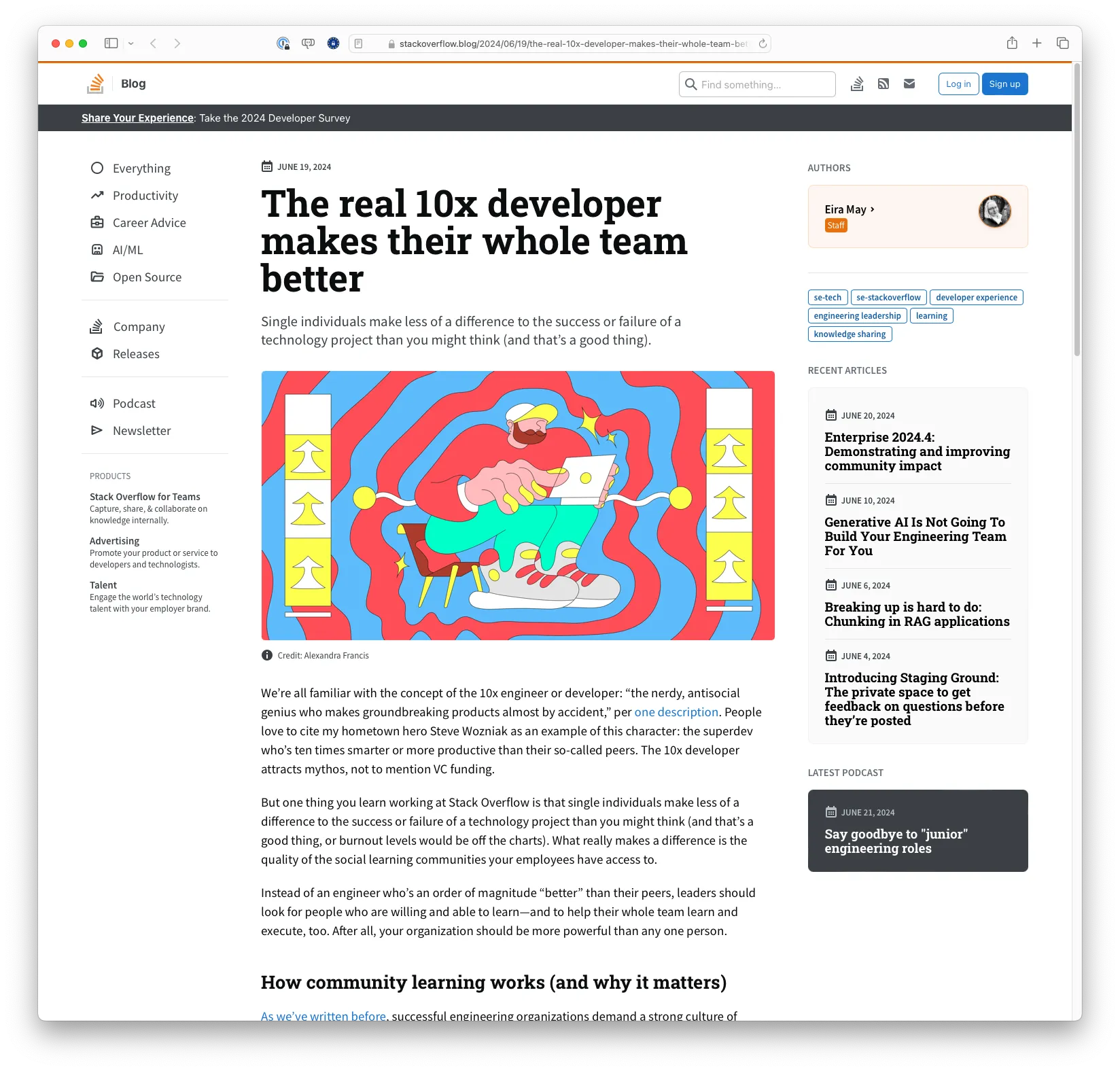
The real value of a 10x developer isn't in their individual contributions, but in how they elevate their entire team through knowledge sharing and collaboration. Successful tech projects rely more on strong social learning communities rather than lone geniuses. Building Communities of Practice (CoPs) can enhance team autonomy, trust, and innovation by fostering an environment where knowledge and resources are shared extensively across the organization.
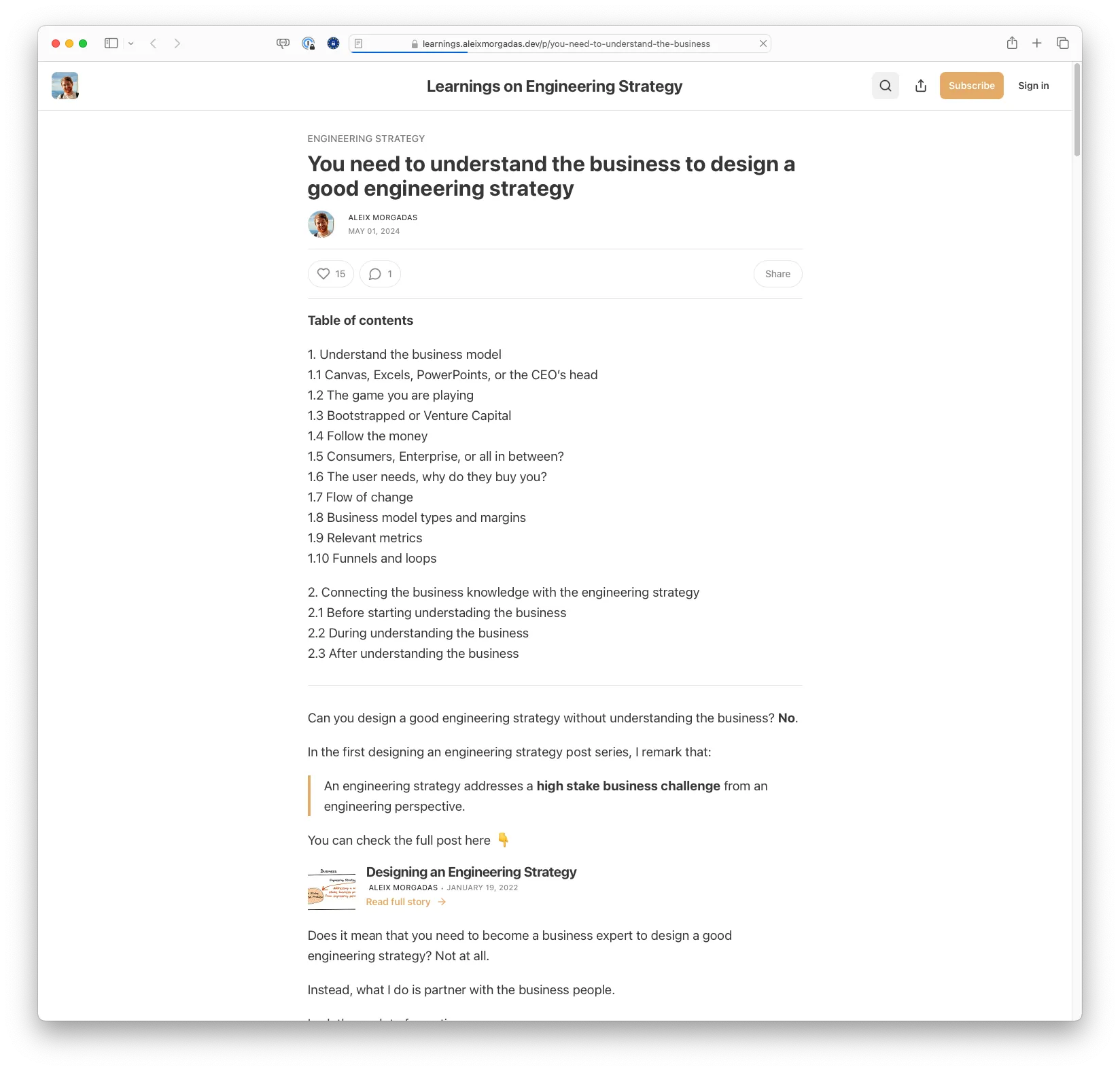
Understanding the business is essential for designing a solid engineering strategy. This article discusses key aspects including business models, cash flow, and the alignment of engineering strategies with business goals. Aleix Morgadas provides a step-by-step guide to connect business knowledge with engineering strategies.
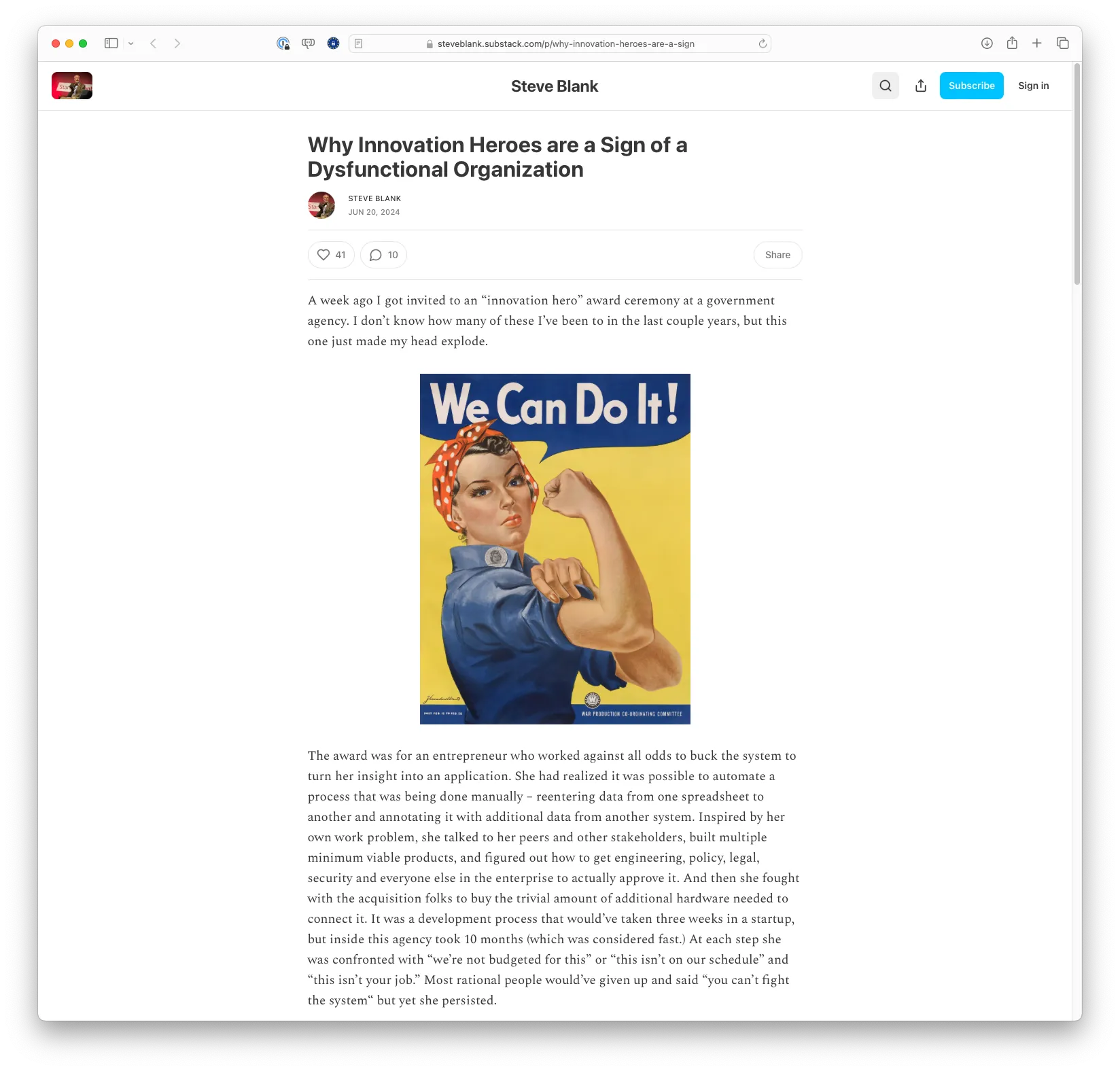
Steve Blank discusses the phenomenon of 'innovation heroes' in large organizations and why they are symptomatic of a dysfunctional system. He critiques the culture that rewards individual heroics rather than having a structured process for innovation, leading to high turnover of talented individuals. A repeatable innovation process and an 'innovation doctrine' are essential for sustainable progress in both government agencies and corporations.
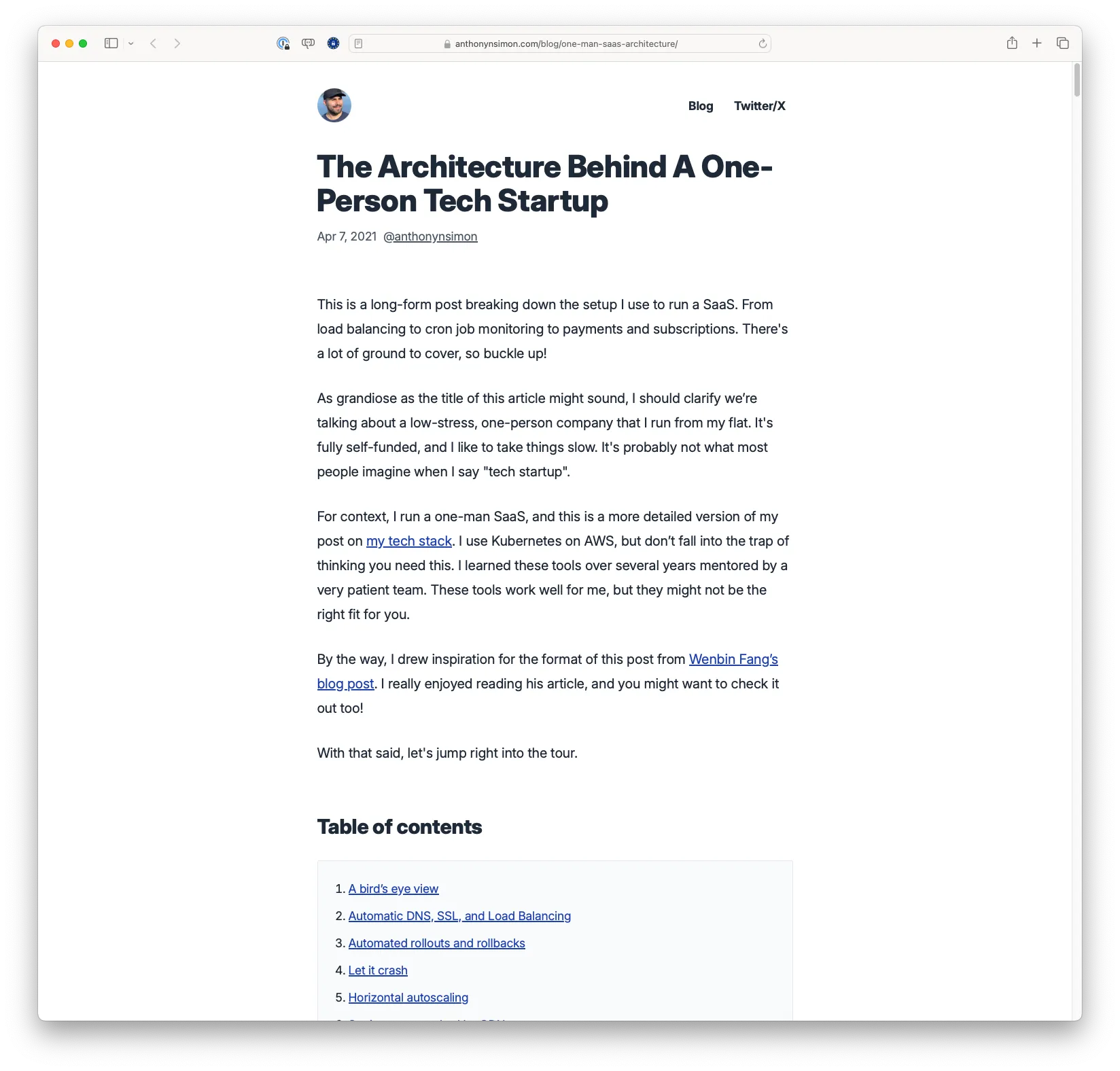
In this detailed blog post, Anthony S. Simon discusses the architecture he uses to run a low-stress, one-person tech startup. It covers topics from load balancing, cron job monitoring, and payments to subscriptions and even shares insights on using Kubernetes on AWS. He emphasizes that the tools he chose might not be suitable for everyone but worked well for his needs after years of learning. The article is inspired by Wenbin Fang's similar post and promises a comprehensive tour of his SaaS setup.
Regards,
M@
[ED: If you'd like to sign up for this content as an email, click here to join the mailing list.]
Originally published on quantumfaxmachine.com. Also available on Medium.
Was this useful?