
QFM031: Engineering Leadership Reading List - August 2024
 Source: Photo by Clark Tibbs on Unsplash
In August's Engineering Leadership Reading List, we start off with an exploration of entrepreneurship and business strategy. In Loving My New Porsche? A Provocative Review of Year Three on My $300k Rollercoaster Business, Marian Kamenistak shares his journey of building a profitable business, highlighting the importance of KPIs, financial data, and community growth. The theme of strategic decision-making continues with The Flywheel Effect, which explains how sustained focus in a single direction can generate momentum, contrasting with companies that fail due to constant changes in strategy.
Leadership and team dynamics are also central in this month’s reading. Is Your Leadership Style Hurting Your Team? by Diana Stepner discusses how different leadership styles impact team morale and performance, emphasising the importance of empathy and adaptability. Similarly, Should the Daily Stand-Up Die? questions the relevance of traditional daily stand-up meetings, suggesting that their effectiveness may depend on team maturity and communication practices.
The list also includes several pieces on software development and architecture. Architectural Retrospectives: The Key to Getting Better at Architecting focuses on improving team decision-making processes through regular retrospectives, while The Case for Custom Software argues for the benefits of custom software solutions over SaaS, particularly as AI makes personalised solutions more accessible. In a similar vein, this Xitter thread roll-up Predictions for the Future of Software Engineering anticipates how advancements in AI will reshape the field, making software more accessible and reducing development time and costs.
For those involved in startups Startup Success - Analysis of Unicorn Startup Founders provides a data-driven look at the factors contributing to unicorn startup success, including founder traits and team structure. Awesome CEO: The Ultimate Guide for Startup Founders is a comprehensive resource for startup leaders, covering everything from fundraising to product development. Meanwhile, The Hard Thing About Small Things contrasts the challenges of managing large corporations with the unique demands of running a startup, stressing the importance of attention to detail.
On the product management front, Focusing on Time to Value Over Time to Market by Sebastian Straube emphasises the benefits of prioritising the speed at which a product delivers value to users. This approach can lead to sustainable growth and customer satisfaction. Also, Introduction to Product Discovery offers a fantastic beginner-friendly guide to improving product leadership skills, with a focus on community engagement and skill-building.
Finally, this month includes insights into learning and tool usage. Learn How To Learn provides strategies for improving learning skills, promoting a positive feedback loop that enhances overall effectiveness. Additionally, GitHub Navigation and Features offers a detailed overview of GitHub’s tools and services, useful for both beginners and experienced users alike.
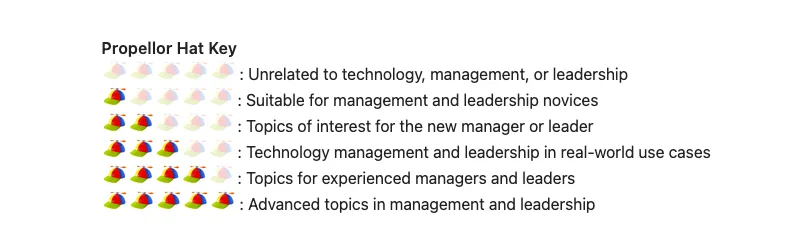
As always, the Quantum Fax Machine Propellor Hat Key will guide your browsing. Enjoy!
Links
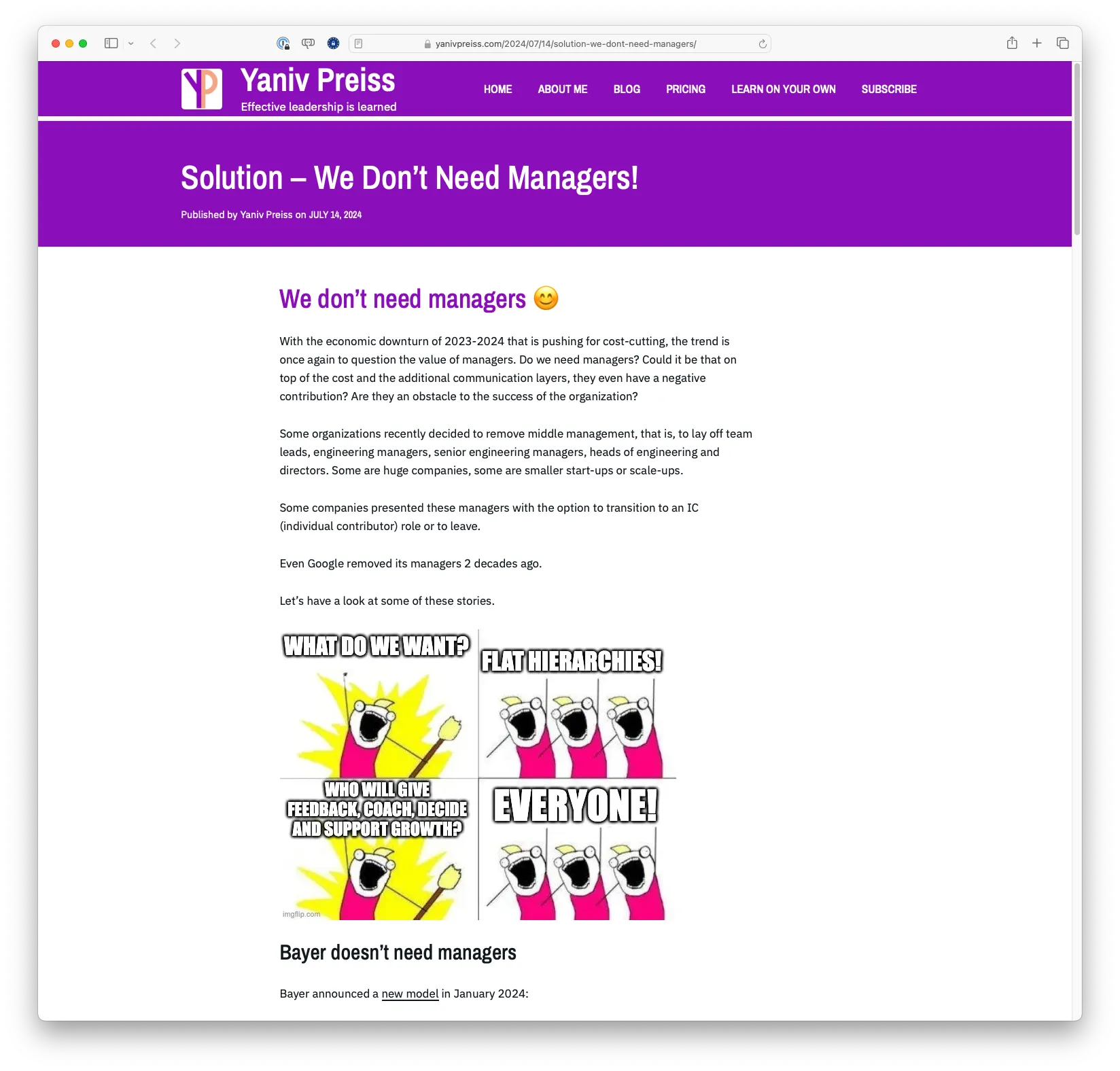
Amid economic downturns, the article explores the value and necessity of managers in modern organizations. It discusses real-world examples from companies like Bayer, Zappos, Google, and Valve who experimented with or adopted flat management structures. The piece concludes with a reflection on whether bad management is the true issue and suggests ways for individual contributors, managers, and executives to improve organizational efficiency.
This is part two of a three-part series on building an engineering progression framework at VirtusLab. It covers two major sections: analysis of common structures of engineering progression frameworks in real-world organizations, and tips and pitfalls for building effective frameworks. The article aims to help organizations create a roadmap for engineering careers, covering required skills, expectations, and salary indications.
In this detailed post, Anthony N. Simon shares his technical setup for managing a low-stress, fully self-funded, one-person SaaS startup from his flat. He covers everything from Kubernetes on AWS to cron job monitoring, emphasizing a self-learned approach and the practicalities of a one-man operation. Although it appears complex, Simon assures it simplifies the management of various automated processes and cost-effective deployments across multiple projects.
Séverin Bruhat has curated a list of resources designed to support the growth of software engineering managers. The collection includes a variety of books, blogs, and podcasts that offer valuable insights and tools for leaders at any stage of their career.
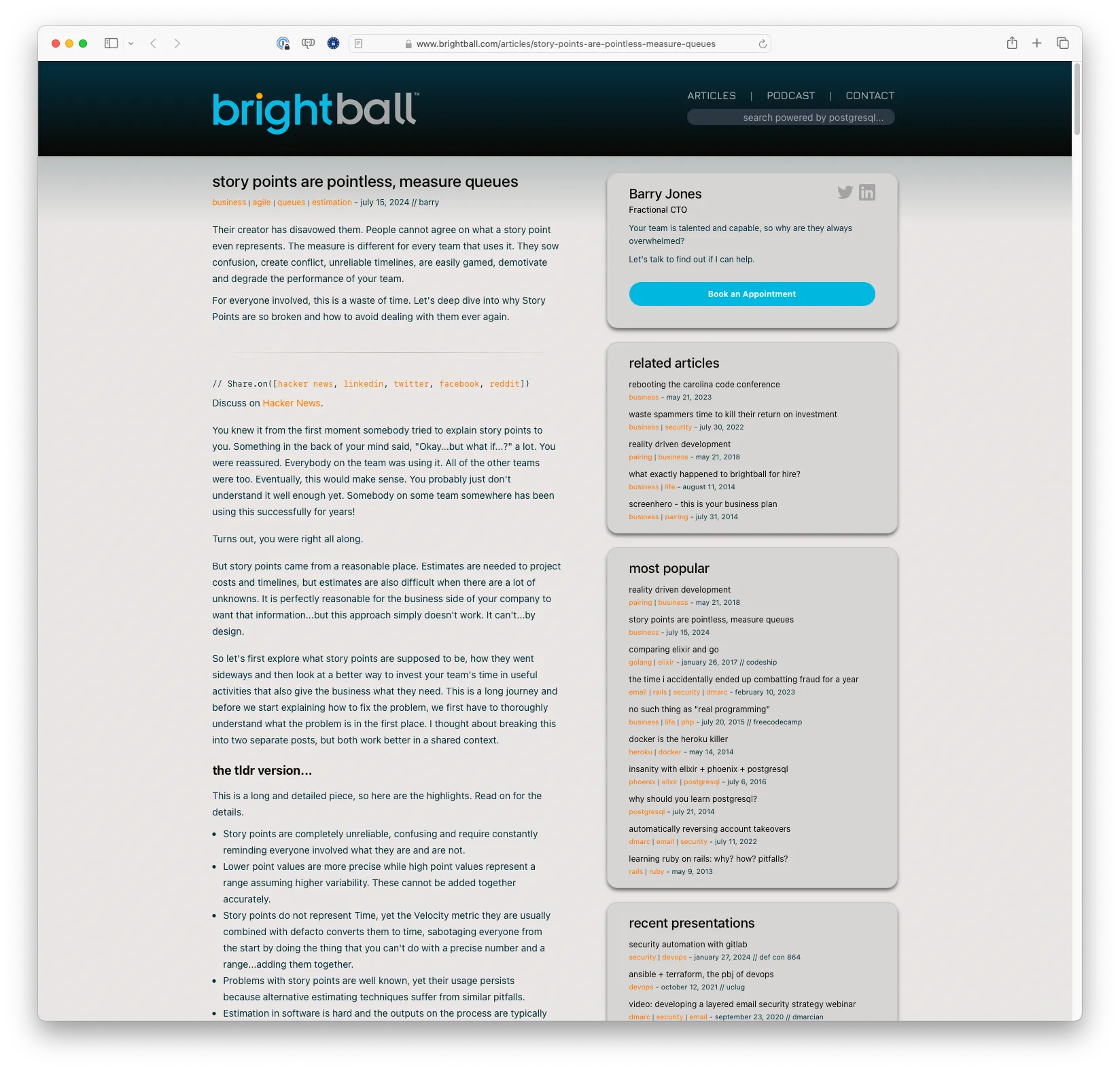
The article argues that story points as a metric for estimating project timelines are fundamentally flawed. The author highlights the inconsistency and confusion surrounding story points, citing their creator, Ron Jeffries, who has disavowed them. Instead, the article proposes measuring queues as a more reliable and effective method for managing work and predicting project completion.
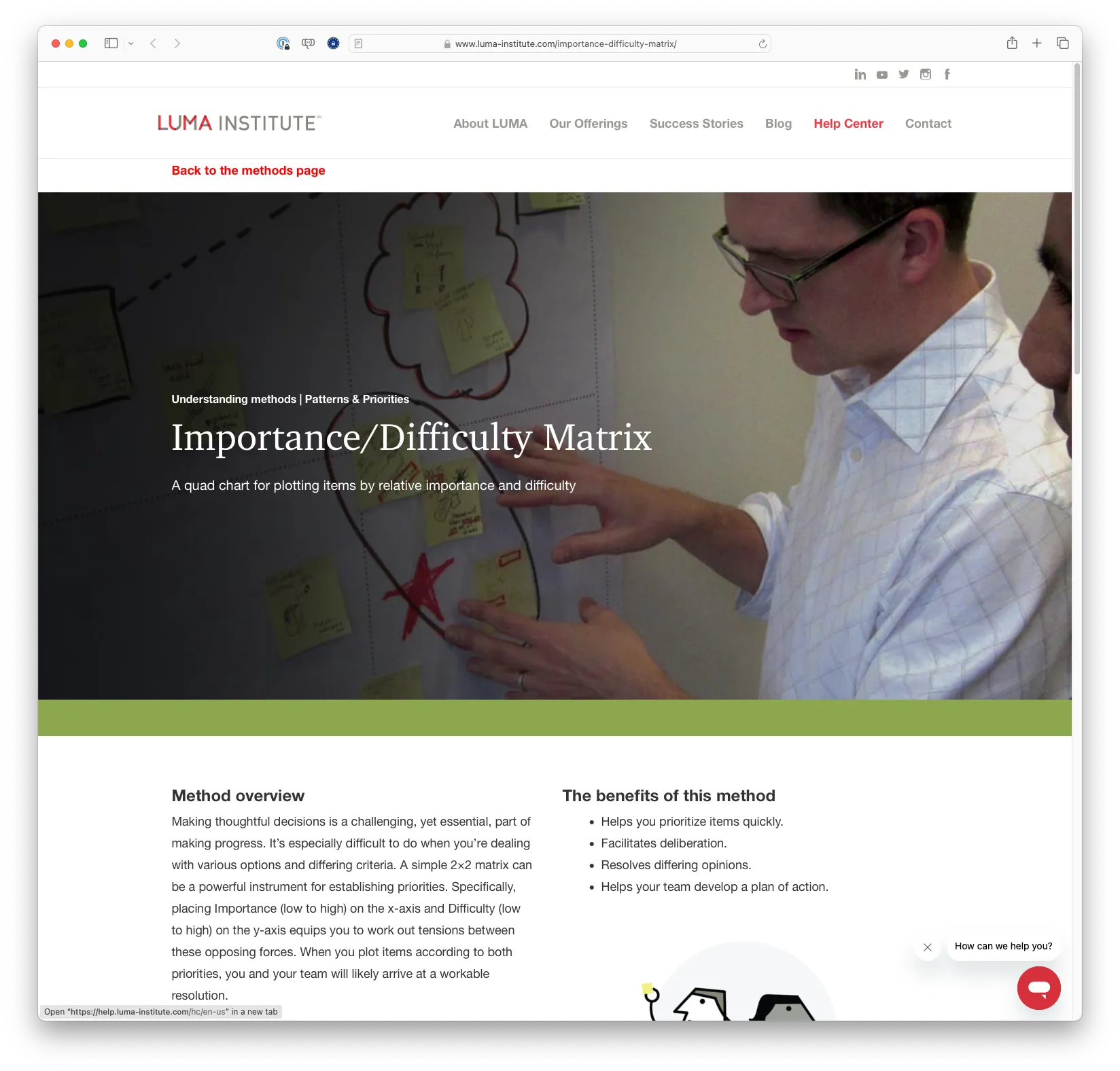
The LUMA Institute introduces a simple yet effective tool for prioritizing tasks called the Importance/Difficulty Matrix. This 2×2 matrix helps teams evaluate tasks based on their importance and difficulty, facilitating better decision-making and resolving differing opinions. Additionally, the LUMA System offers various methods and design recipes to tackle challenges such as improving workplace culture or uncovering customer insights.
In the first part of a three-part series, Pawel Dolega from VirtusLab shares insights on building an engineering progression framework for organizations. This article focuses on the groundwork necessary for implementation, including understanding company culture, the nature of work, and existing organizational issues. The subsequent parts will delve into building the structure and ensuring its successful execution in the company.
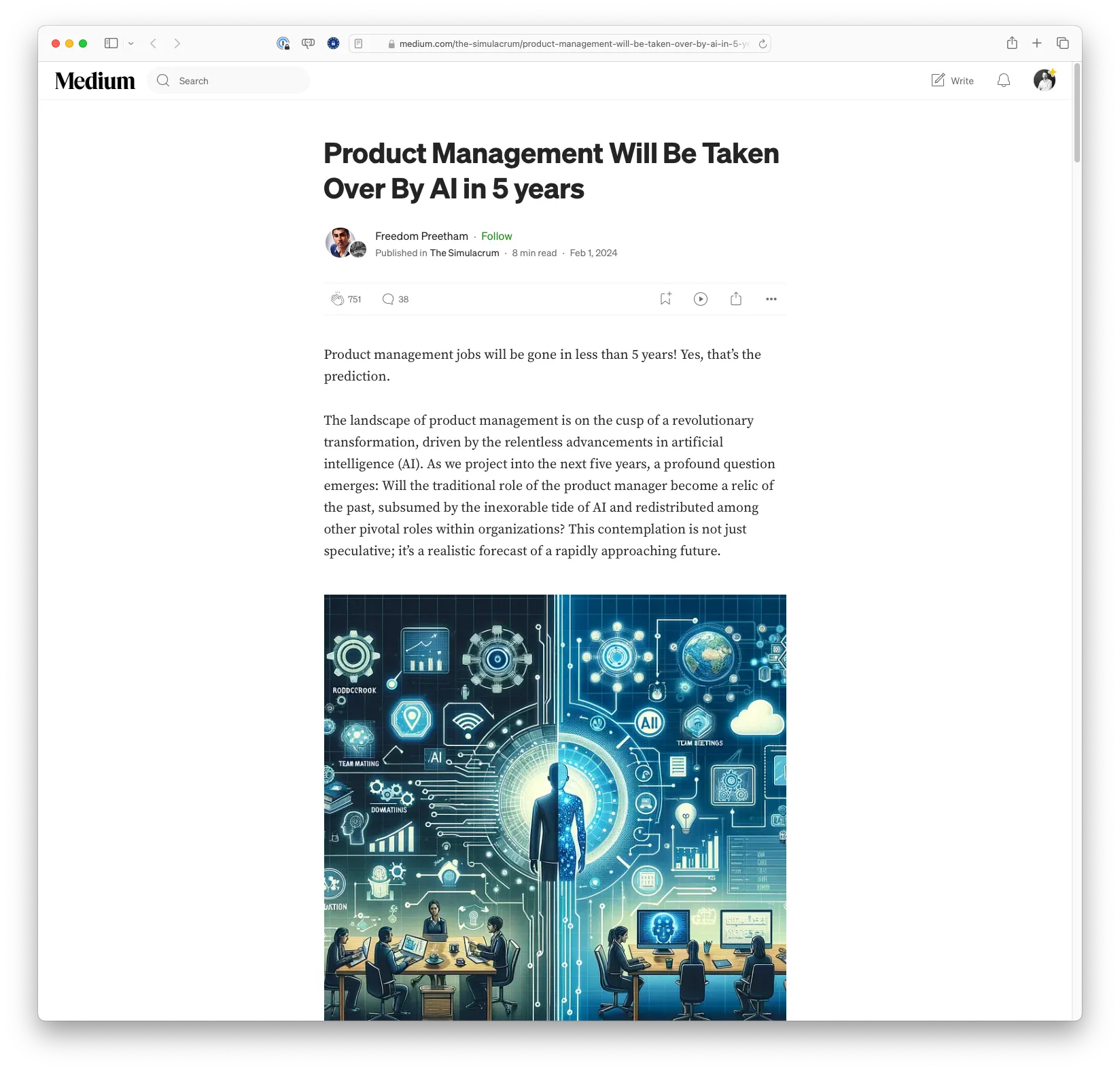
This article explores the transformative role of AI in product management, predicting that the traditional role of the product manager may become obsolete within the next five years. By automating up to 80% of product management tasks, AI is set to redefine roles within organizations, distributing responsibilities among business leaders, engineers, and UX designers, while emphasizing the remaining human-centric aspects of strategic oversight, creative ideation, and complex decision-making.
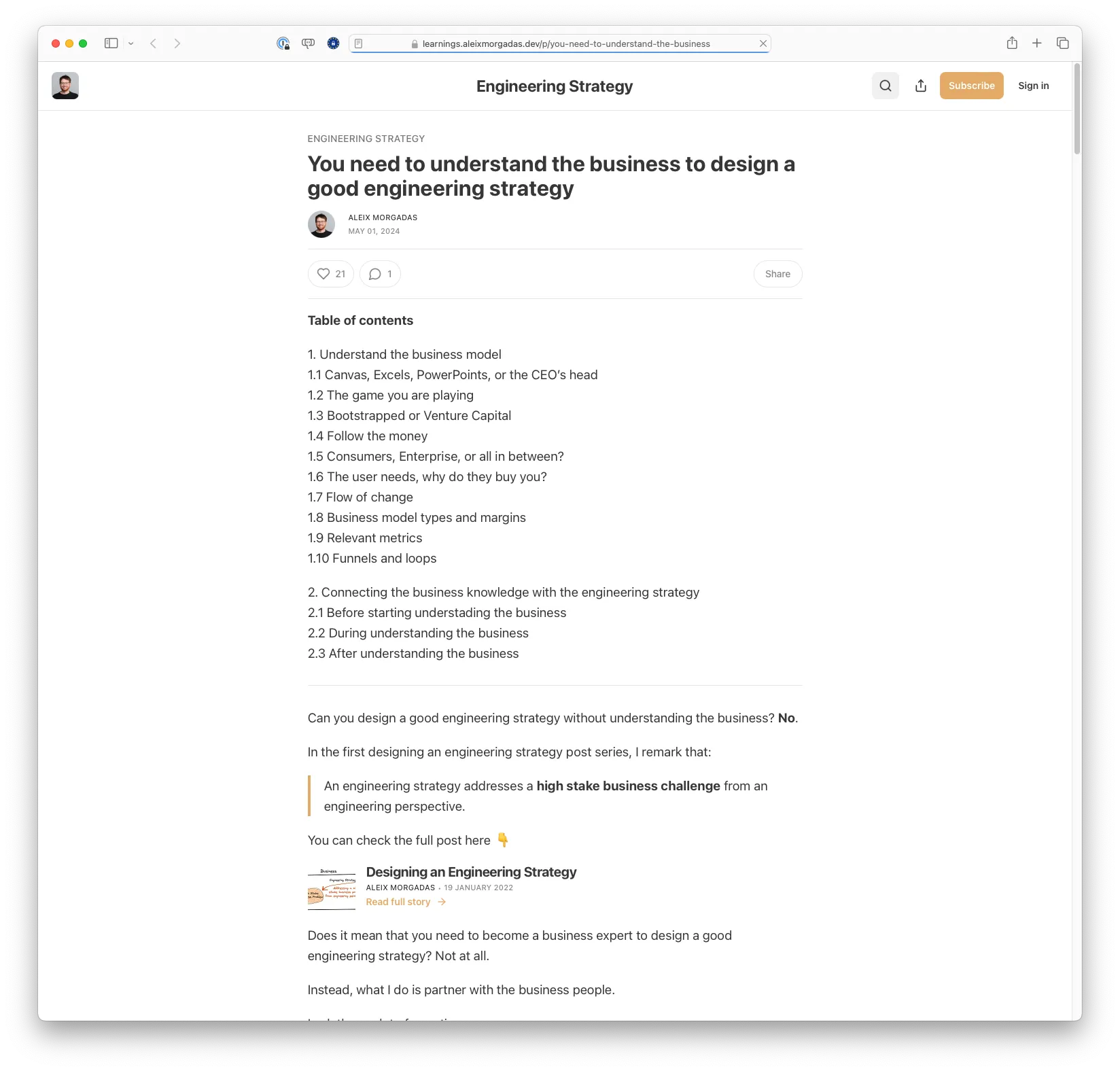
Aleix Morgadas emphasizes the importance of understanding the business to design an effective engineering strategy. The key highlights include knowing the business model, following the money, understanding user needs, and aligning engineering decisions with business goals. Collaboration with business experts is crucial to gain insights and ensure that engineering solutions address high-stake challenges effectively.
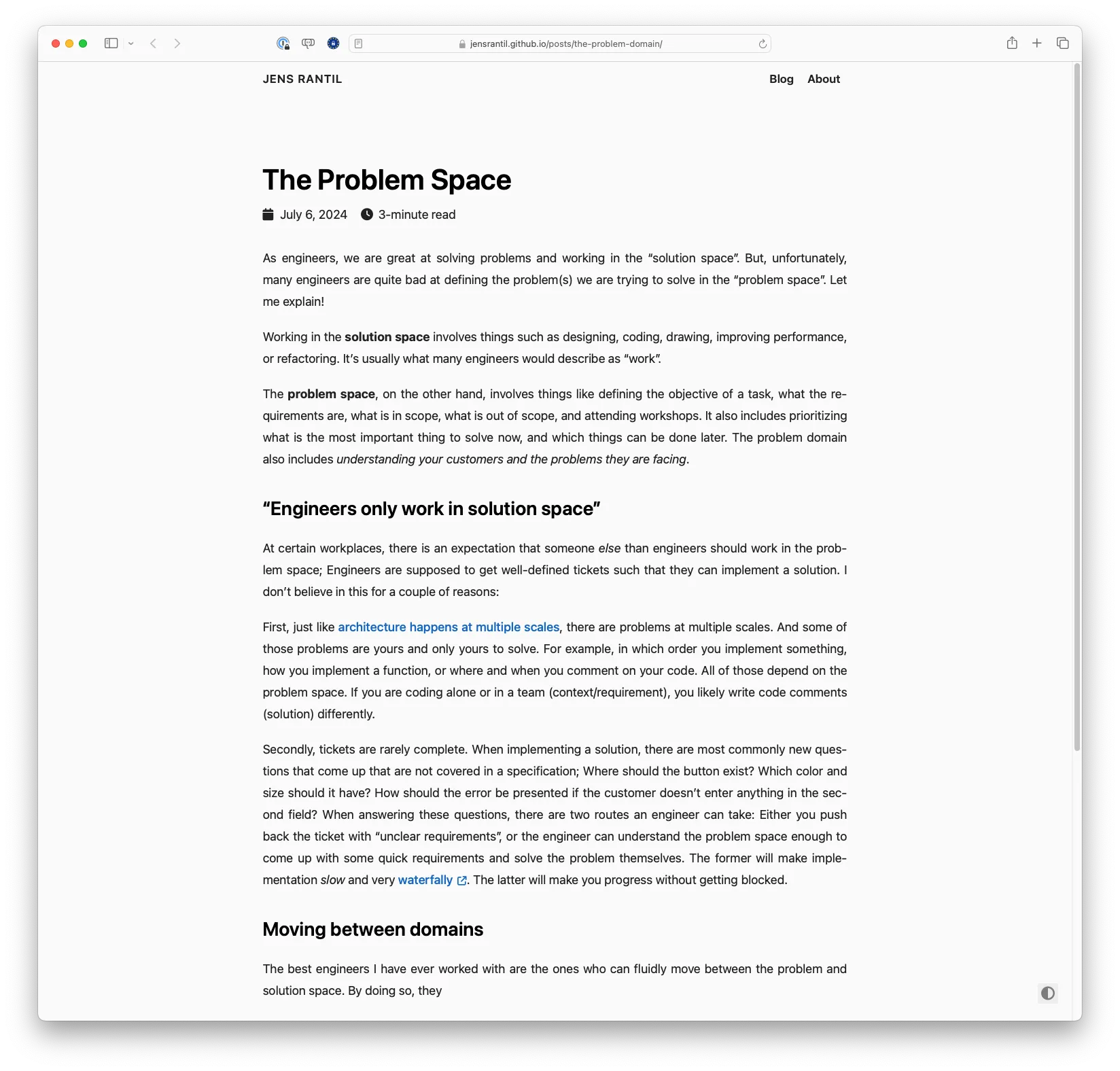
Engineers are efficient in solving problems in the 'solution space' but often struggle with defining problems in the 'problem space.' This article discusses the importance of understanding both domains, highlighting that moving fluidly between them can lead to better solutions and quicker progress on projects. Emphasizing the value of the problem space in engineering work can drive efficiency and career advancement.
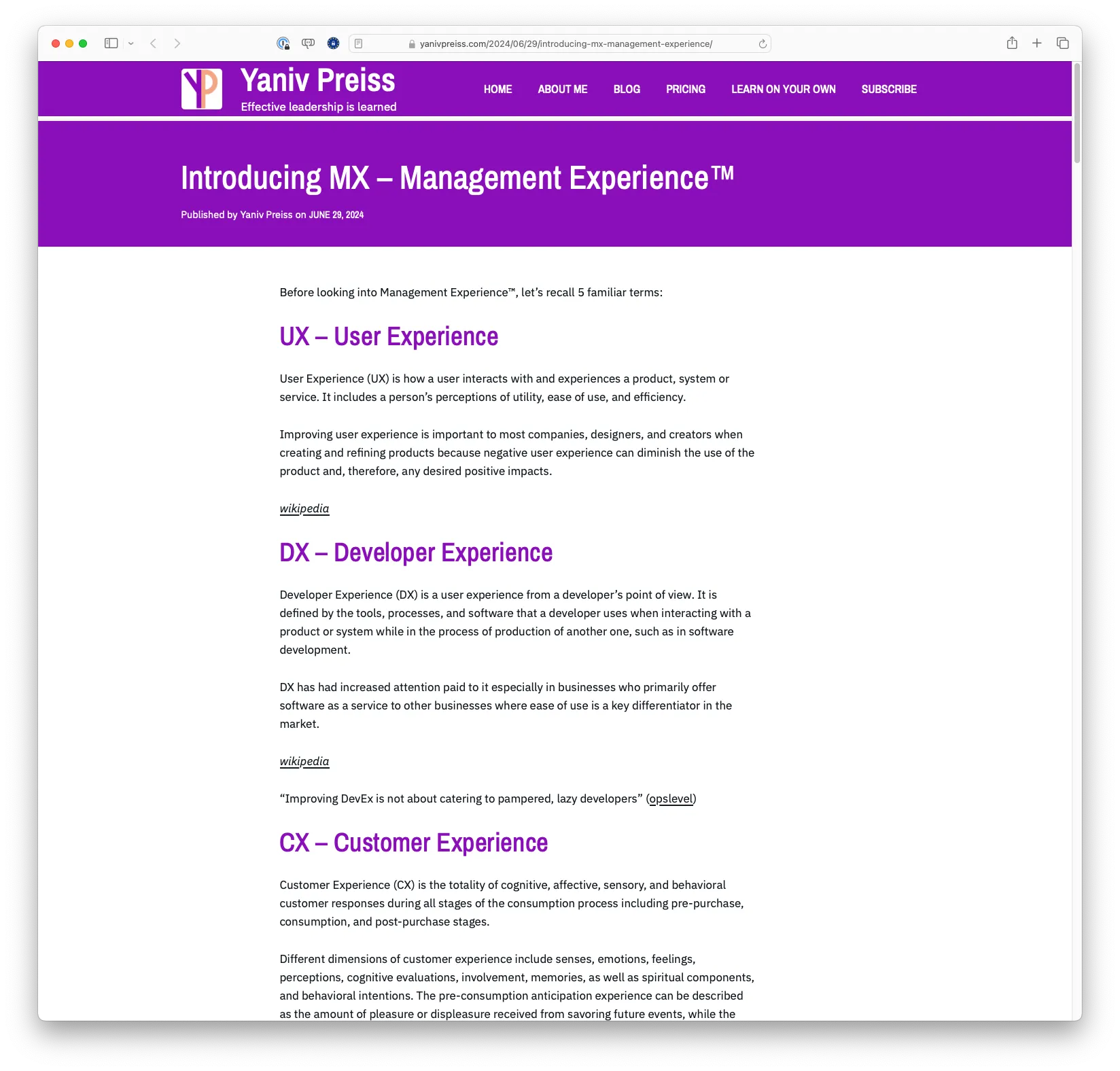
Yaniv Preiss introduces 'Management Experience (MX)', a new management philosophy focused on how employees experience their interactions with their managers based on four core principles: knowing direct reports, frequent performance discussions, fostering growth, and delegating responsibilities. MX is positioned as a complement to existing experience frameworks like User Experience (UX) and Employee Experience (EX), and emphasizes ethical management and the importance of results and retention.
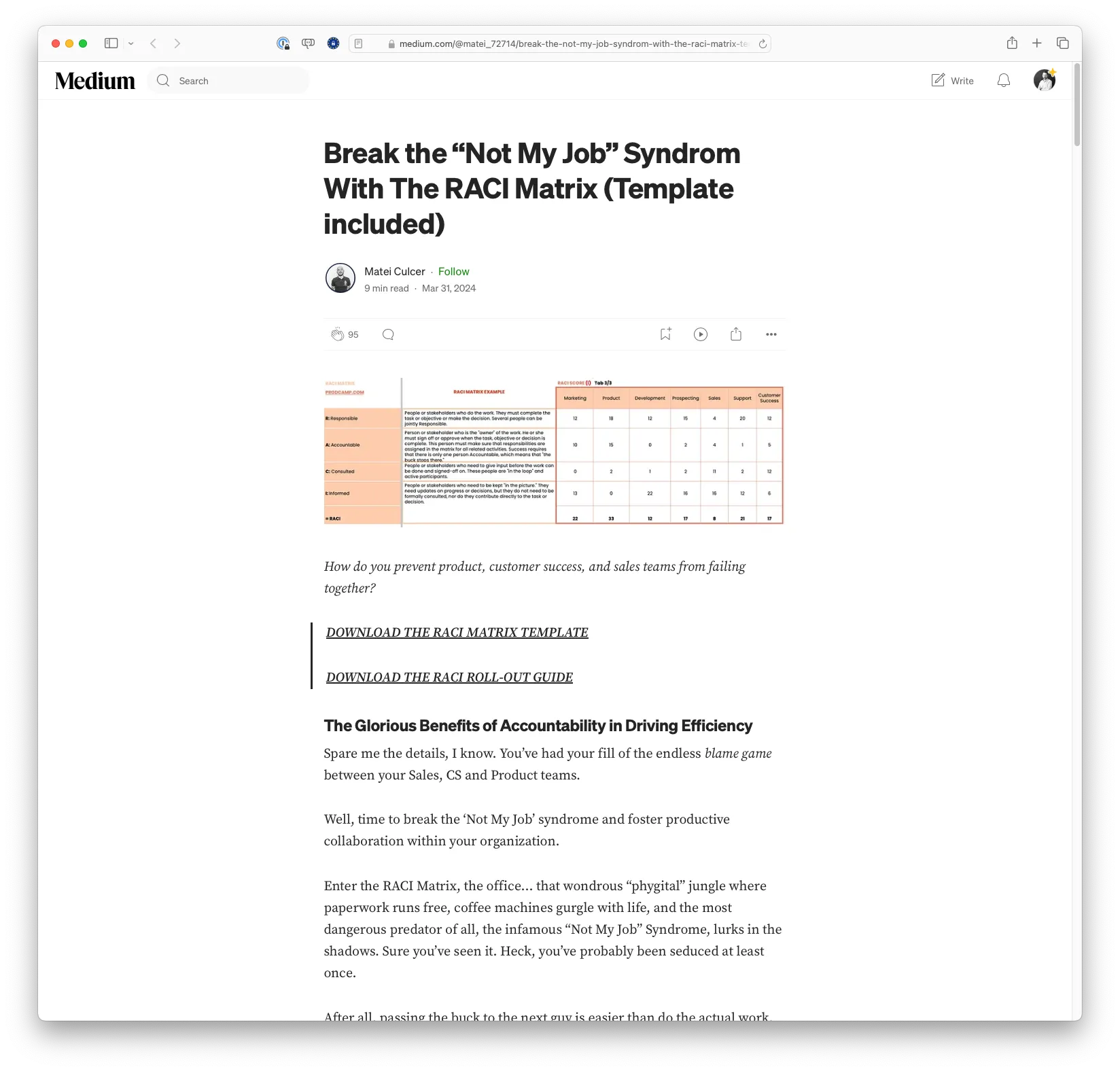
This article discusses how the RACI Matrix can help break the 'Not My Job' syndrome in organizations, promoting accountability and efficiency. It highlights the importance of assigning specific roles and responsibilities to team members to prevent blame-shifting and improve productivity.
Creativity is often seen as exclusive to the arts, but this article challenges that perception. It emphasizes that creativity is inherent in everyone and can be applied in various fields such as business and engineering. The piece encourages readers to recognize and nurture their creative abilities rather than compare themselves to traditionally 'creative' individuals.
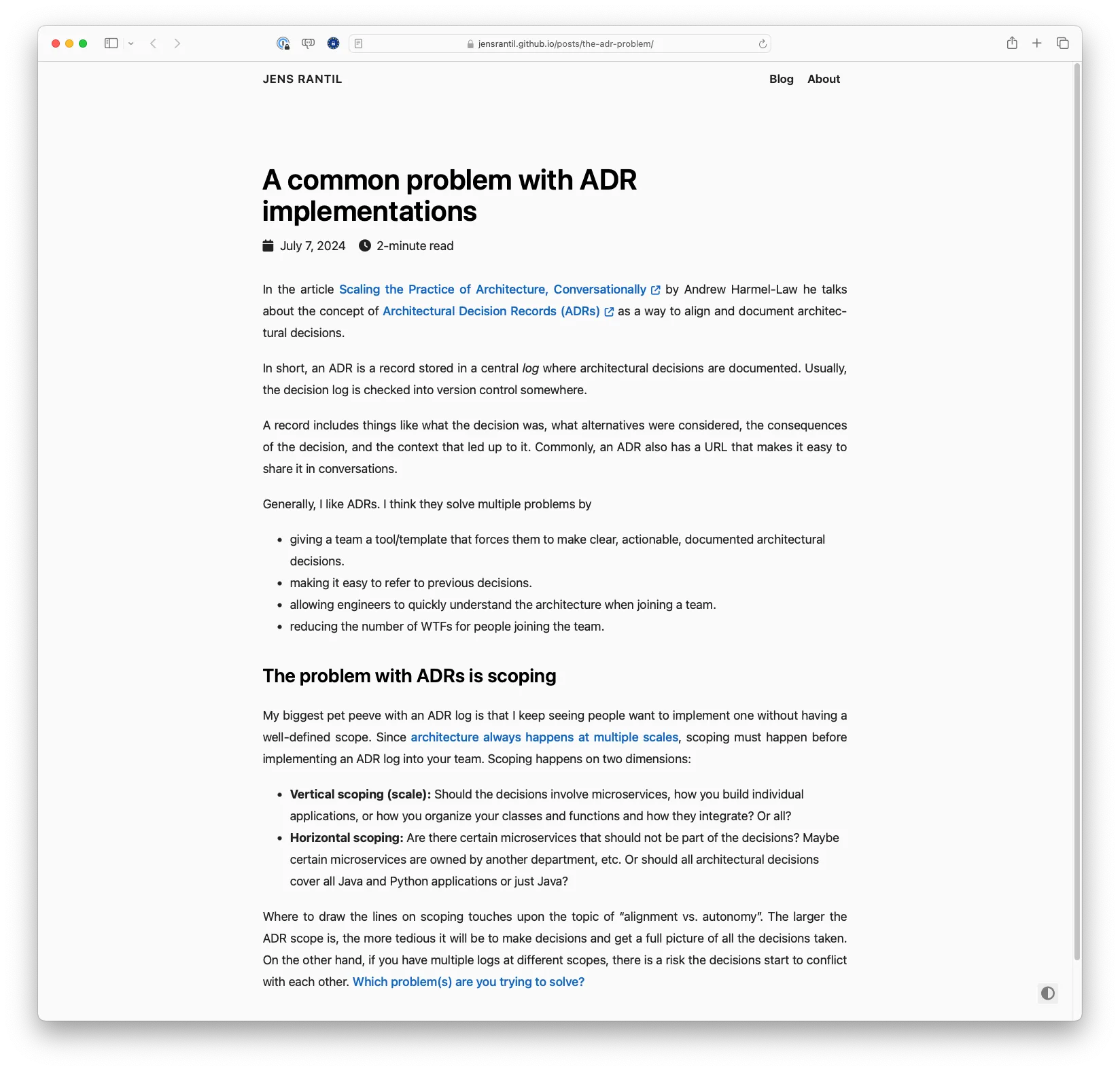
Architectural Decision Records (ADRs) are valuable tools for documenting architectural decisions, providing clear, actionable records, and aiding team communication. However, Jens Rantil highlights the common issue of improper scoping within ADR implementations, emphasizing the importance of defining vertical and horizontal scopes to avoid conflicts and ensure efficiency.
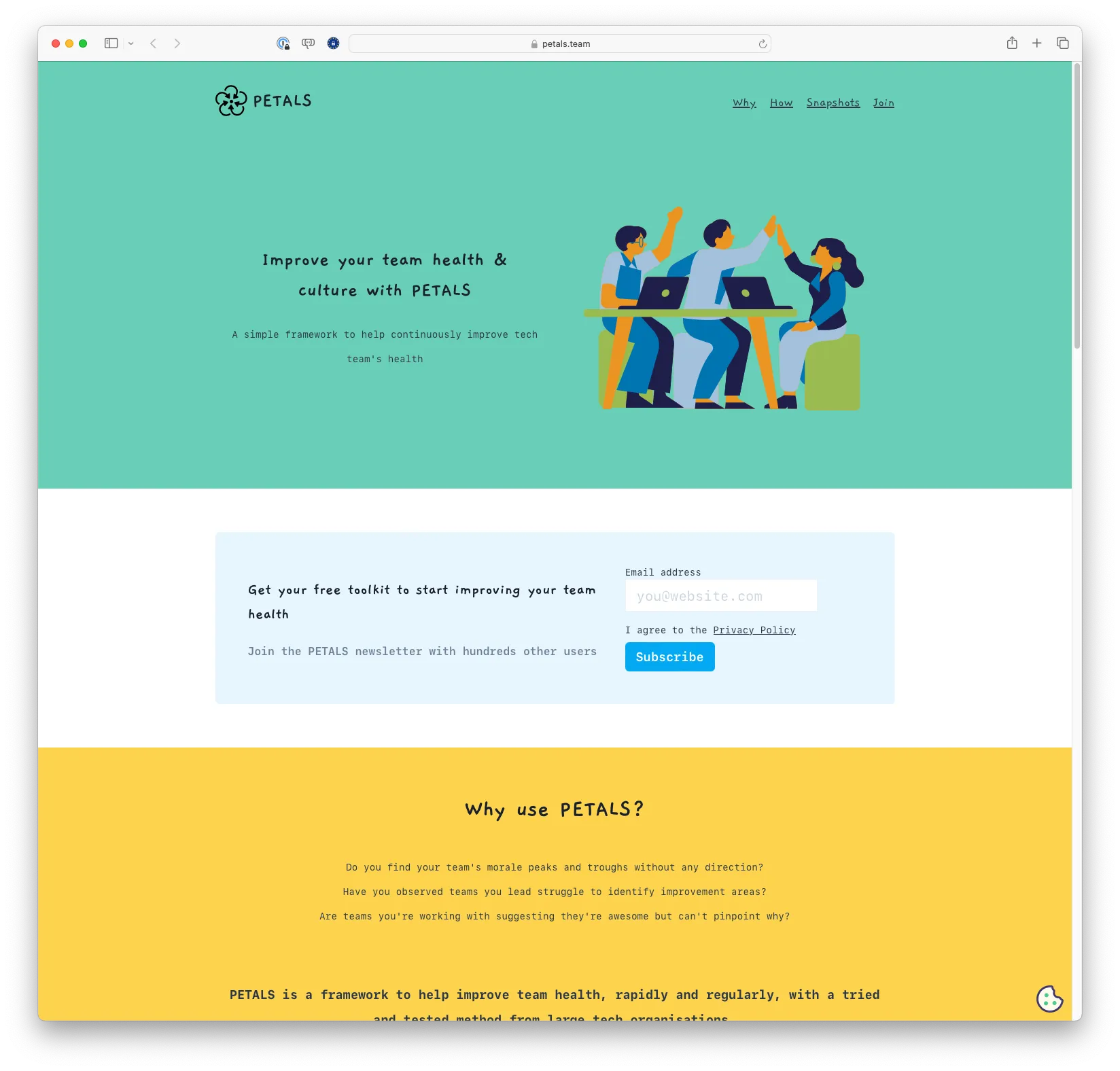
PETALS is a simple framework designed to improve team health and culture. It focuses on rating five key metrics: Productivity, Enjoyment, Teamwork, Learning, and Serenity, to help identify areas for continuous improvement. The framework is easy to implement during regular team meetings and has been recognized for its simplicity and effectiveness.
A new study by Atlassian and DX reveals that developers lose at least eight hours a week to inefficiencies, primarily due to misalignment between them and their managers. Managers often make decisions on developer experience without consulting the developers, leading to dissatisfaction and higher turnover rates. To improve productivity and job satisfaction, it is recommended that leaders engage with developers directly to understand their needs and challenges.
A new Stack Overflow survey reveals that 80% of developers are unhappy with their jobs. Factors contributing to dissatisfaction include technical debt, hustle culture, and bureaucracy. While AI tools are widely used and praised for increasing productivity, they are still deemed unreliable for complex tasks. Despite high pay and remote work opportunities, many developers feel demoralized and burned out, with a significant number facing health issues due to a sedentary lifestyle.
This article delves into the plan-execute pattern, a design approach often overlooked by software engineers despite being universally relied upon in daily life. The author contrasts this method with the traditional 'just do it' approach, illustrating its effectiveness through examples like Dfinity’s incremental state synchronization protocol and build systems. The pattern’s separation of planning and execution stages offers significant benefits for testing, debugging, and managing complexity in software development.
Regards,
M@
[ED: If you'd like to sign up for this content as an email, click here to join the mailing list.]
Originally published on quantumfaxmachine.com and cross-posted on Medium.
Was this useful?