
QFM043: Engineering Leadership Reading List - November 2024
 Source: Photo by yns plt on Unsplash
We begin this month’s Engineering Leadership Reading List with The Cynefin Framework Overview, a practical tool for leaders seeking to understand and operate effectively within different levels of complexity. Its emphasis on sense-making and adaptive decision-making sets the stage for broader discussions on navigating complexity, a recurring theme this month. Similarly, How to Delegate Effectively as Your Responsibility Grows provides actionable advice for leaders managing increasing demands, highlighting the importance of accountability and fostering independence within teams.
On the technical side, Exploring D2: A Declarative Diagramming Language showcases how declarative tools can enhance productivity in engineering workflows. This exploration of simplifying processes ties into 4 Ways to Technically Upskill Engineers, which outlines structured approaches for managers to help their teams transition from technical proficiency to fluency through self-directed learning and reflection.
Team dynamics and feedback feature prominently in Why You Should Have 1:1s with Your Peers and Why You’re Bad at Giving Feedback. Both articles examine the importance of fostering open communication and building trust within teams, offering practical strategies for improving collaboration and interpersonal skills. These ideas are extended in How to Give a Senior Leader Feedback (Without Getting Fired), which focuses on navigating hierarchical challenges while ensuring feedback is constructive.
Broader reflections on innovation and learning emerge in Learning by the Blade or From the Chalice, which uses metaphor to explore different modes of collaboration and decision-making, encouraging a balance between decisiveness and nurturing approaches. This ties into philosophical discussions on professional growth, such as The Power of Anti-Goals, where a contrarian approach to productivity highlights the value of designing workdays to avoid burnout and unwanted tasks.
Lastly, we turn to technical leadership challenges in specialised fields. Engineers Do Not Get To Make Startup Mistakes When They Build Ledgers addresses the unique demands of fintech engineering, advocating for robust systems and highlighting the risks of overlooking foundational principles like double-entry accounting. This focus on precision and reliability is complemented by VC School: What’s a Venture Scale Business?, which breaks down what it means for a business to be venture-scale, providing a strategic lens for evaluating growth potential and market impact.
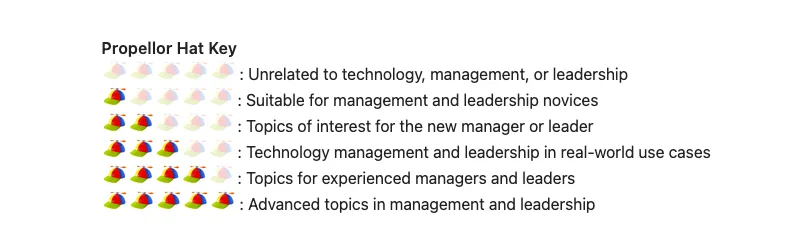
As always, the Propellor Hat Key will guide your reading. Enjoy!
Links
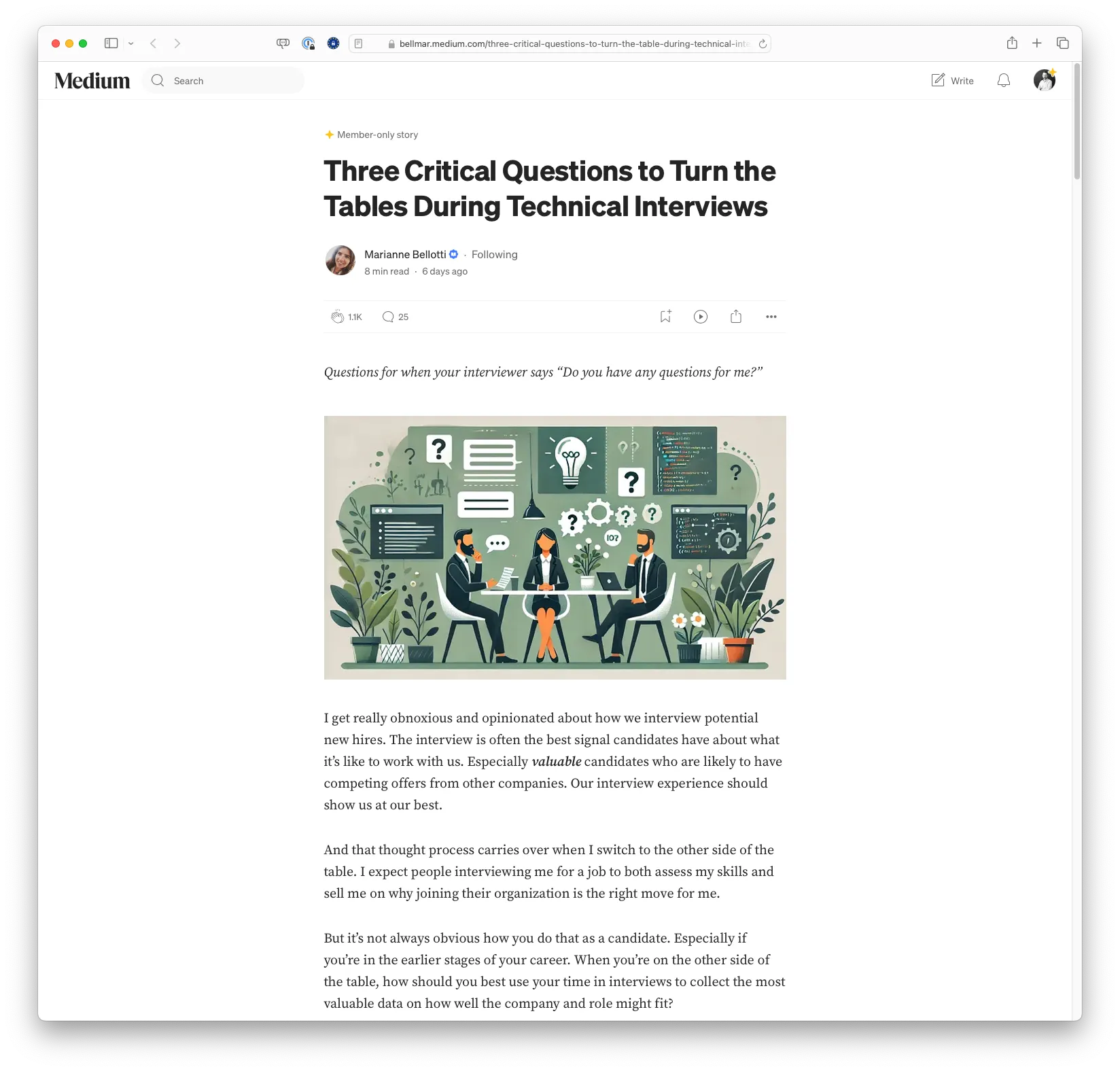
Marianne Bellotti emphasizes the importance of candidates using the question, 'Do you have any questions for me?' during technical interviews to evaluate potential employers. By preparing a standard set of questions, candidates can assess if the company and role are the right fit. This strategy is particularly useful for individuals early in their careers who may have multiple job offers.
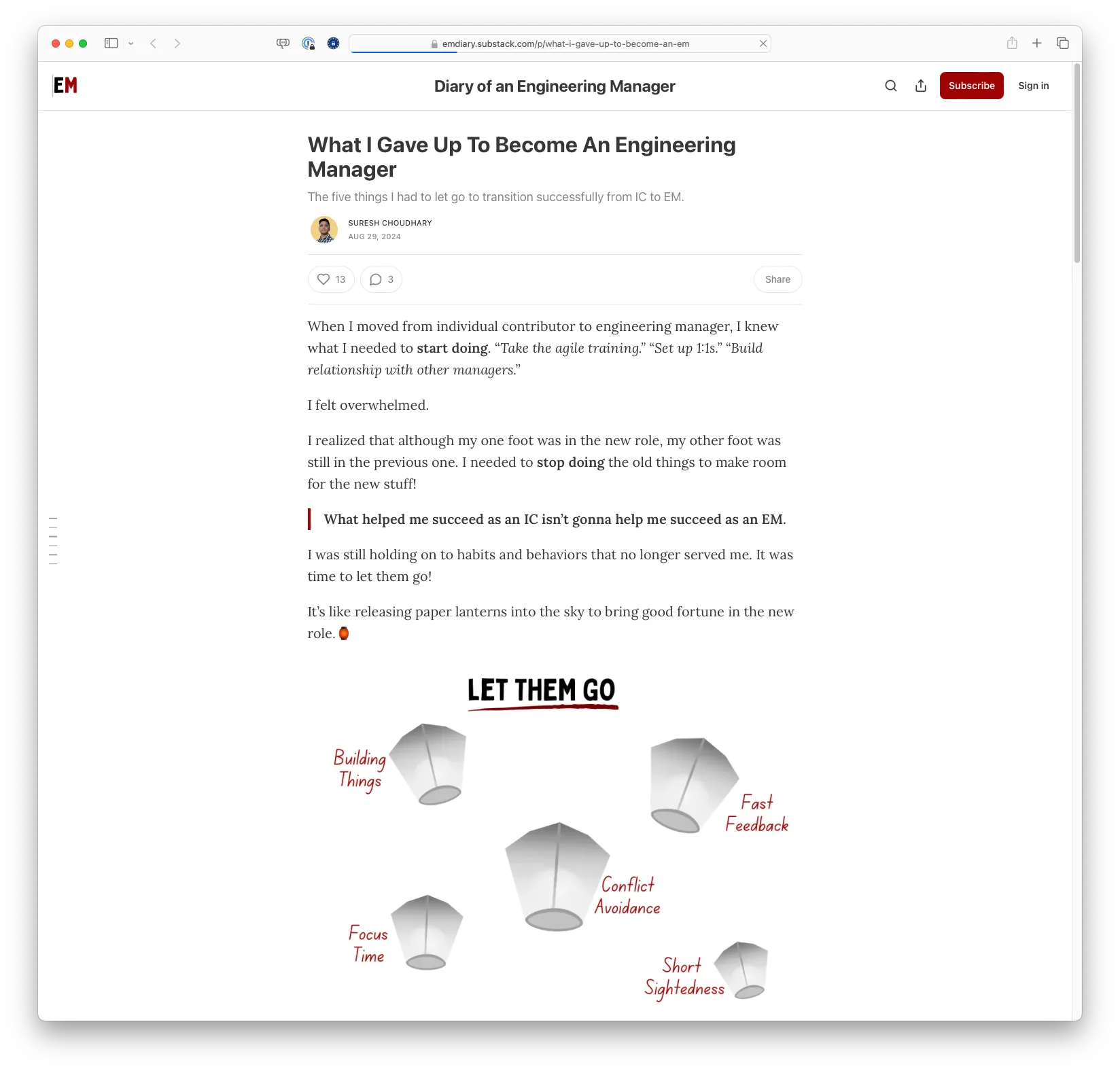
The article discusses the transition from being an individual contributor (IC) to an engineering manager (EM). It emphasizes the need to stop doing certain activities that were essential as an IC to make room for new responsibilities as an EM. The author shares five key areas to let go, including building things and blocking long focus times, to successfully shift into the managerial role.
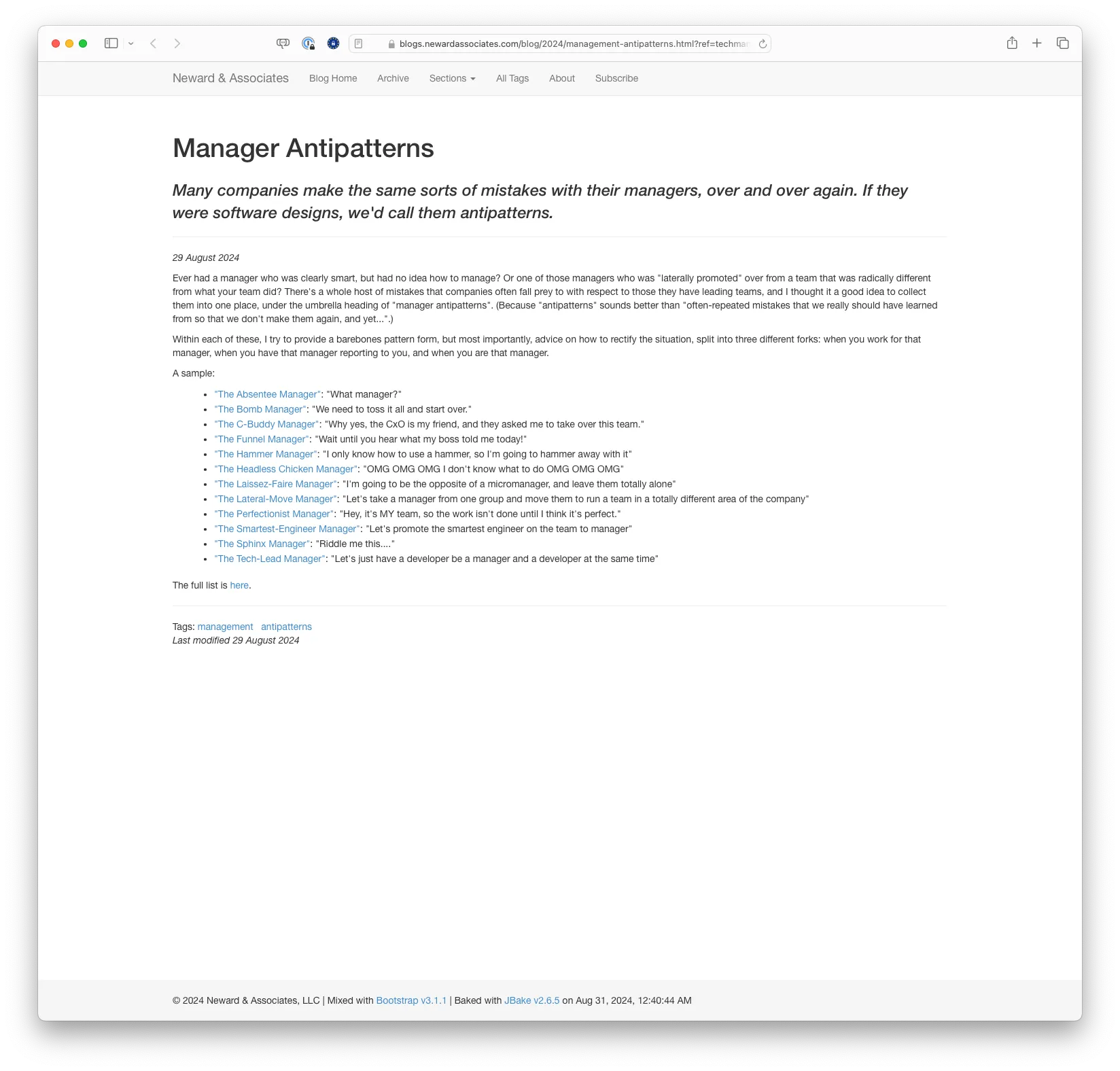
Many companies make recurring mistakes with their managers, which can be viewed as 'manager antipatterns.' These errors range from promoting the best engineer to a managerial role to having managers who are overly hands-off. The article discusses various types of dysfunctional management styles and provides tips on how to handle each scenario, whether you work for, are subordinate to, or are the manager in question.
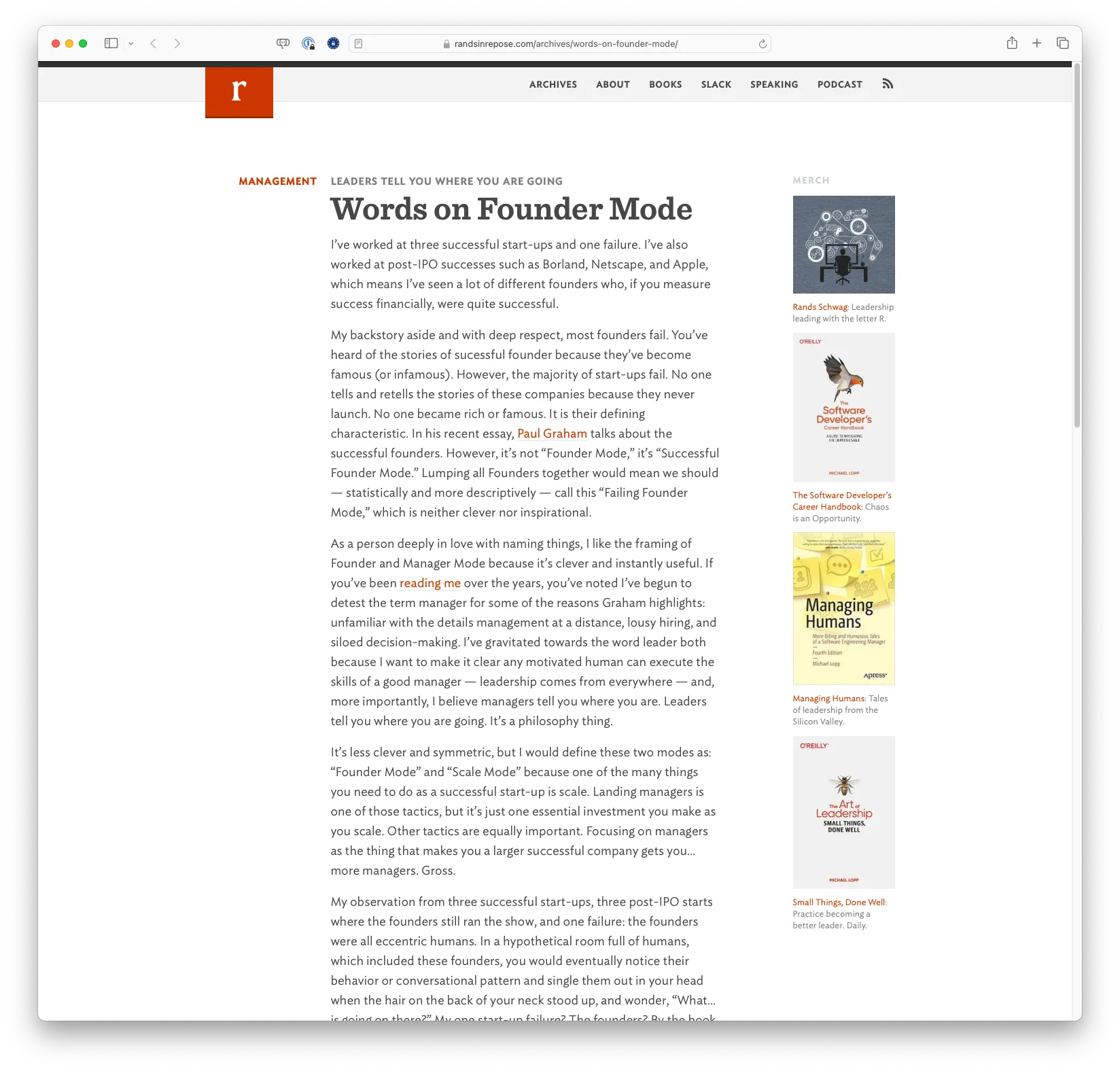
The article discusses the differences between Founder Mode and Manager Mode in startups. It argues that while most founders are not successful, those who are have a distinct way of running things, involving the whole team in every detail and prioritizing leadership over traditional management. The piece emphasizes the importance of hiring leaders rather than managers and suggests that company culture is deeply influenced by the character of the founders.
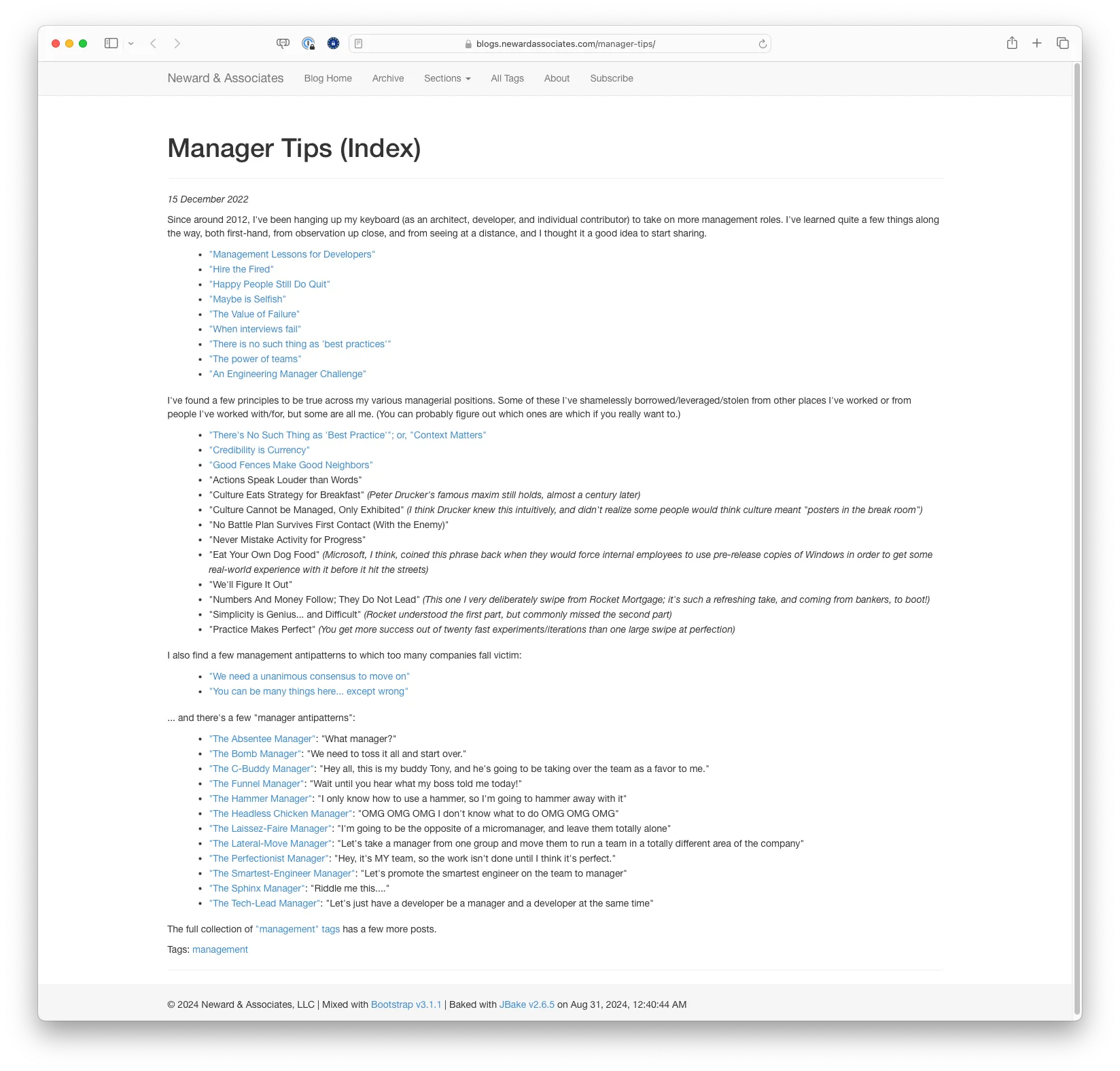
The author shares insights and lessons learned from years of transitioning from a developer to a managerial role. Topics include the importance of context over best practices, the value of failure, and various managerial pitfalls and anti-patterns.

The Software Blueprint service offers a streamlined approach for creating comprehensive project plans for custom software development. By providing detailed documentation of technical requirements and design, it aims to reduce time and cost while enhancing project clarity. The service is designed to align with various budget sizes, ensuring efficient resource use and faster time to market.
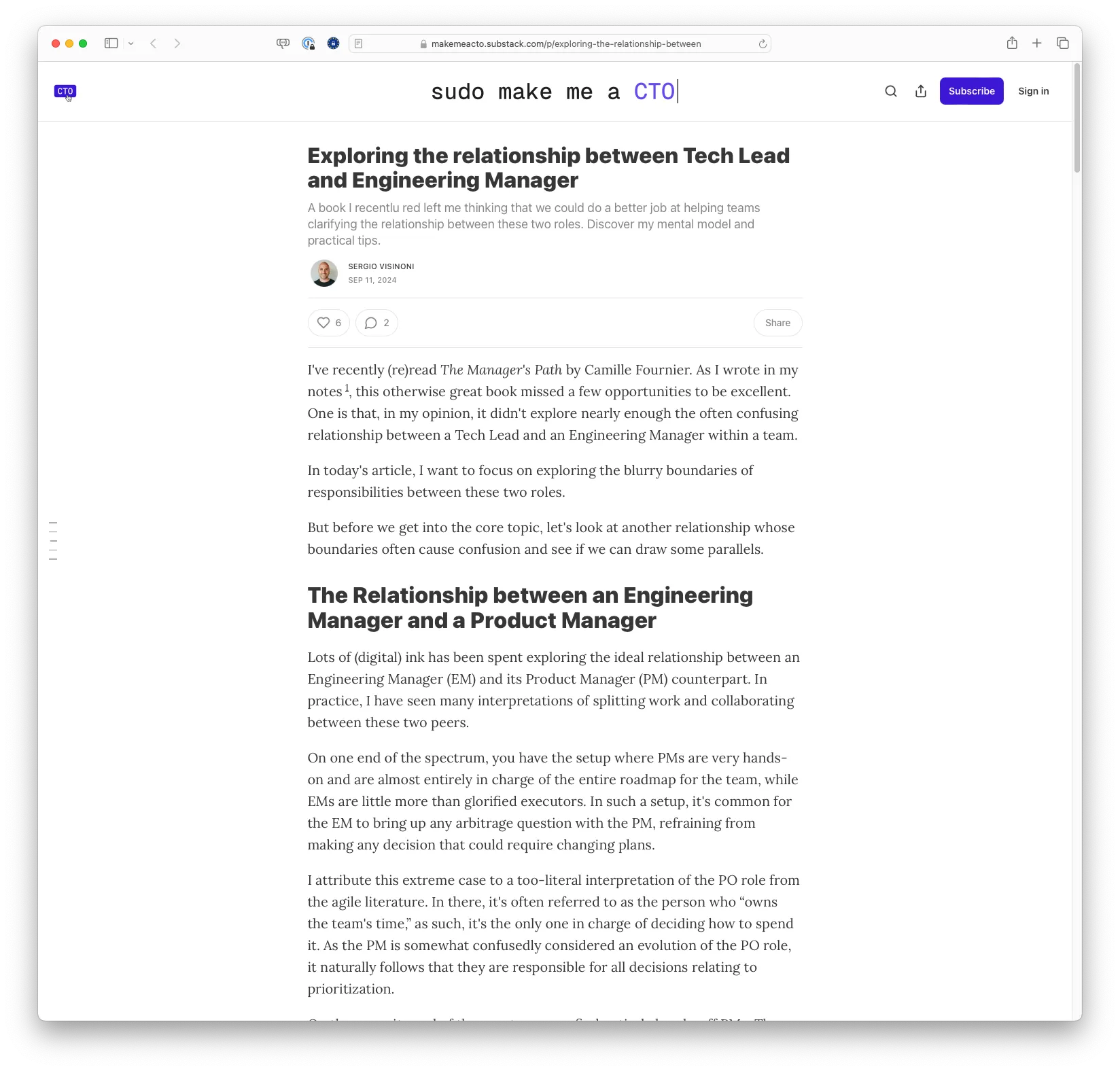
This article delves into the often confusing relationship between Tech Leads and Engineering Managers. It explores the boundaries and shared responsibilities derived from the comparison with the Engineering Manager and Product Manager roles. Practical tips and a mental model are offered to help navigate these roles and improve team dynamics.
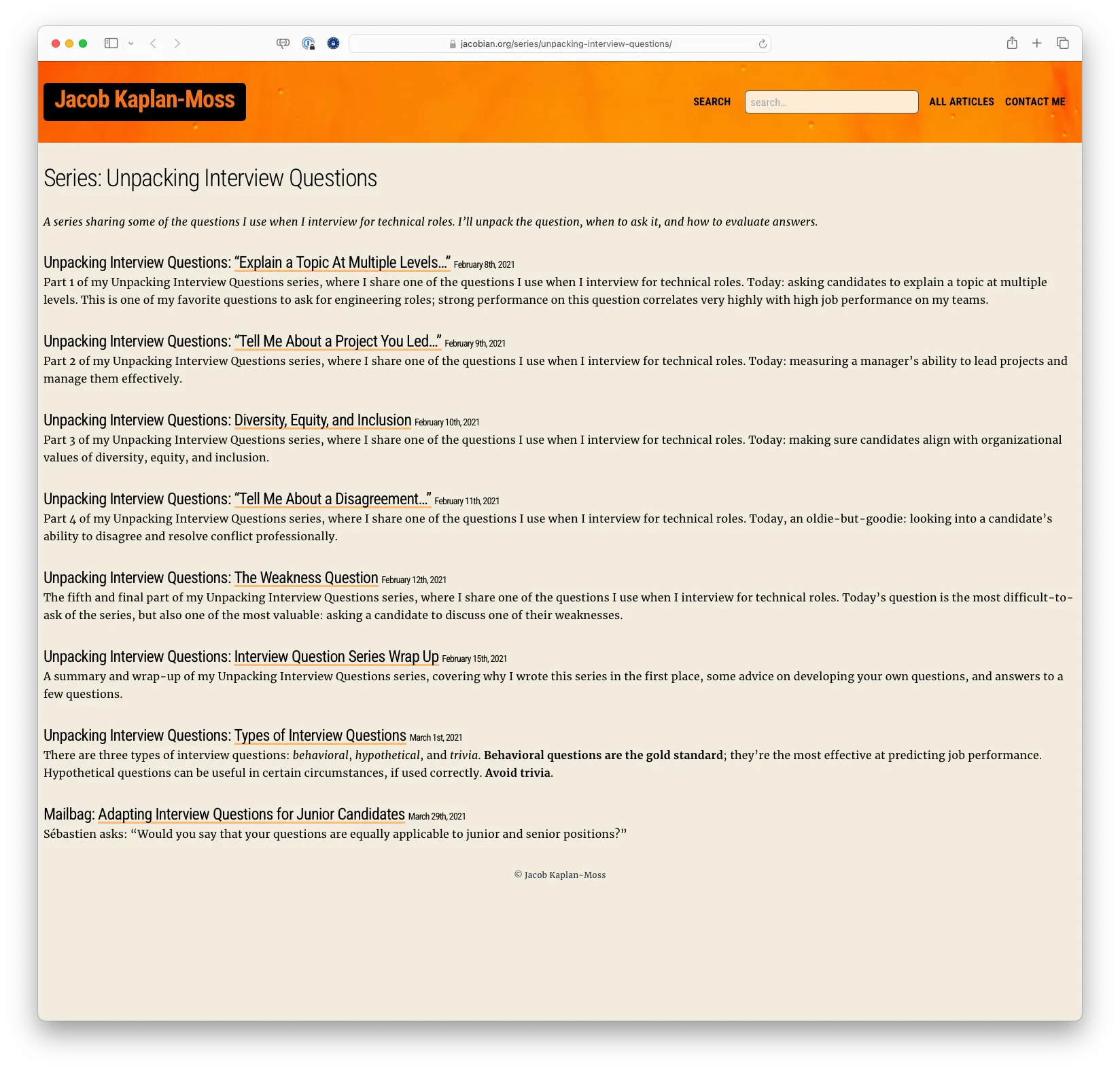
Jacob Kaplan-Moss presents a comprehensive series titled 'Unpacking Interview Questions,' where he shares insightful questions he uses during technical role interviews. The series explores topics like explaining a concept at different levels, leadership, diversity, equity, and inclusion, as well as conflict resolution and discussing weaknesses. He also provides a summary and tips on creating effective interview questions and discusses tailoring questions for junior candidates.
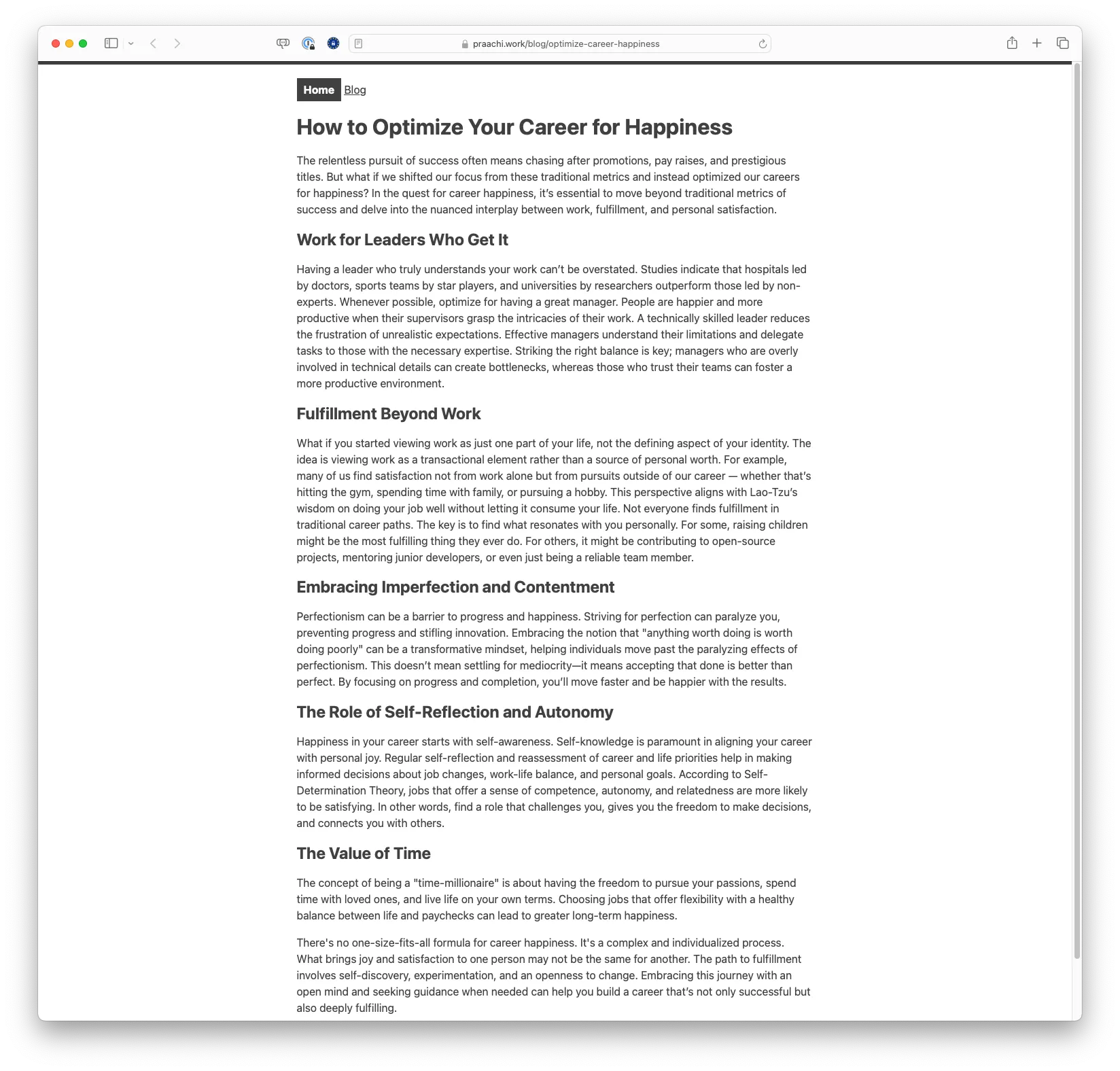
This article discusses shifting focus from traditional metrics of success, like promotions and pay raises, to optimizing one's career for happiness. Key points include working for leaders who understand your job, finding fulfillment beyond work, embracing imperfection, and practicing self-reflection. The concept of being a 'time-millionaire' is also explored, emphasizing the importance of job flexibility and work-life balance.
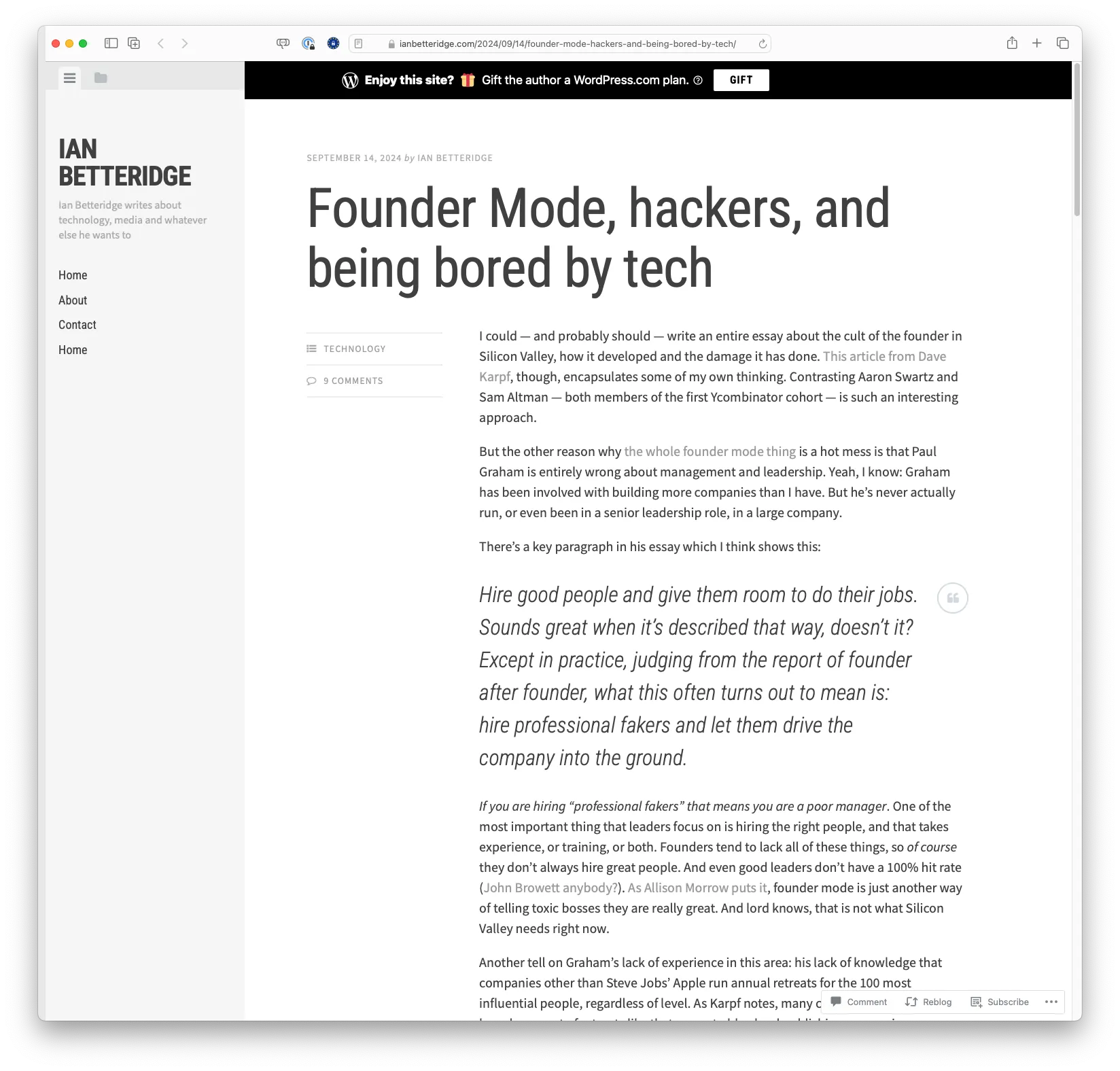
Ian Betteridge critiques the Silicon Valley 'cult of the founder', using figures like Paul Graham and Sam Altman as examples. He argues that many founders neglect crucial management skills and that the tech industry has become monotonous due to hype cycles driven by such personalities. Betteridge also reflects on how tech discourse has shifted from exciting, multifaceted discussions to one-dimensional coverage dominated by a few high-profile founders.
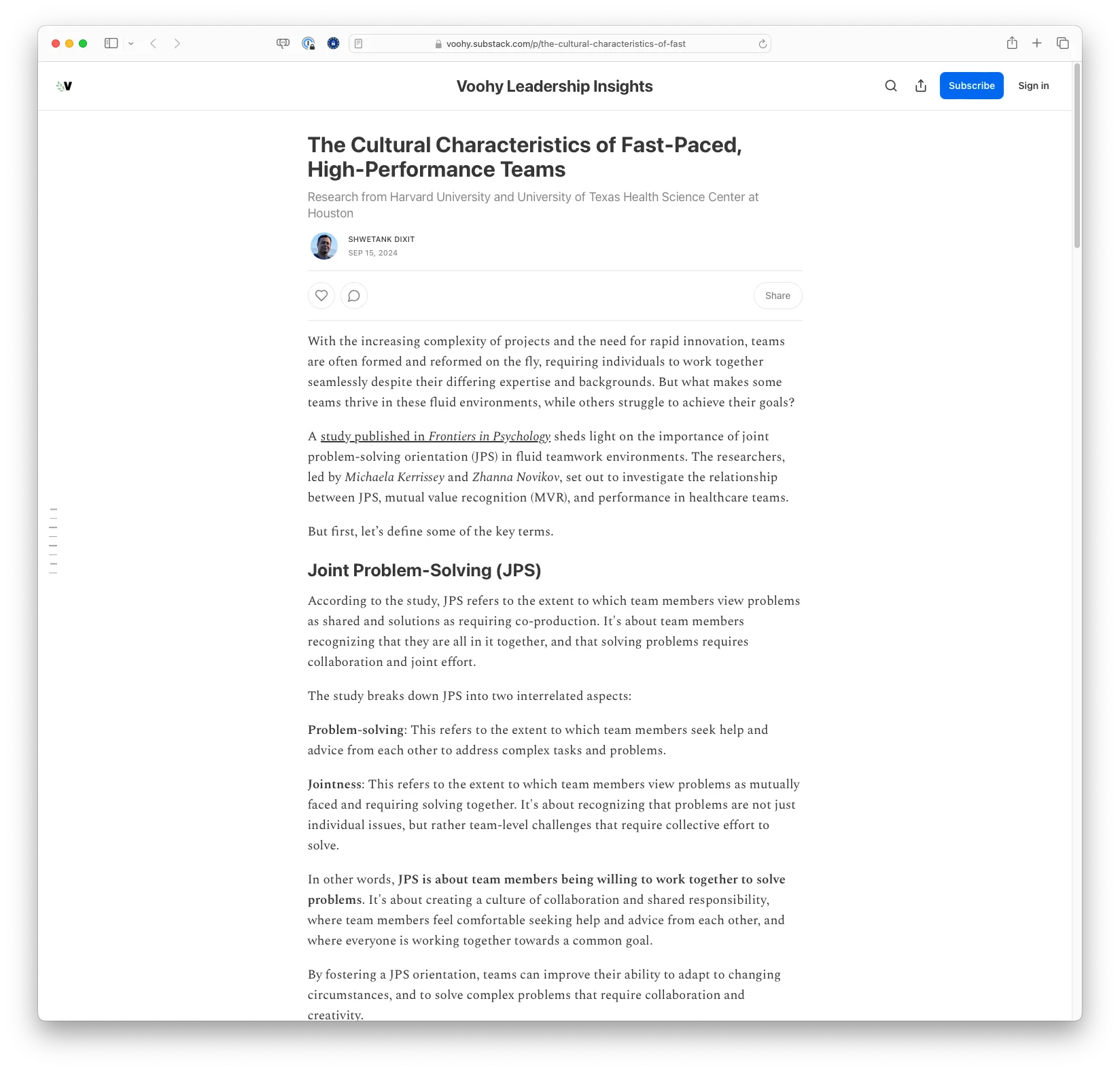
A study published in Frontiers in Psychology explores the importance of Joint Problem-Solving (JPS) and Mutual Value Recognition (MVR) in high-performance teams. The research, involving over 1,600 healthcare units, finds that teams with strong JPS and MVR are more adaptable and perform better. The study emphasizes the critical role of leadership in fostering these attributes, especially in fluid environments like healthcare settings.
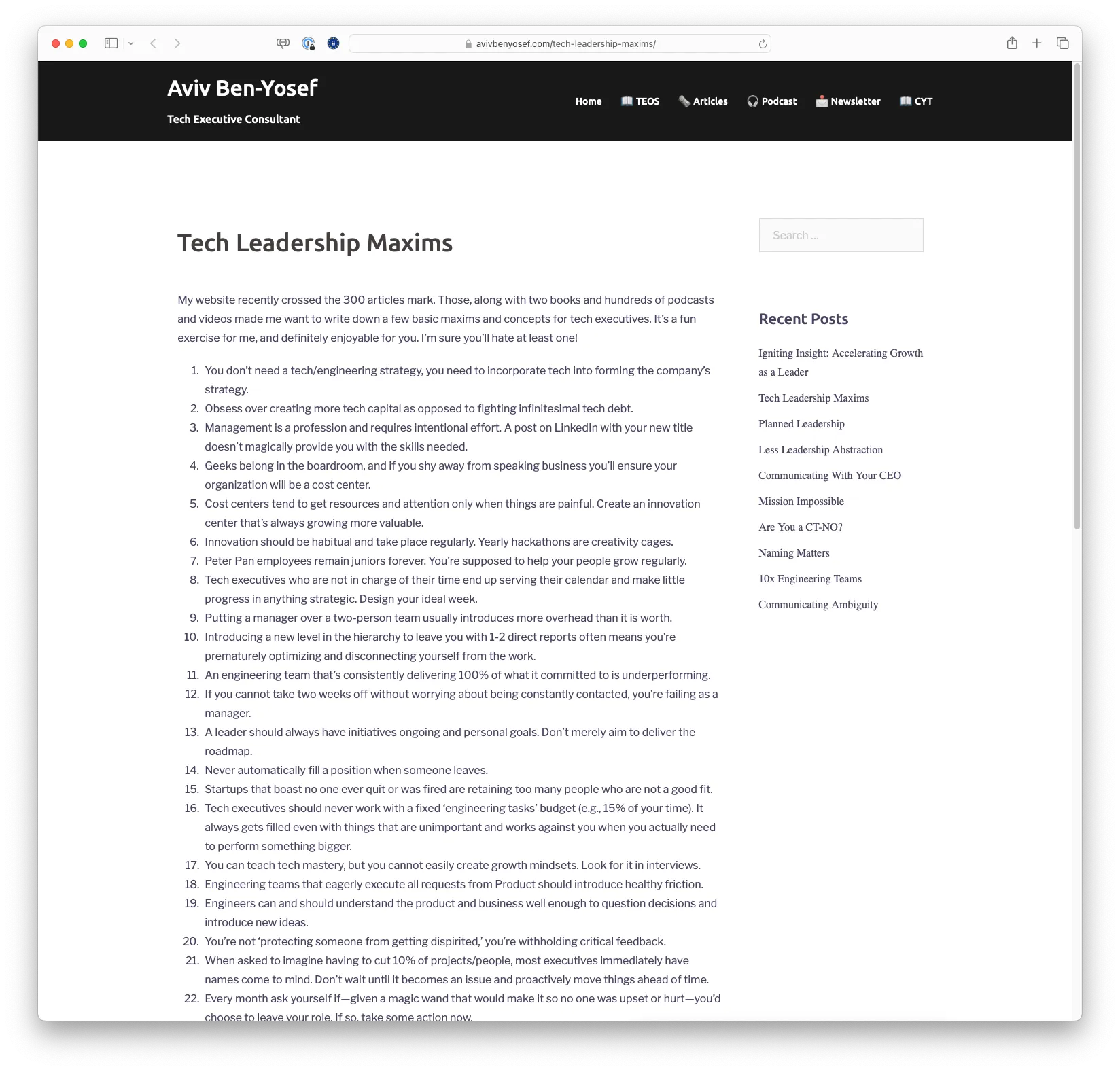
Aviv Ben-Yosef shares key maxims for tech executives based on his extensive content, which includes over 300 articles, books, and podcasts. Highlights include the importance of integrating tech into the company's strategy, fostering innovation as a habit, and the critical need for tech leaders to manage their time effectively. He also emphasizes that tech management requires intentional effort and that true leadership means being proactive rather than merely being a facilitator.
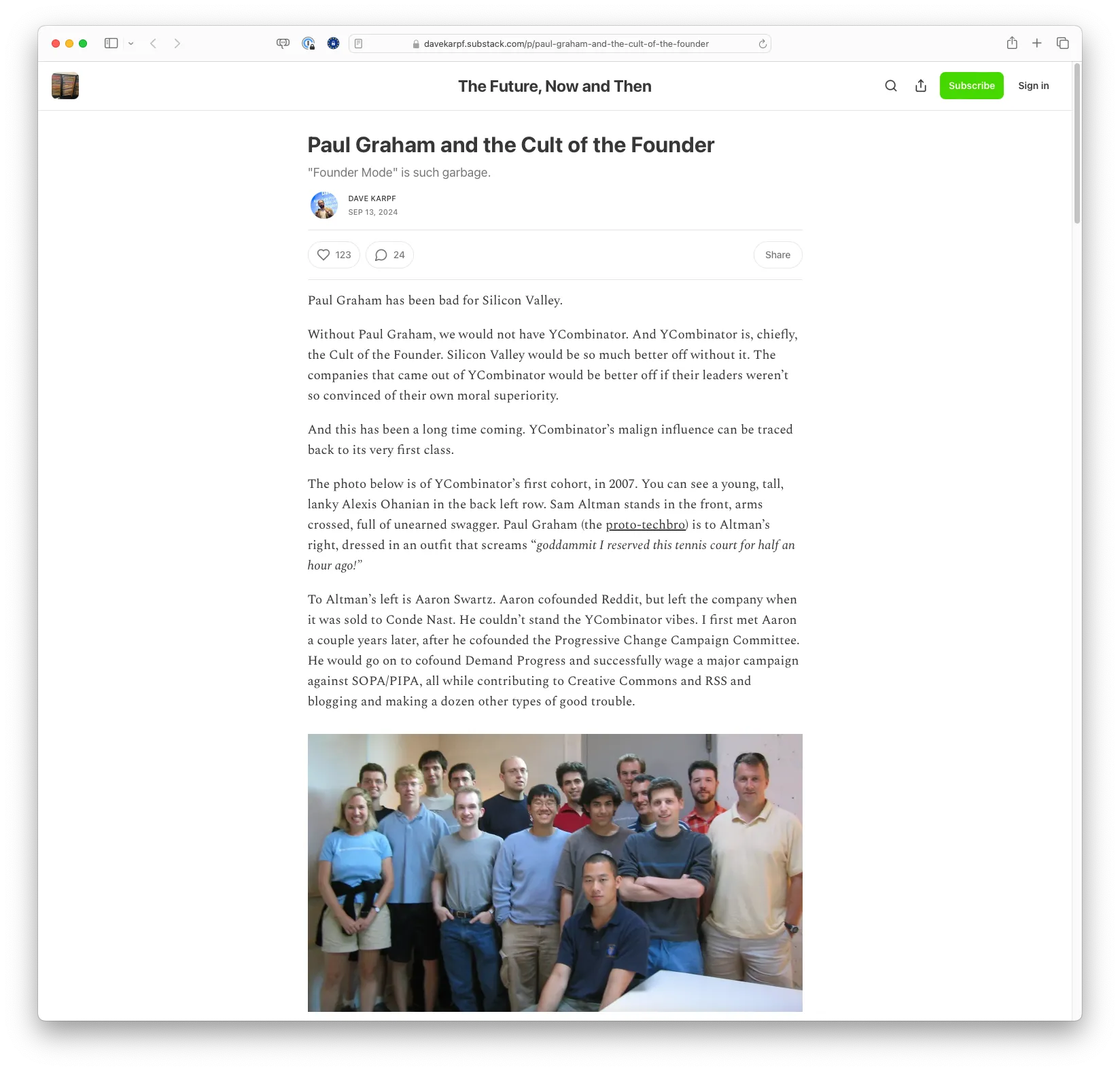
Dave Karpf critiques Paul Graham's influence on Silicon Valley, arguing that YCombinator's glorification of 'founder culture' has had negative repercussions. He contrasts two archetypes: the founder, represented by Sam Altman, and the hacker, represented by Aaron Swartz, lamenting the loss of the hacker's influence in the modern tech landscape.

Yaniv Preiss advocates for the "No Estimations" approach, arguing that estimations often lead to misleading timelines and unnecessary stress. He suggests focusing on prioritizing tasks based on a roadmap rather than on unreliable estimations. The article emphasizes that this approach can improve trust and efficiency within tech teams.
This article by Superhuman founder and CEO Rahul Vohra delves into the framework his startup utilized to achieve product-market fit. It details a four-step process and a specific survey method to measure and optimize product-market fit, focusing on user feedback and continuous improvement.
Francisco Trindade discusses how managers can define and implement team principles to guide behavior and decision-making. The principles are aimed at creating empowered teams with clear direction and consistent approaches. Trindade emphasizes the importance of maintaining team autonomy, creating motivating challenges, and fostering collaboration.
Lara Hogan discusses how humans unconsciously mirror each other's moods and behaviors in the workplace. She provides strategies to recognize these patterns and encourages acting as a thermostat—setting a positive tone—instead of just a thermometer that reflects the current mood.

The article discusses the balance between creating custom abstractions and using commoditized implementations in software engineering. The author emphasizes the importance of creating meaningful abstractions tailored to specific contexts while utilizing ready-made implementations for general use. This approach helps balance innovation with stability, but finding the right equilibrium can be complex and requires expertise.
The article challenges the traditional notion of retirement, emphasizing the pursuit of personal joy and financial alignment throughout one's life rather than depending on a retirement salary. It critiques the existing retirement systems in countries like Germany and proposes a more dynamic, purpose-driven approach to life where one continuously invests in their happiness and fulfillment.
Many product teams face difficulties in delighting users despite exhaustive planning. The article suggests that an overemphasis on detailed product plans and output fixation can mislead teams, causing them to lose sight of actual user needs. By revising this approach and employing a practical 5-step guide, teams can better focus on delivering what truly matters to users.
In challenging times, Engineering Managers can lead their teams effectively by focusing on delivery, building resilient teams, and supporting individual growth. It's crucial to stay mission-focused, and empower teams to move quickly while maintaining morale. Acknowledging the high-pressure environment and investing in both personal and team health can help leaders and teams not just survive but thrive.
In this article, Doug Turnbull discusses the importance of hiring junior developers, countering the trend of only recruiting experienced staff. Turnbull emphasizes that juniors bring unique value by fostering a culture of teaching and learning, which can drive innovation and psychological safety within teams. He provides examples of how juniors have generated groundbreaking ideas and highlights the benefits of having a diverse team with fresh perspectives.
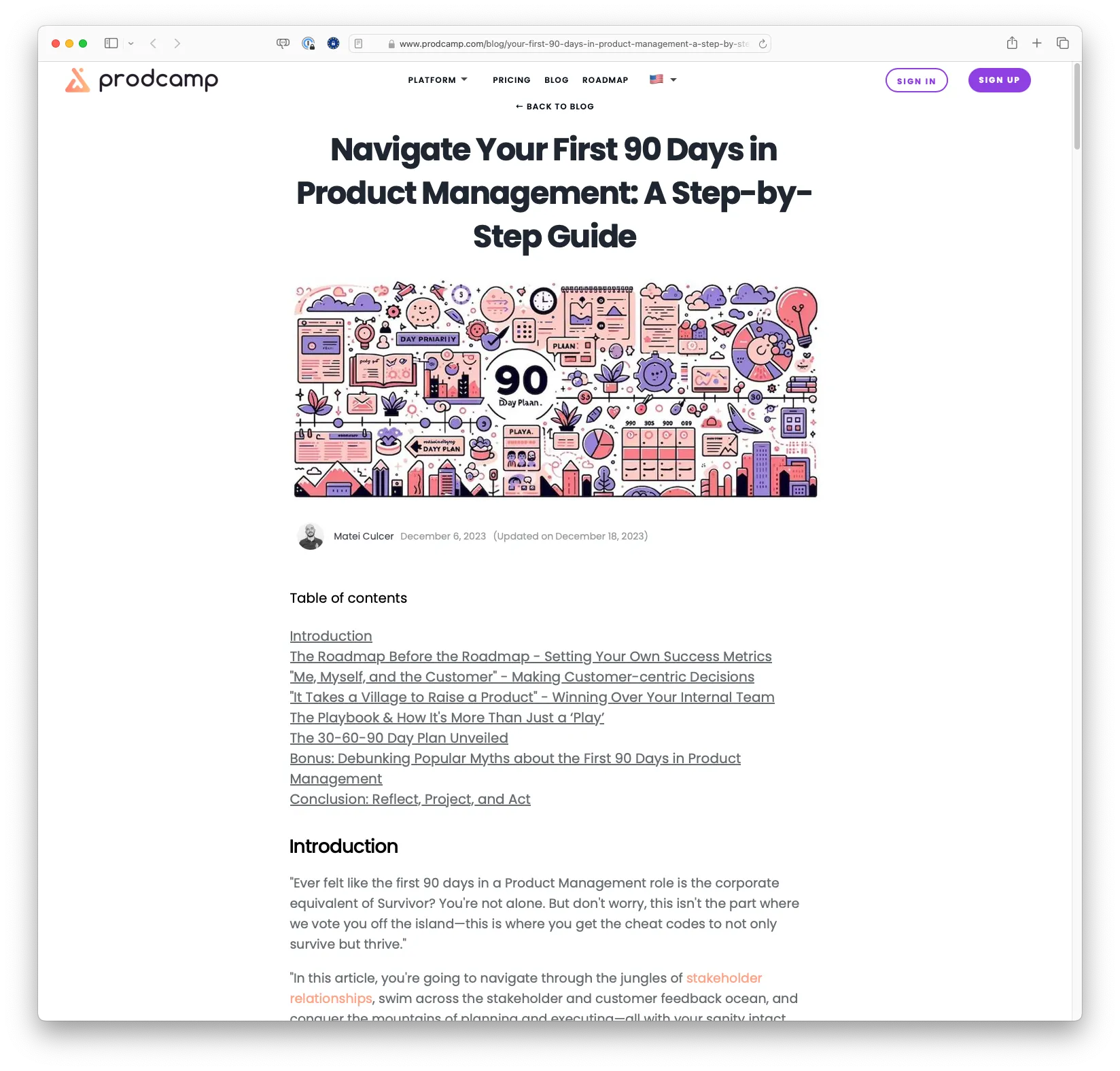
Navigating the first 90 days in a Product Management role can be daunting. This guide provides actionable steps, insights, and common pitfalls to avoid, ensuring you not only survive but thrive. From setting success metrics and balancing internal and external activities to creating a robust playbook and engaging with stakeholders, this article aims to set you up for success in your new role.
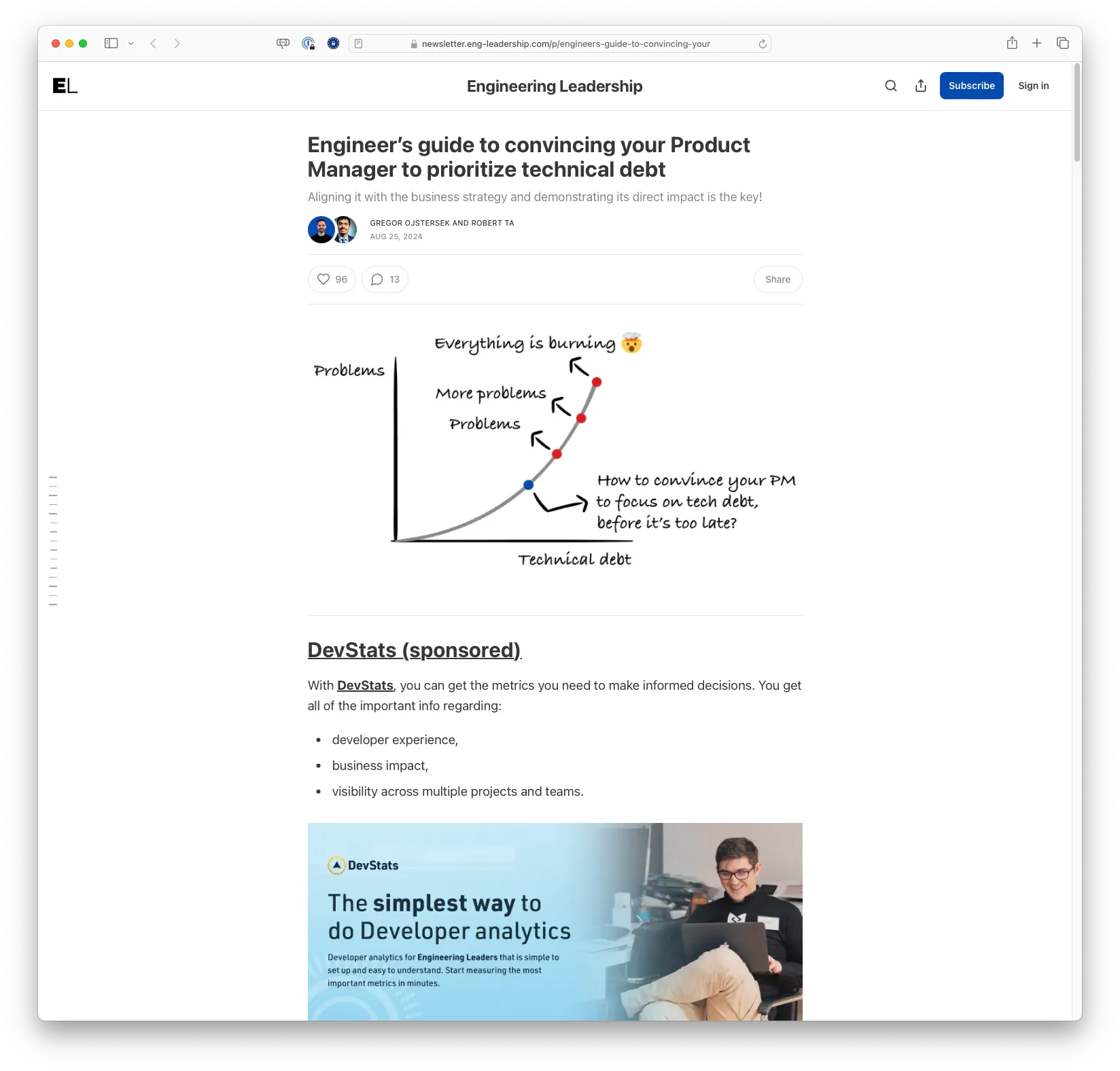
Engineers often struggle to convince product managers to prioritize technical debt. This article, written by Gregor Ojstersek and Robert Ta, offers a structured approach to align technical debt with business strategy, quantify its impact, and present a compelling case for tackling it. The process involves five steps: aligning with business strategy, quantifying the problem, relating technical debt to business value, offering a solution, and presenting a proposal.
The article, a part of the 'Innovate, Disrupt, or Die' series, addresses how conventional business metrics can stifle innovation. It particularly examines 'The Efficiency Paradox,' where a strong focus on lean operations can suppress creativity and risk-taking, thus limiting radical innovations. The piece discusses the need for companies to balance operational efficiency with maintaining an environment that fosters innovation to avoid being disrupted by more adaptable, forward-thinking competitors.
This article discusses the methods for assessing the adoption and impact of Generative AI (GenAI) in software development environments. It emphasizes the importance of measuring these metrics to understand how technology improvements translate into developer efficiency and productivity. The piece offers insights into various tools and frameworks that can aid in quantifying and enhancing these aspects for developer teams.
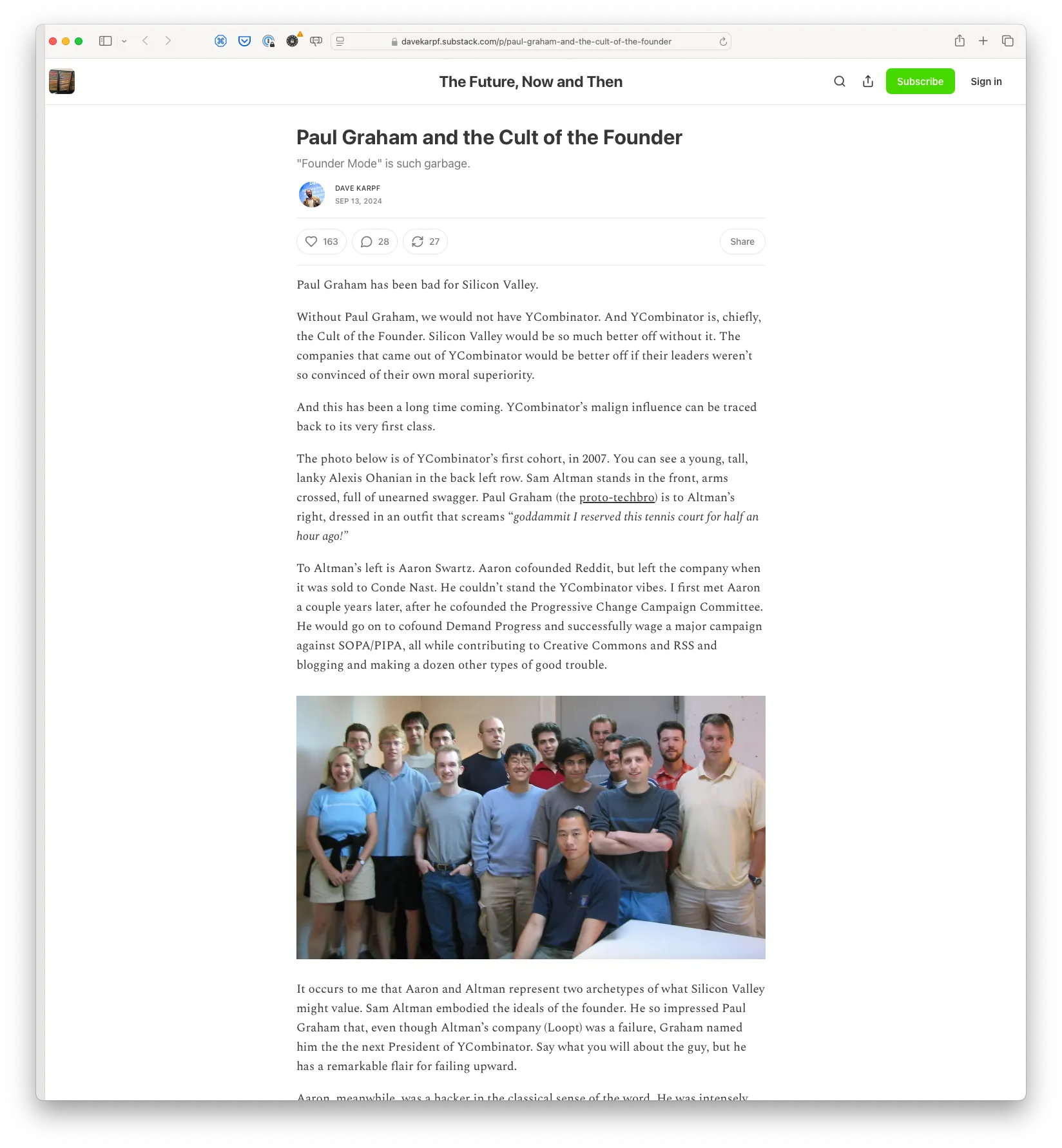
In his article, Dave Karpf critically examines the influence of Paul Graham and YCombinator on Silicon Valley. He argues that Graham's "Cult of the Founder" has led to an environment where founders are excessively glorified, to the detriment of broader technological innovation. The article contrasts icons like Aaron Swartz with leaders such as Sam Altman, questioning the merit of celebrating founders over engineers and innovators.
This article discusses how certain business metrics, essential for measuring short-term success, often stifle long-term innovation. It highlights the 'profitability trap' where a focus on immediate financial returns suppresses transformative ideas. Using examples like Kodak and Blockbuster, it illustrates how an overemphasis on short-term profits can miss opportunities for disruptive innovation. The piece argues for a balanced approach that integrates innovation into financial performance metrics, encouraging companies to redefine profitability to include both current returns and future growth through innovation.
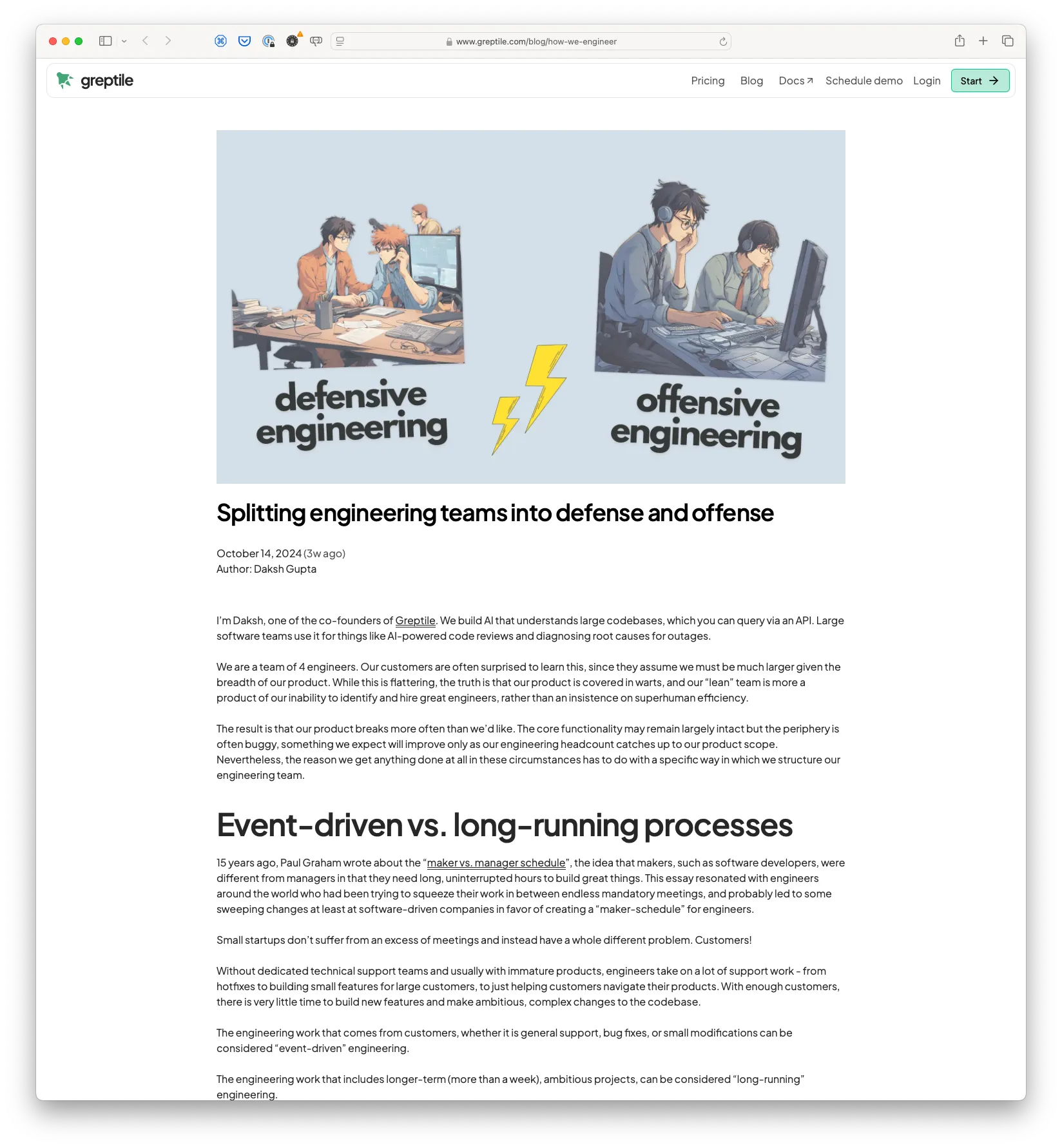
The article discusses the challenges and solutions in structuring small engineering teams to tackle both immediate customer needs and long-term projects. At Greptile, a lean team of four engineers is divided into two groups: one focuses on 'long-running' tasks for extended periods without interruptions, while the other handles 'event-driven' tasks such as support and bug fixes. This structure helps balance product maintenance and expansion by isolating distractions, allowing engineers to work more efficiently. The strategy highlights the need for innovative approaches to team management in fast-growing startups.
The article explores the motivations behind the push for employees to return to office settings, arguing that productivity is not the true driving factor. Instead, it points out that the interests of maintaining the value of commercial real estate investments, such as office buildings, are at play. References are made to how traditional office employees find ways to be unproductive too, underscoring that remote work is unfairly targeted as unproductive.
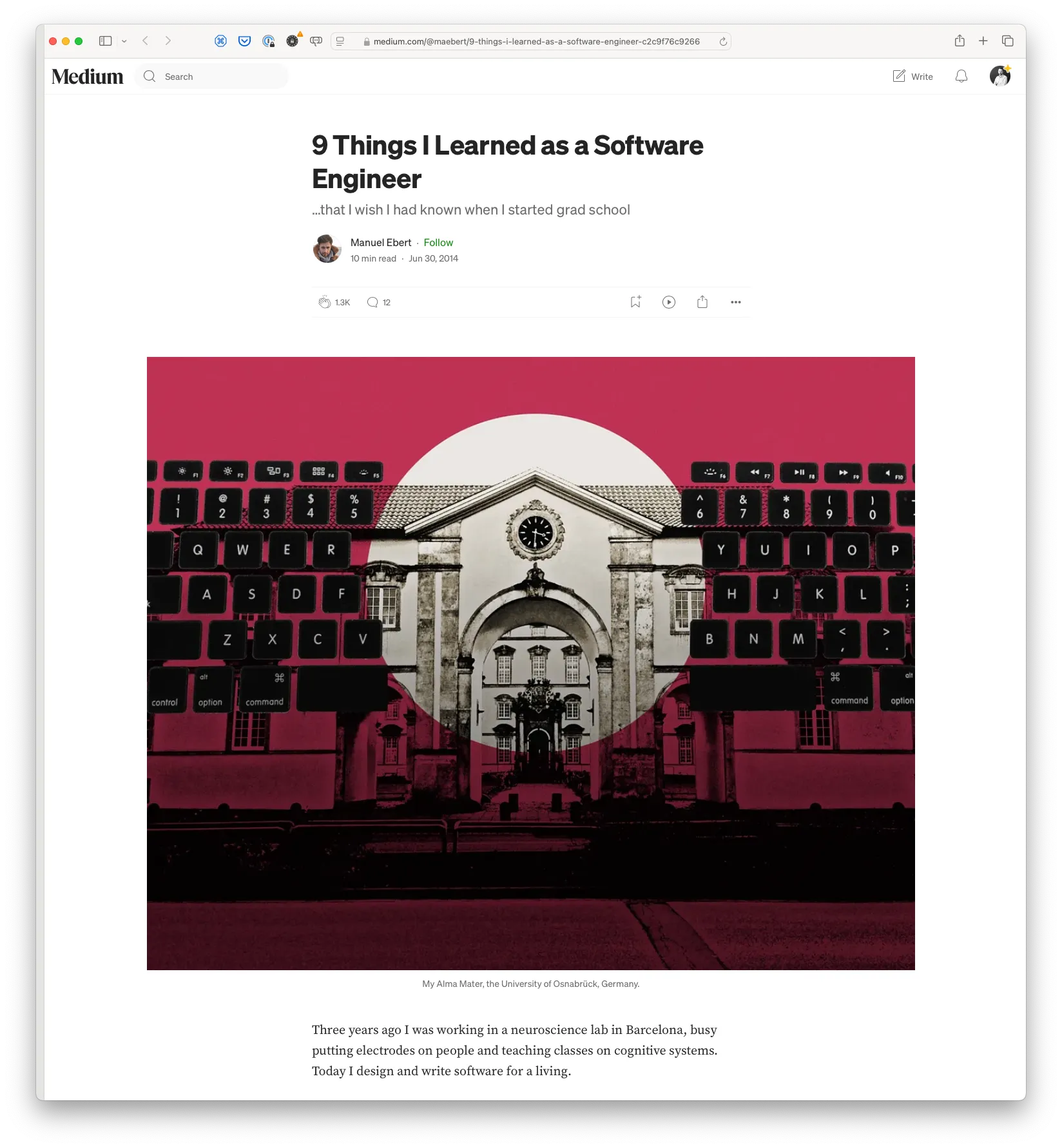
In "9 Things I Learned as a Software Engineer," Manuel Ebert shares invaluable lessons from his transition from neuroscience to software engineering. He emphasizes the importance of mindset over mere knowledge of programming languages, advocating for a craftsman approach to work and continual learning through pet projects. Ebert also highlights the significance of understanding one's role as a stakeholder in an organization, the philosophy of 'shipping it,' and taming one's mental focus to enhance productivity.
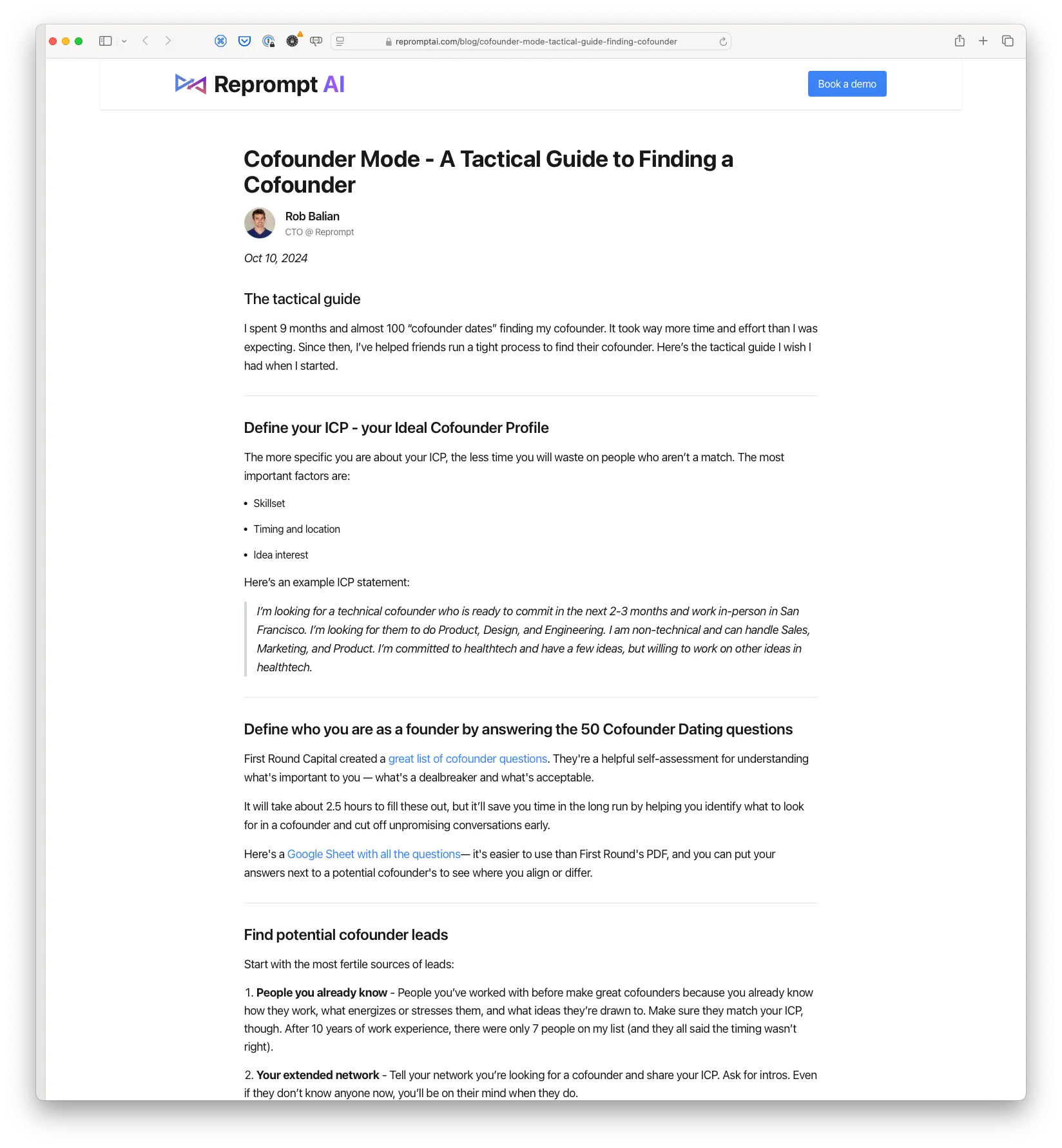
The article offers a comprehensive guide to finding a cofounder, drawing on the author's experience of spending nine months and nearly one hundred "cofounder dates" for the search. It emphasises the value of defining a very specific Ideal Cofounder Profile (ICP) to streamline the process, using tactics from personal networking to structured 'dating funnels', and suggests tools like cofounder matching platforms and self-assessment questionnaires to aid in the search. The guide provides practical advice, including recognising red flags and handling timing effectively during the search for a compatible cofounder.
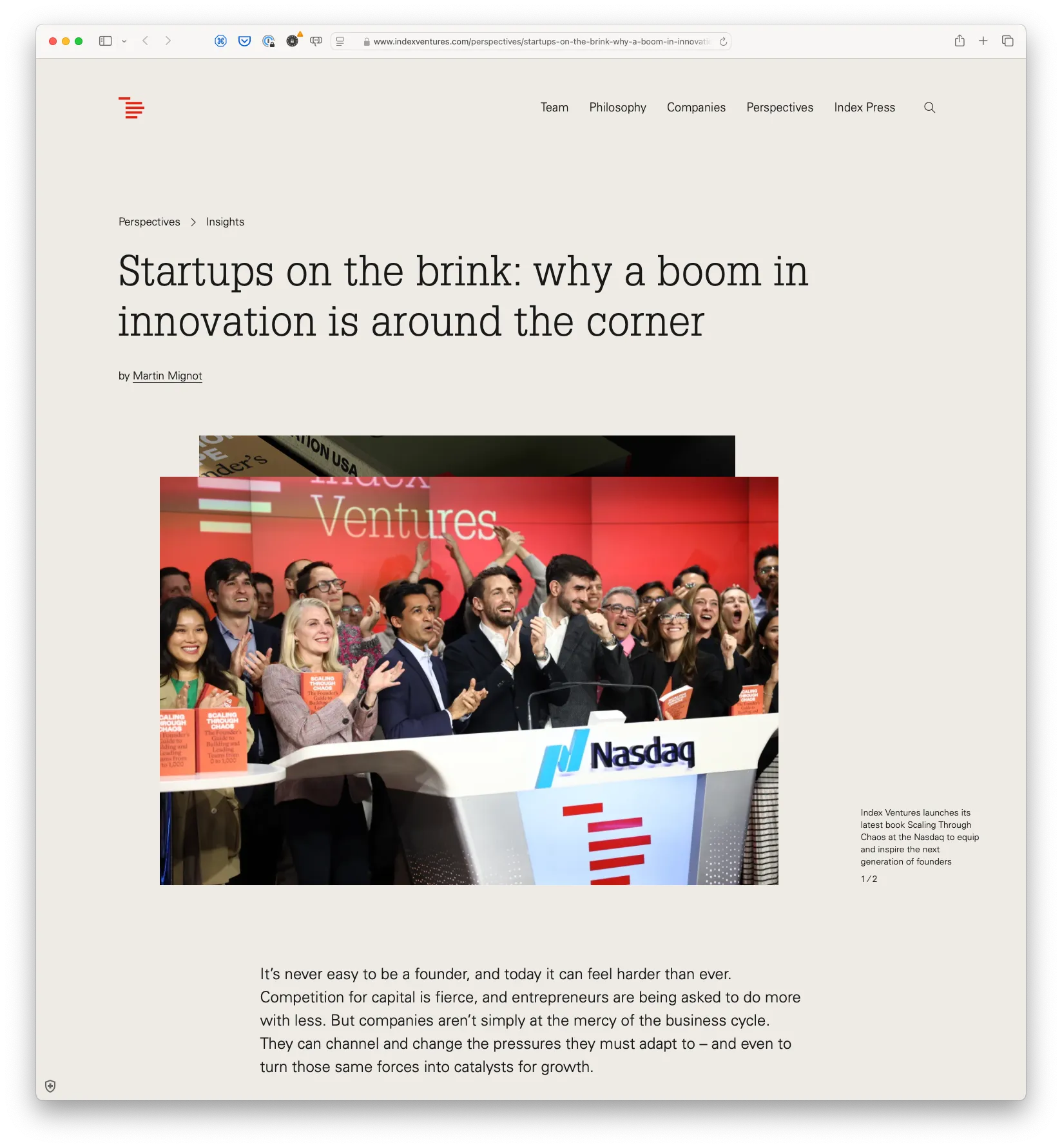
The article explores how startups are poised at a pivotal moment of innovation, driven by the convergence of accumulated wisdom in entrepreneurship, global expertise, and cutting-edge technologies. Despite the challenges faced by modern entrepreneurs, these factors enable founders to turn survival pressures into growth accelerants. The piece highlights the role of books like Scaling Through Chaos by Index Ventures in providing deep insights into team dynamics and startup scaling, suggesting that founders now have unparalleled resources to navigate and leverage the chaotic nature of high-growth environments.

The article explores how venture capital investments have surged drastically, leading to the creation of massive unicorns that dominate markets. However, this often results in negative societal impacts as companies initially perceived as benign grow so large that they become a detriment to community stability and overall market health. It highlights the unintended consequences of startups like Uber and Airbnb whose growth led to significant societal changes, including increased housing costs and disrupted industries, with a critique on the current model of scaling as a necessary measure for success.
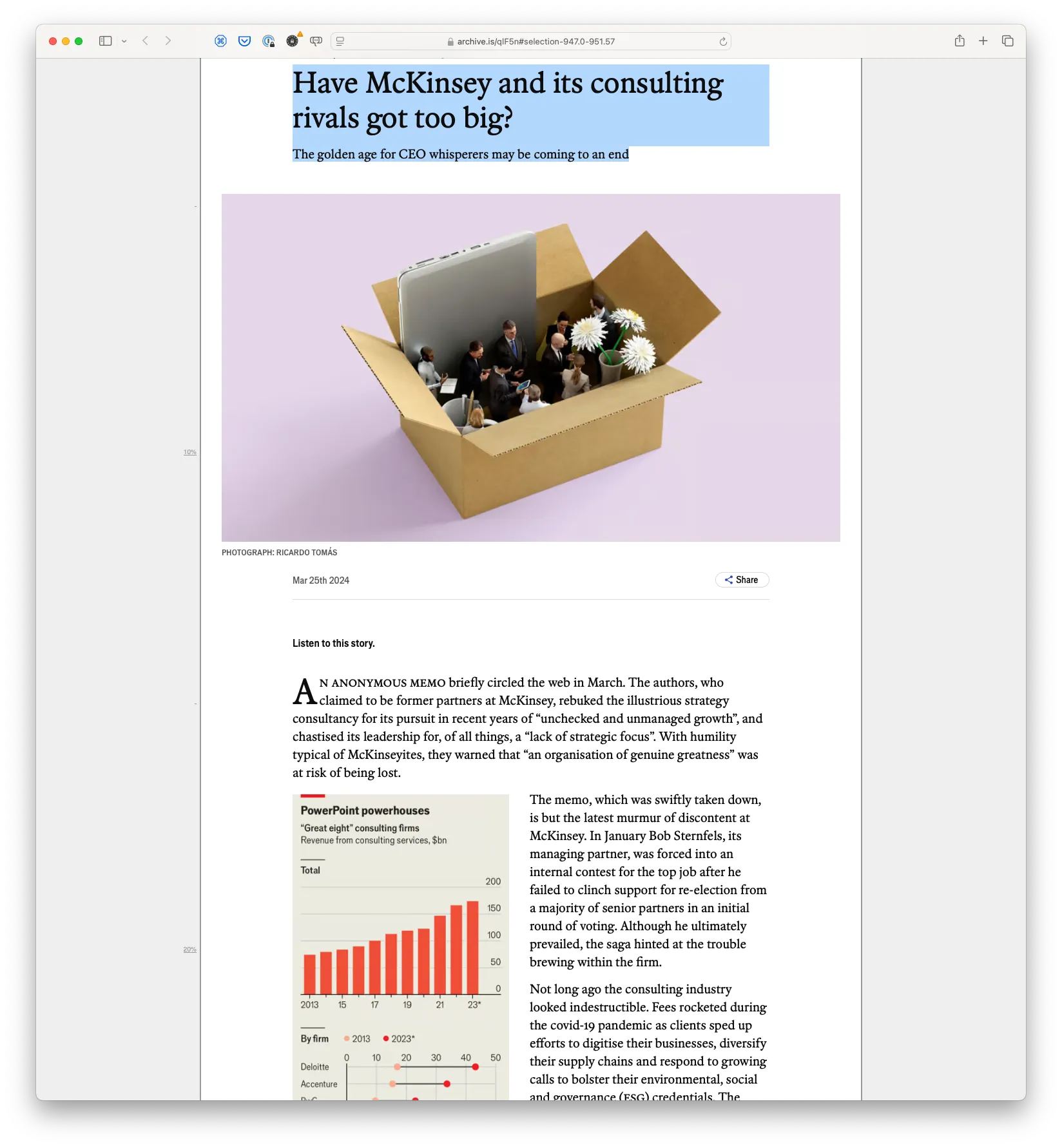
McKinsey and other major consulting firms face declining growth as client demand wanes amidst economic uncertainties, political tensions, and emerging technology challenges, including AI-driven solutions that risk bypassing traditional consulting services. Despite efforts to adapt, these firms’ reliance on geopolitical and economic stability may ultimately make them vulnerable to structural shifts in client expectations and industry practices.
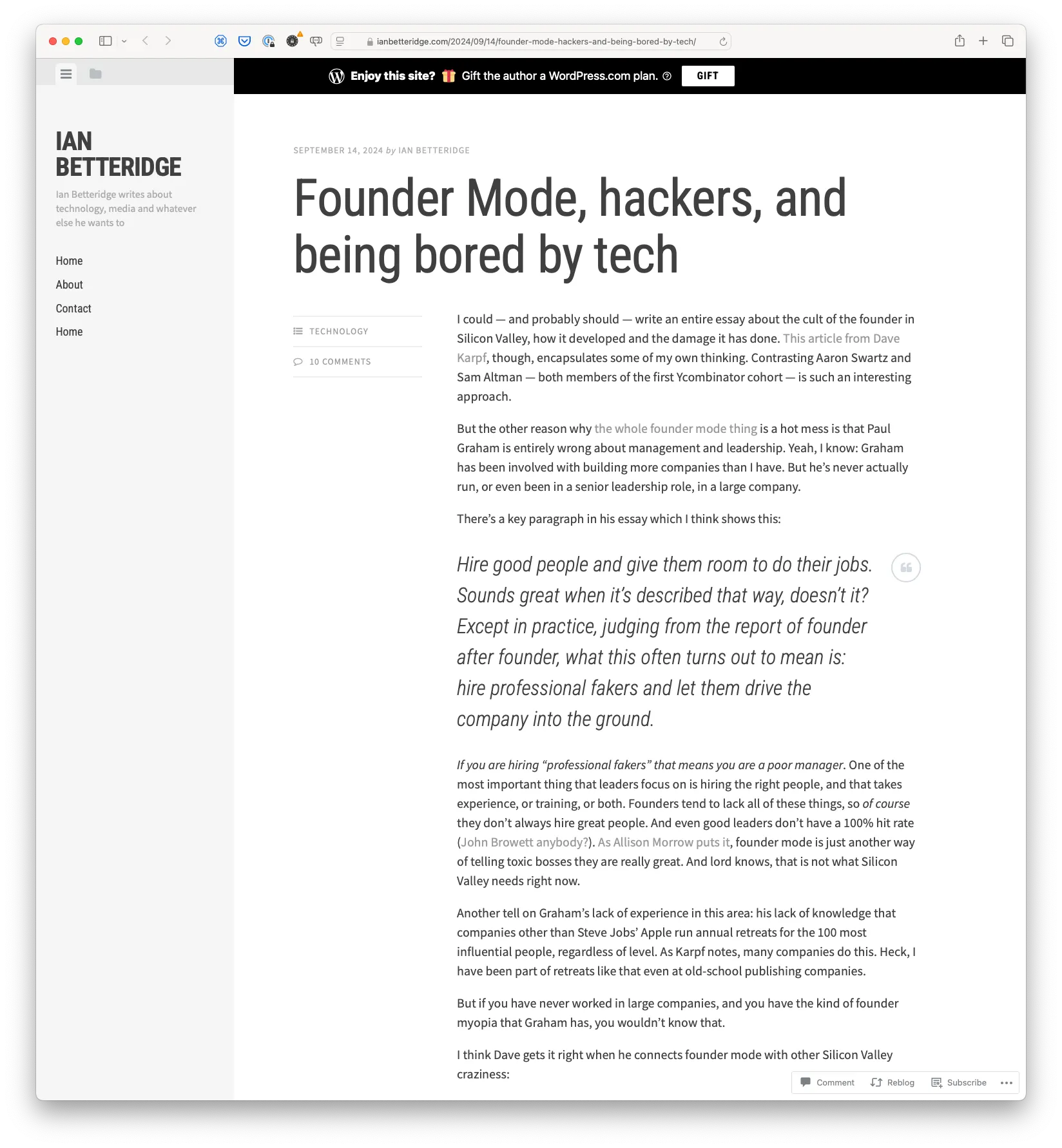
Ian Betteridge critiques the prevailing 'founder mode' prevalent in Silicon Valley, characterized by figures like Paul Graham and Sam Altman, where rapid tech company growth and founder adulation are prioritized over substantial leadership and management skills. He argues that the obsession with glorified founders has pushed aside genuine innovators, the 'hackers', in favor of entrepreneurs who lack management prowess but flourish due to hype cycles. Betteridge also touches on the broader tech disillusionment, observing that many tech enthusiasts find the industry stagnant and character-driven rather than innovation-focused. He suggests that this disillusionment isn't indicative of tech itself being dull, but rather a reaction to the dominance of overconfident figures who overshadow real technological progress.

This guide emphasizes a structured and empathetic approach to onboarding new software engineers, with a focus on creating a supportive environment to avoid common pitfalls such as feeling lost or overwhelmed. The article highlights the importance of having structured plans like a 30-60-90 day framework and the need for clear expectations and communication to ensure new hires feel integrated and confident. By addressing both known and unknown challenges, and offering emotional support and clarity around roles, the onboarding process can significantly enhance a new hire’s experience and productivity.
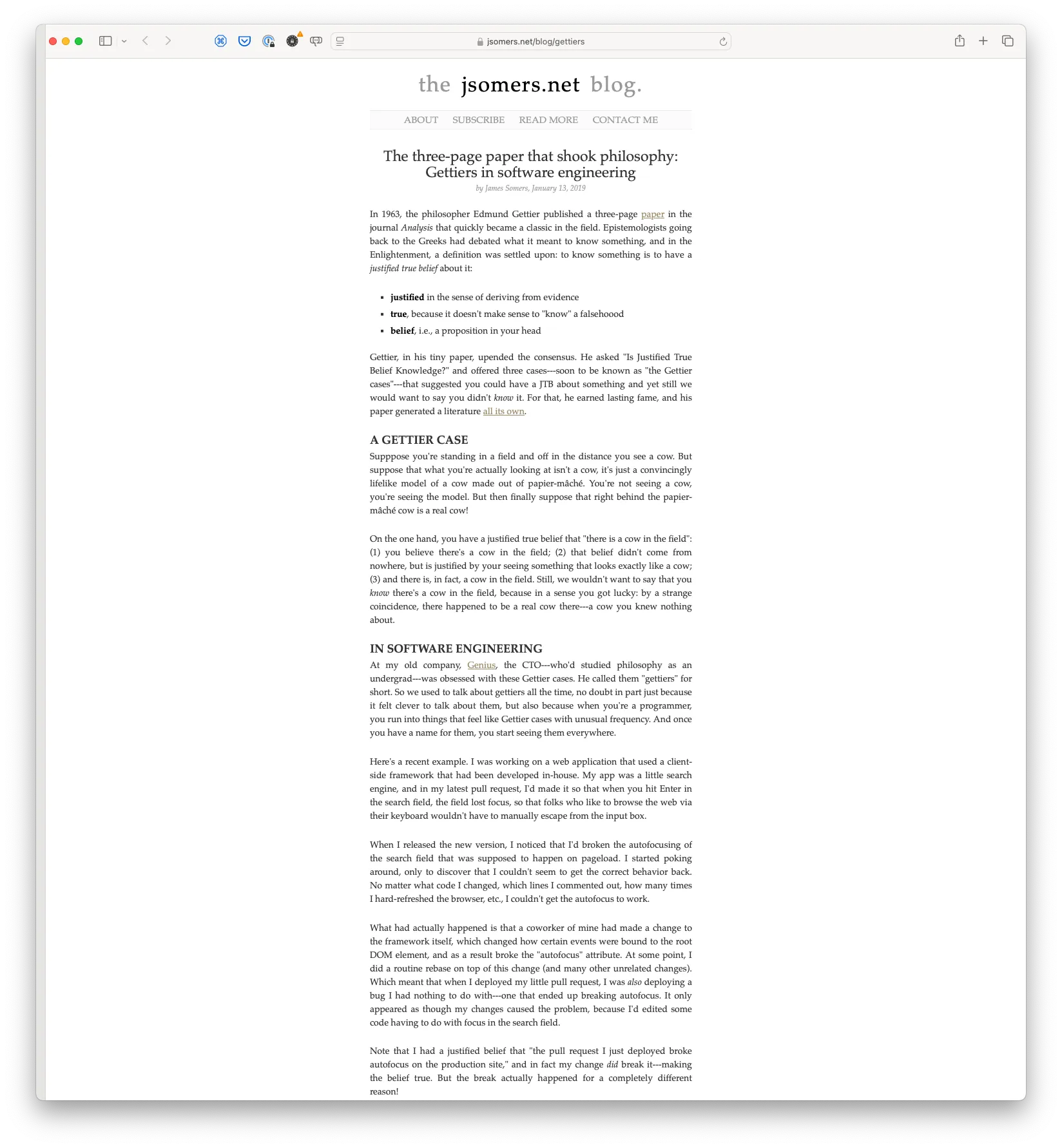
In 1963, philosopher Edmund Gettier published a paper challenging the established definition of knowledge as justified true belief (JTB). His examples, known as Gettier cases, show scenarios where one can have a justified true belief but still not truly 'know' something. This philosophical idea has intriguing parallels in software engineering, as programmers frequently encounter situations where their code appears to produce certain effects, but the real cause lies elsewhere, making them think they 'know' the cause of an issue when they actually don't. Understanding Gettier cases helps develop critical thinking in solving complex software problems.
Regards,
M@
[ED: If you'd like to sign up for this content as an email, click here to join the mailing list.]
Originally published on quantumfaxmachine.com and cross-posted on Medium.
hello@matthewsinclair.com
matthewsinclair.com
bsky.app/@matthewsinclair.com
masto.ai/@matthewsinclair
medium.com/@matthewsinclair
xitter/@matthewsinclair
Was this useful?