
QFM063: Engineering Leadership Reading List - April 2025
 Source: Photo by Clark Tibbs on Unsplash
This month's Engineering Leadership Reading List explores career progression and organisational structures. Career Development: What It Really Means to be a Manager, Director, or VP critiques traditional HR leveling practices within large companies, emphasising the distinct responsibilities at each leadership tier. The article advocates for VPs to take full responsibility for their plans' success or failure rather than hiding behind group approval, positioning this accountability as preparation for potential CEO roles.
Technical excellence receives detailed examination through individual contributor perspectives. The Best Programmers I Know identifies traits that define exceptional programmers, emphasising deep tool knowledge, problem-solving skills, constant learning, and meaningful reputation building. The article advocates for practical improvements like admitting ignorance when appropriate, reading documentation thoroughly, and communicating effectively, whilst highlighting the importance of patience, coding simplicity, and helping others consistently.
AI's impact on development practices emerges as a central theme across two articles. The Post-Developer Era revisits predictions about AI replacing developers, concluding that whilst AI tools are increasingly used across the software industry, human guidance and expertise remain crucial for successful development outcomes. This connects to Claude Code: Best practices for agentic coding, which provides practical guidance for integrating Claude into development workflows through special 'CLAUDE.md' files that document essential commands, code style guidelines, and setup instructions.
Project management and AI integration also receive attention. AI Architecture and Scaffolding with Claude Code demonstrates methodologies for planning and starting AI development projects, using templates to define business context, application purpose, and desired outcomes. The approach leverages automated scripts and detailed PLAN.md structures to improve project kick-off processes whilst reducing manual intervention.
Business strategy considerations appear in How to Structure a B2B Marketplace Venture, which examines strategic considerations for companies launching business-to-business marketplaces. The article explores organisational structure choices between in-house development and separate entities, drawing insights from a survey of 200 B2B marketplaces that reveals over half operate as pure startups rather than corporate spinoffs or internal units.
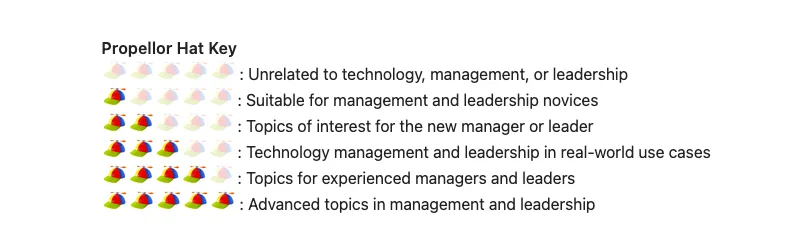
As always, the Quantum Fax Machine Propellor Hat Key will guide your browsing. Enjoy!
Links
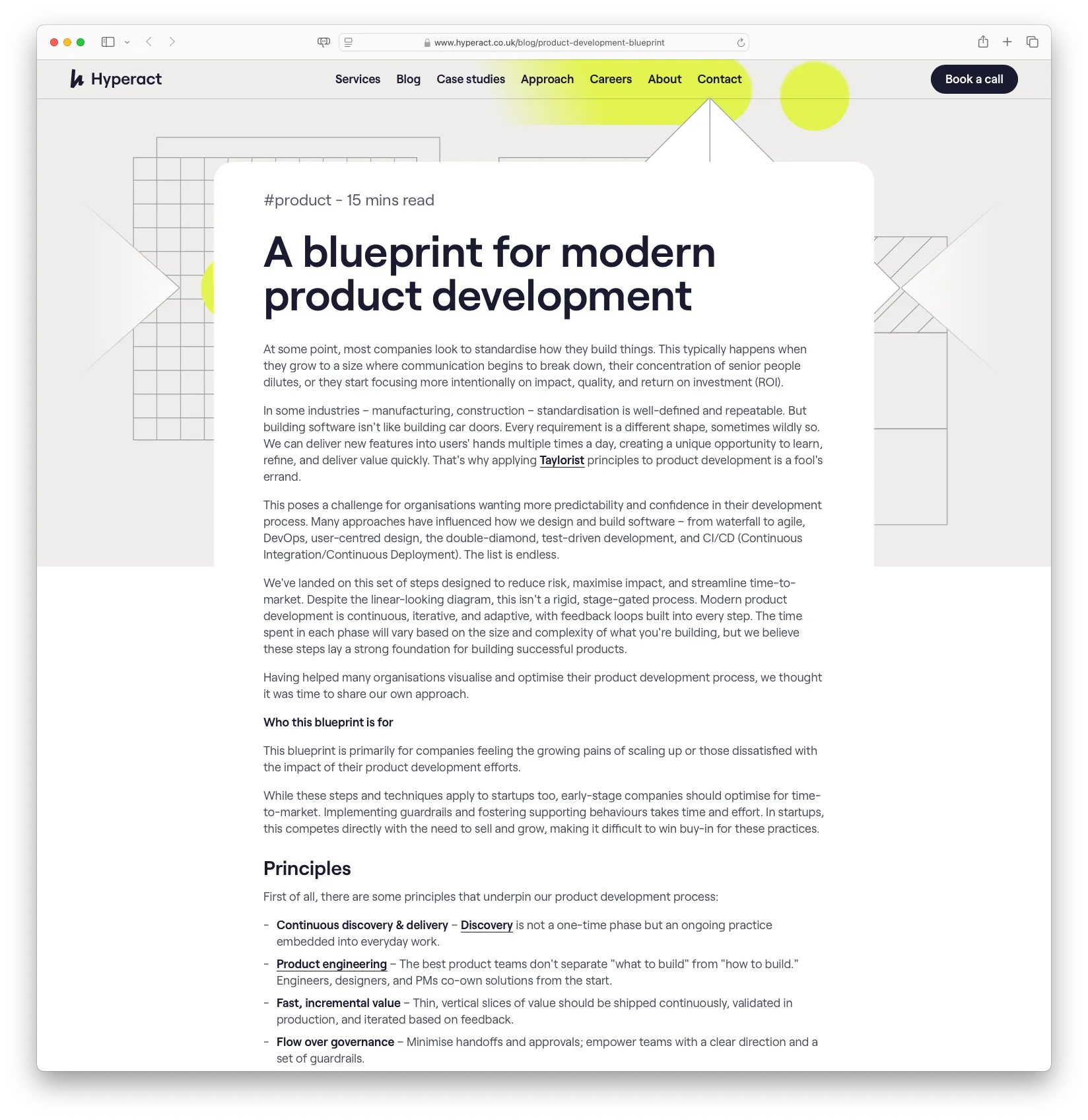
The article discusses the challenges and best practices of modern product development, focusing on the importance of standardization as companies grow. It argues against the Taylorist approach for software, since modern development needs to be adaptive and iterative. The blueprint offered provides a process involving capture, discovery, delivery, and rollout, aimed primarily at scale-ups and enterprises to enhance predictability and ROI. The principles of continuous discovery and delivery, minimizing governance, and relying on evidence over opinions are emphasized, all within a flexible structure to accommodate varying scales of solution complexity.
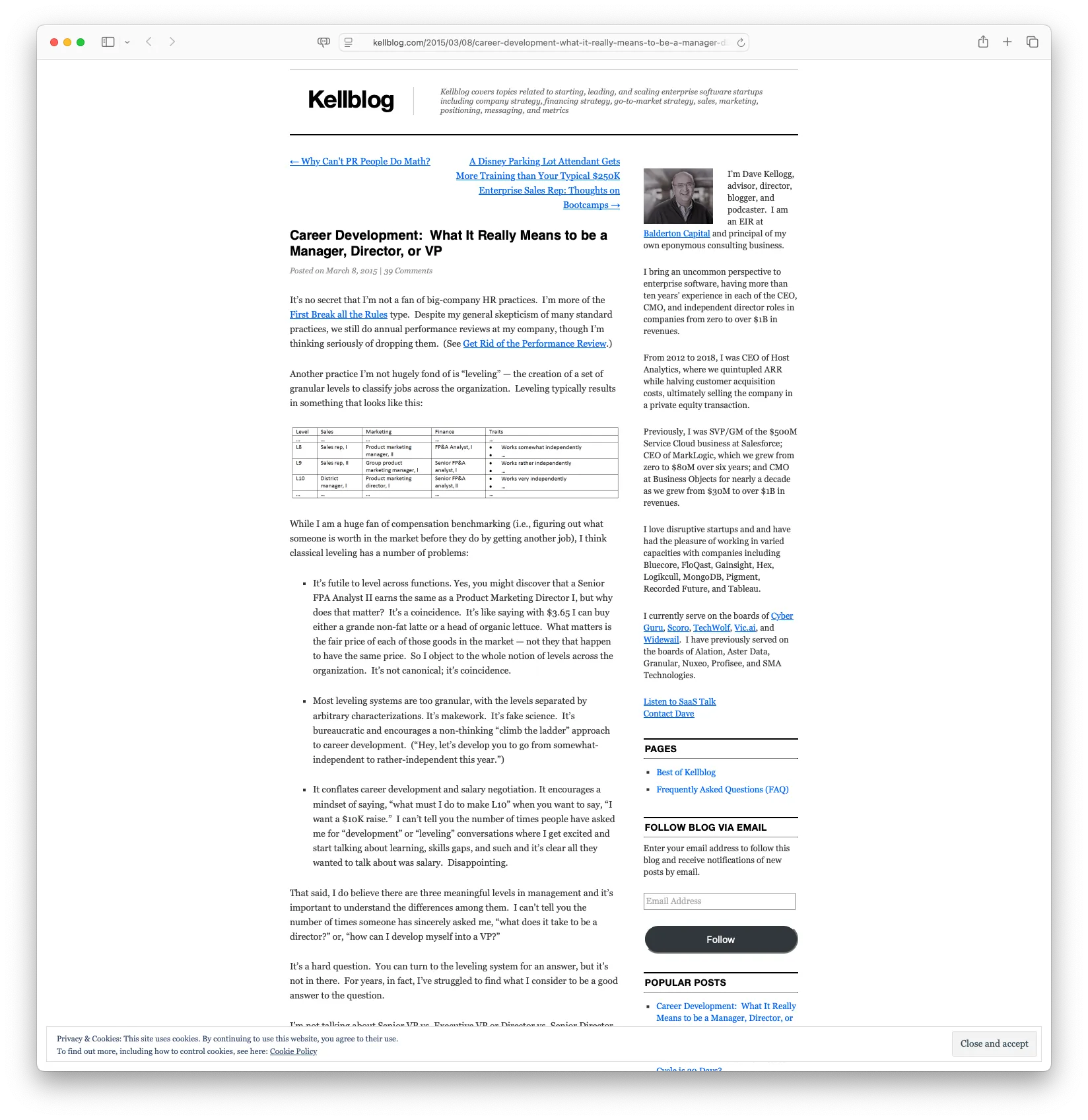
The article discusses the nuances of career development within management roles such as Manager, Director, and VP. It critiques standard big-company HR practices like leveling, arguing for a more results-oriented and realistic approach to management roles and responsibilities. The author emphasizes the importance of accountability and strategic planning at each managerial level, advising against blindly following hierarchical leveling systems in favor of meaningful career progression.
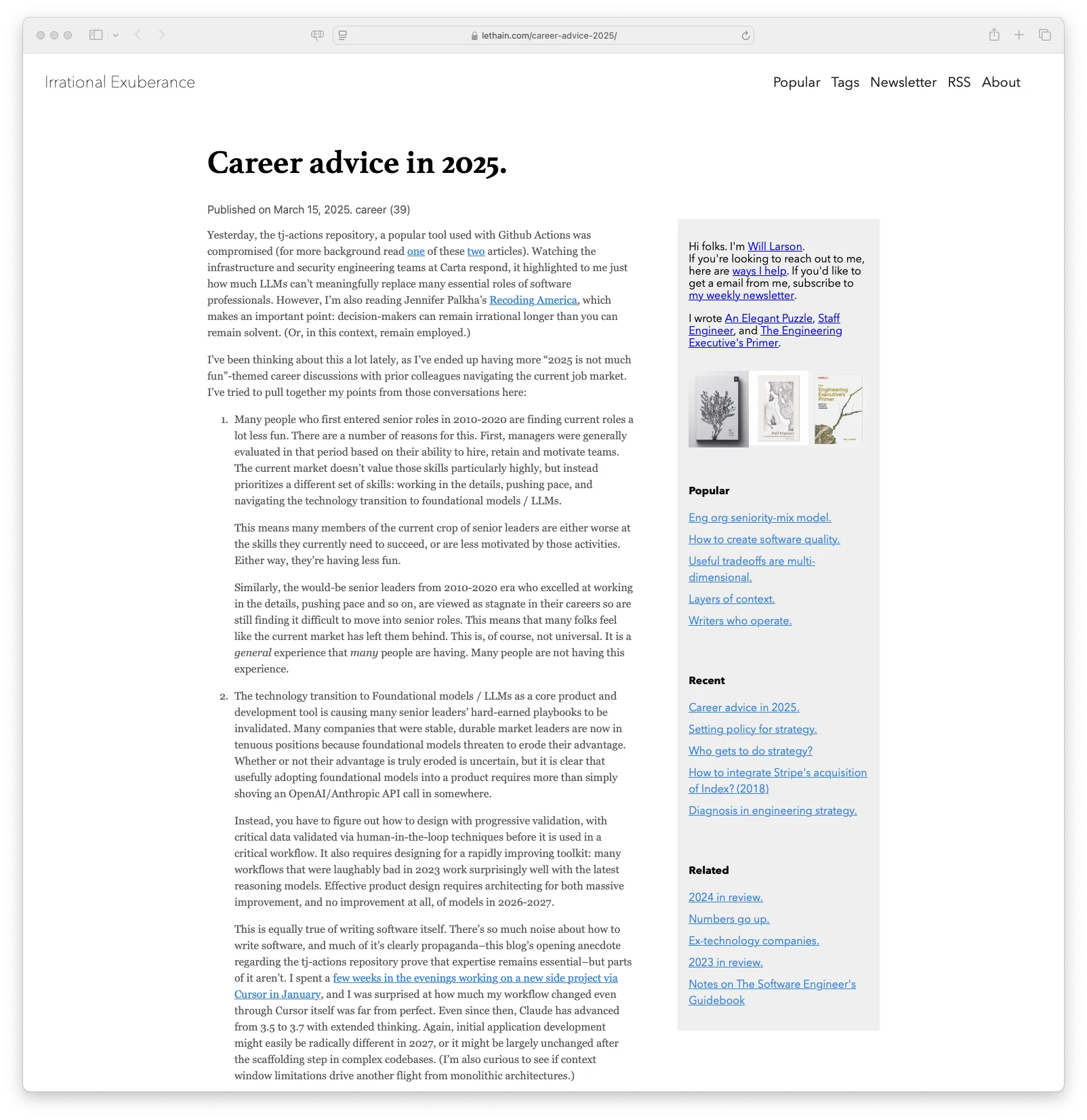
In this complex landscape of 2025, technology transitions and market shifts are challenging careers, particularly in tech leadership roles. The shift towards foundational models and AI is invalidating many traditional management playbooks, leading to less enthusiasm among leaders who thrived under previous paradigms focused on team growth and motivation. As valuations and funding become more stringent, career paths have become unpredictable, especially outside AI-focused enterprises, resulting in tough competition and limited opportunities.
Stanford University offers an engaging video lecture titled 'CS109 Probability for Computer Scientists I Counting I 2022 I Lecture 1'. This video is designed for computer science students to gain a foundational understanding of probability and counting principles. Led by Assistant Professor Chris Piech, the lecture provides a comprehensive introduction to the subject, aligning with the course's curriculum available on Stanford's website.
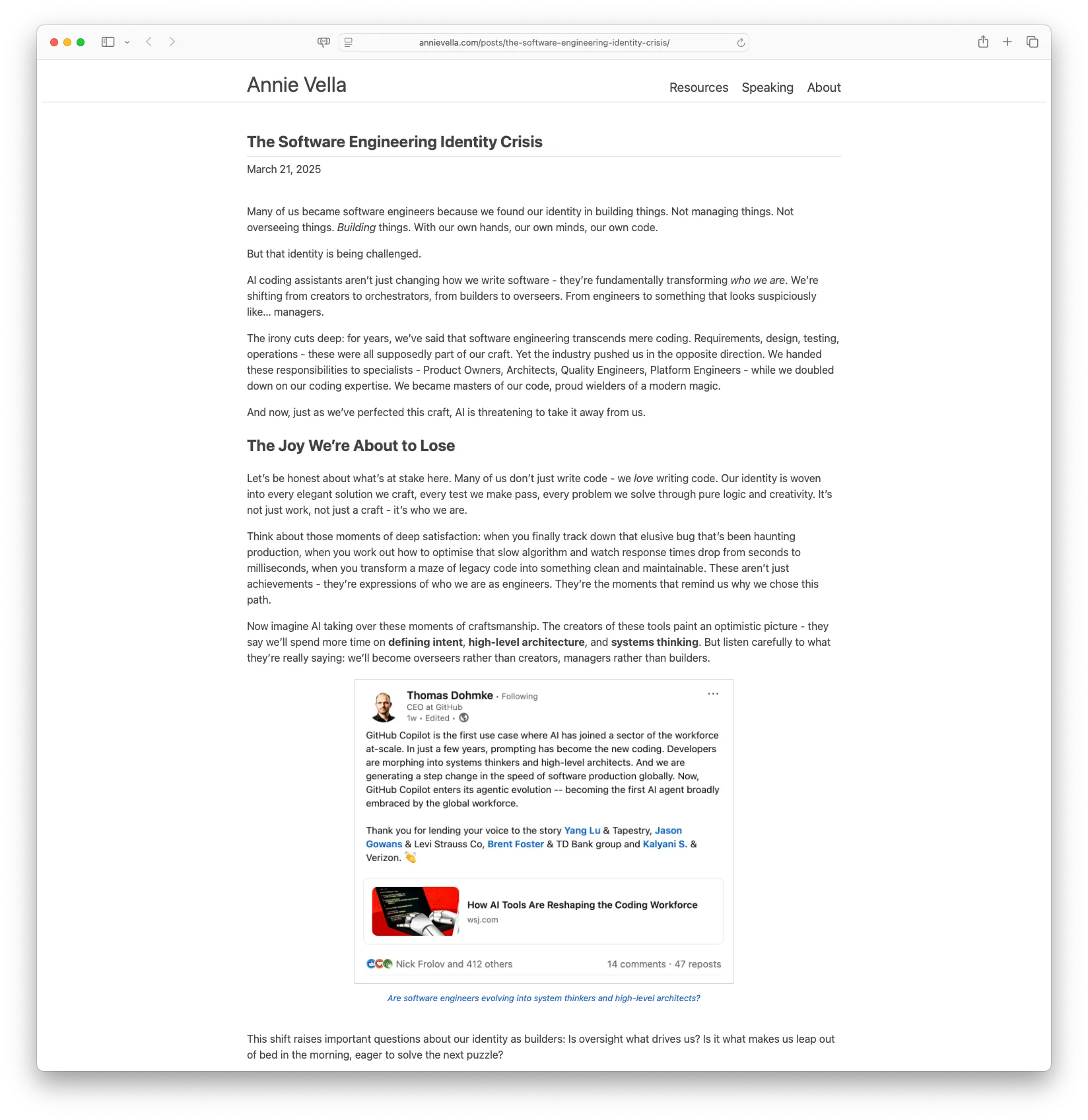
Annie Vella explores the evolving identity of software engineers in an era dominated by AI coding assistants. The article discusses how the use of AI is transforming engineers from creators to overseers, raising fundamental questions about professional identity and satisfaction. As AI takes on more coding tasks, engineers need to focus on higher-level design and communication skills, challenging the traditional craft of coding and urging adaptation to maintain their essence as builders.
The article explores the dichotomy of using LLMs in software engineering, highlighting both productivity gains and the risk of dependence that can limit knowledge retention. Over-reliance on tools like GitHub's Copilot may lead to "Copilot Lag," where engineers become passive, awaiting direction from AI rather than engaging in the problem-solving process themselves. While LLMs serve as powerful aids when used judiciously; they should not replace the foundational understanding necessary for true innovation and skill development.
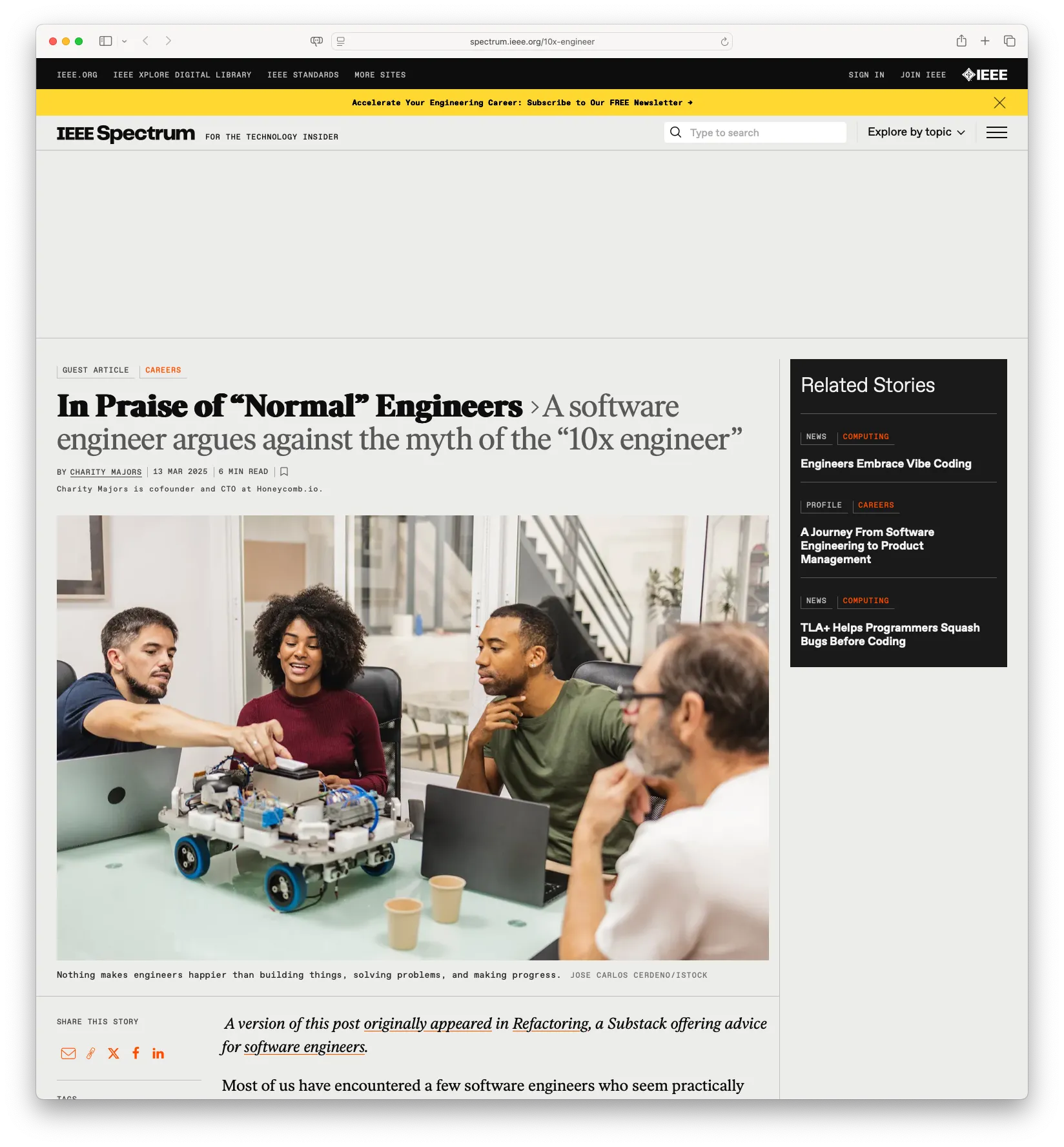
The article critiques the myth of the '10x engineer', who is solely credited with bringing tremendous value to tech projects. It challenges the practicality of measuring productivity and emphasizes the importance of team collaboration over individual accomplishments. The author argues that great engineering teams are those where 'normal' engineers can perform well and have a consistent impact, without relying solely on exceptional talents. It suggests that organizations that empower average engineers often produce world-class engineers.
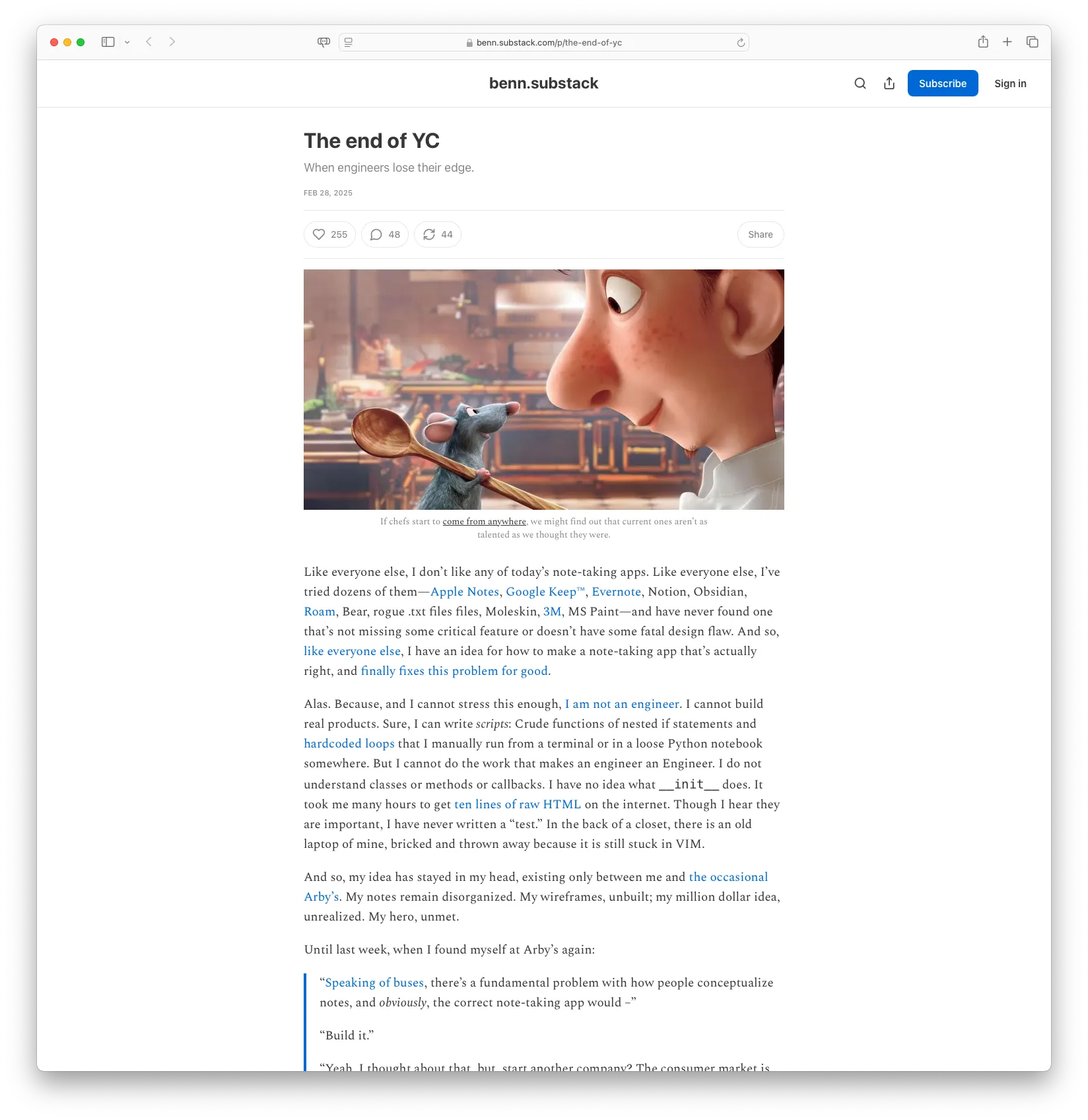
AI-driven development tools have reduced the barriers to building software, allowing non-engineers to rapidly prototype and test ideas without traditional technical expertise. This shift challenges Silicon Valley’s model of favouring technologists over domain experts, potentially leading to a future where product success is determined more by deep industry knowledge and taste than engineering skill.
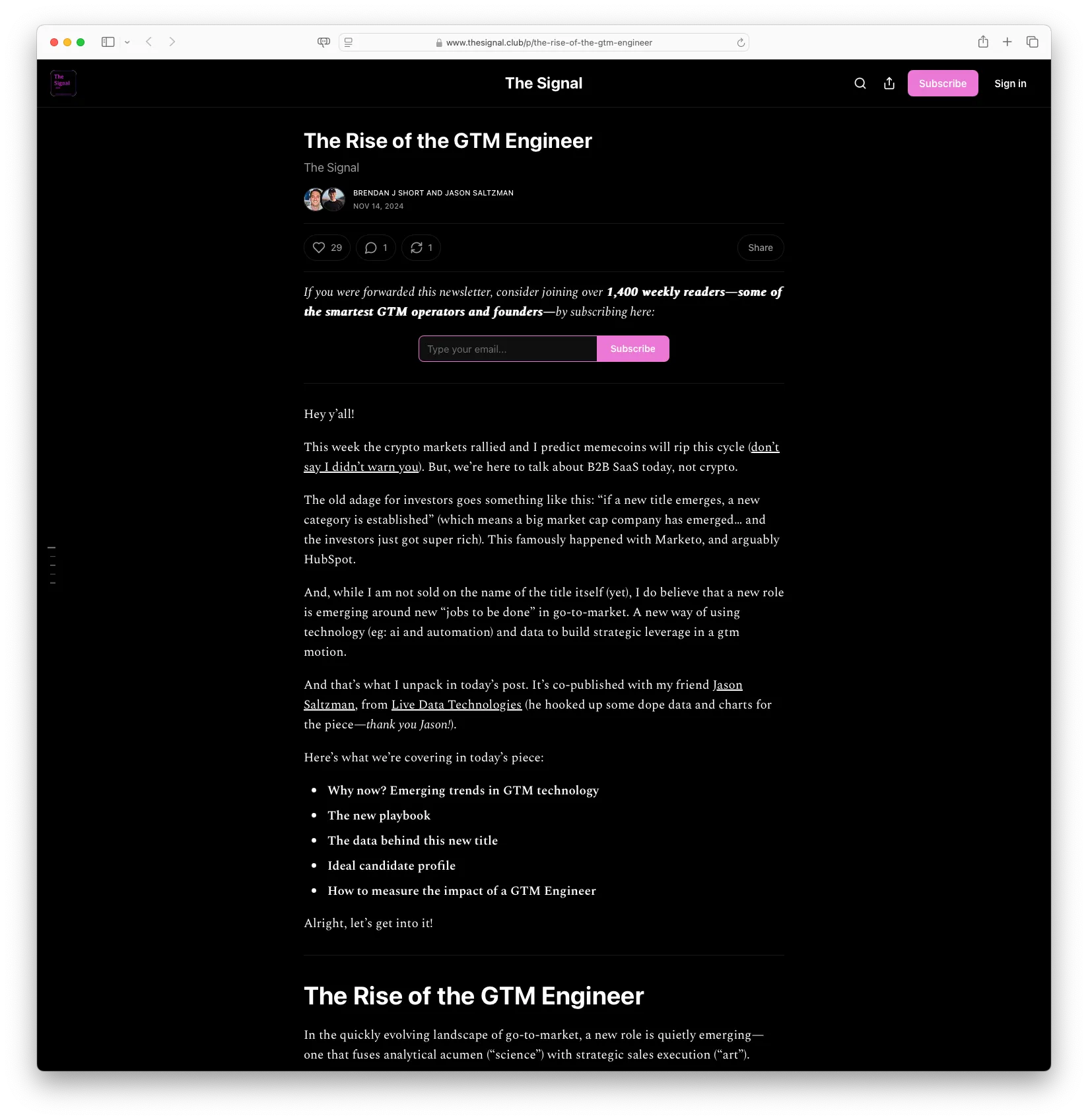
Go-to-market (GTM) Engineers are emerging as a crucial role in adapting to the rapidly evolving landscape of technology-driven sales and marketing. This article, co-published by Brendan J Short and Jason Saltzman, explores the significance of this new role. GTM Engineers leverage AI, automation, and data analytics to optimize sales strategies and enhance customer engagement throughout the entire lifecycle, from lead generation to customer retention. The piece highlights major industry trends that contribute to the rise of GTM engineering, such as AI-driven personalization and sales automation, and provides insights into why this role may become integral for future business successes.
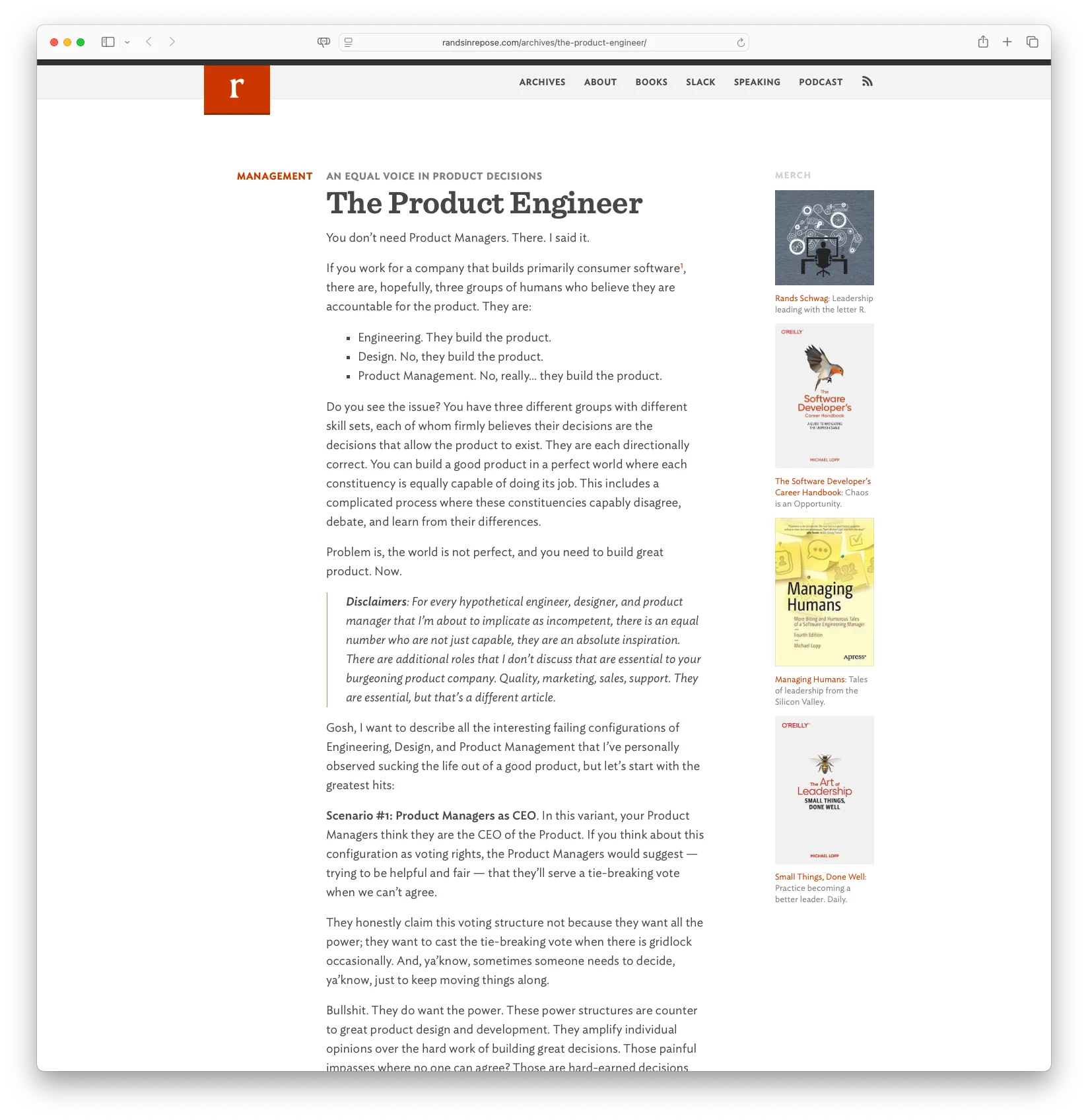
"The Product Engineer" by Rands in Repose argues against the necessity of Product Managers in consumer software companies. It highlights the power struggle between Engineering, Design, and Product Management, advocating for a more integrated role for engineers, designers, and a new concept of a Product Engineer who embodies both technical knowledge and product vision. The article discusses common pitfalls in product development such as 'Product Managers as CEOs' and 'Uncompromising Designers' and proposes that builders should have a significant voice in product decisions.
Regards,
M@
[ED: If you'd like to sign up for this content as an email, click here to join the mailing list.]
Originally published on quantumfaxmachine.com and cross-posted on Medium.
hello@matthewsinclair.com | matthewsinclair.com | bsky.app/@matthewsinclair.com | masto.ai/@matthewsinclair | medium.com/@matthewsinclair | xitter/@matthewsinclair |
Was this useful?