
QFM071: Engineering Leadership Reading List - June 2025
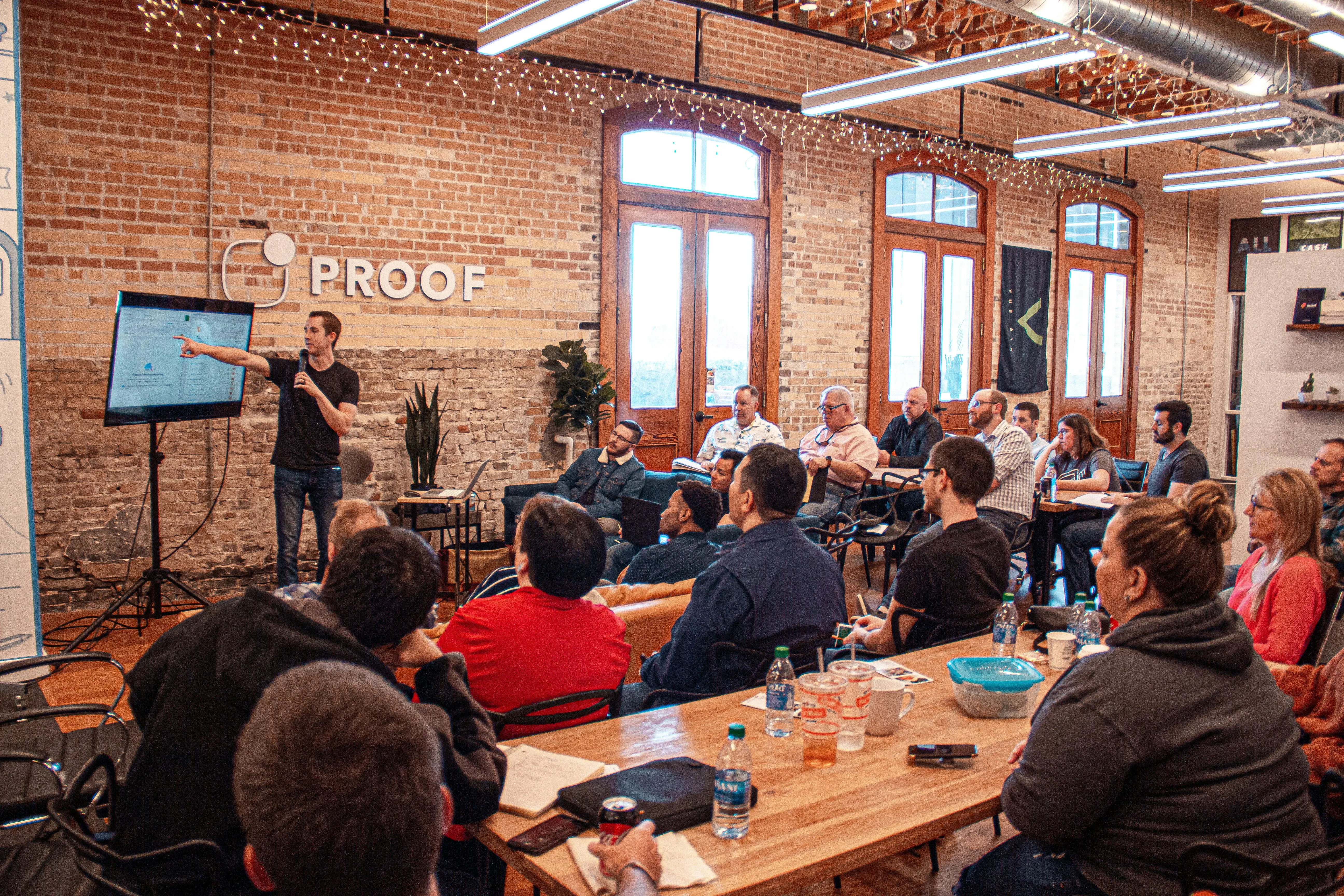 Source: Photo by Marvin Meyer on Unsplash
This month's Engineering Leadership Reading List examines strategy and organisational patterns. Why Most Tech Strategies Fail diagnoses common pitfalls. Stop Team Topologies challenges the popular framework's applicability.
Designing an Engineering Strategy provides practical guidance, while Silicon Valley's Tiny Team Era Is Here explores how AI is reshaping team structures.
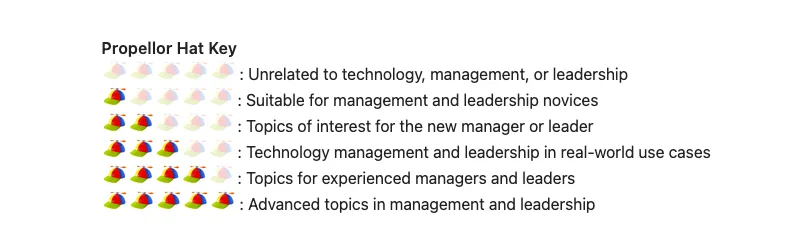
As always, the Quantum Fax Machine Propellor Hat Key will guide your browsing. Enjoy!
Links
Tech strategies fail most commonly when they are too generic—applicable across industries and company sizes rather than tailored to specific organizational needs—creating an illusion of direction while leaving teams flying blind. A second critical failure pattern is cargo culting, where leaders ritualistically adopt strategic elements (like declaring themselves "AI-first") without understanding the underlying problems they're meant to solve or whether they're appropriate for their specific context. These failures result from not using strategies as concrete decision-making tools that differentiate an organization's direction, instead treating them as generic best practices that rarely deliver competitive advantage.
Effective managers become force multipliers by amplifying their team's capabilities through accumulated small interventions rather than personal heroics or grand initiatives—targeted coaching in 1:1s, empowering junior engineers to lead, protecting team focus from stakeholder distractions, and delegating real decisions all compound over time to shift how people see themselves and their work. This approach mirrors British Cycling's marginal gains strategy, where 1% improvements across dozens of areas produced exponential results, and requires managers to be catalysts fine-tuning the engine rather than visible heroes grabbing the wheel.
AI-generated job applications have overwhelmed the hiring process, with LinkedIn processing 11,000 submissions per minute—a 45 percent increase from last year—as candidates use AI tools to mass-produce customized résumés with minimal effort. This has triggered an escalating arms race where employers deploy their own AI screening tools while job seekers use AI to generate interview answers, creating a bot-versus-bot standoff that obscures genuinely qualified candidates amid the noise. The disruption represents a fundamental shift from earlier résumé technologies that improved efficiency for individual documents to AI's capacity to generate hundreds of applications automatically, forcing companies like Anthropic to publicly discourage AI use in their own hiring processes.
ADEPT is a lightweight product discovery framework that evaluates ideas across five dimensions—Attractive, Doable, Effective, Practical, and Targetable—by rating each factor's confidence level and backing it with evidence quality, from hunches to statistical proof. The method combats common pitfalls like assumption blindness and false consensus by forcing teams to distinguish between what they think they know versus what they actually know, fitting the entire assessment on a single sticky note within minutes.
Engineering Strategy is a coherent set of analyses and actions that address high-stakes business problems from an engineering perspective, structured around three core elements: diagnosis of the problem, a guiding policy, and coherent action. Effective engineering strategies must be grounded in business problems rather than technical concerns alone—such as reducing time-to-market, scaling infrastructure, enabling remote work, or resolving architectural bottlenecks—and should be evaluated by their impact on business outcomes, not technical merit in isolation.
Builder.ai did not use 700 engineers to fake AI capabilities as widely reported; instead, the startup built a legitimate code generator using Claude and other large language models. The company's actual failure appears to stem from wasting resources building redundant internal tools like Slack, Zoom, and JIRA clones rather than leveraging existing solutions, compounded by alleged accounting fraud.
The author argues that while Team Topologies provides a valuable practical framework for organizing teams, blindly applying its prescriptions ignores context-specific organizational challenges highlighted by the Cynefin framework—complex problems require emergent solutions through probing and sensing, not reused templates. Rather than abandoning product thinking in favor of stream-aligned teams, the author advocates conceptualizing each team's work as addressing a specific product with defined users, jobs-to-be-done, and value propositions, which creates clearer ownership, priorities, and user-centric outcomes than pure flow optimization.
Regards,
M@
[ED: If you'd like to sign up for this content as an email, click here to join the mailing list.]
Originally published on quantumfaxmachine.com and cross-posted on Medium.
hello@matthewsinclair.com | matthewsinclair.com | bsky.app/@matthewsinclair.com | masto.ai/@matthewsinclair | medium.com/@matthewsinclair | xitter/@matthewsinclair
Was this useful?