
QFM077: Machine Intelligence Reading List - August 2025
 Source: Photo by Kevin Ku on Unsplash
This month's Machine Intelligence Reading List features Claude Code workflows and agentic development. 6 Weeks of Claude Code shares real-world experiences with the AI coding tool, while Getting Good Results from Claude Code offers practical tips for effective usage.
The collection also covers agent architecture, with Best Practices for Building Agentic AI Systems and Building AI Products in the Probabilistic Era exploring how to build robust autonomous systems.
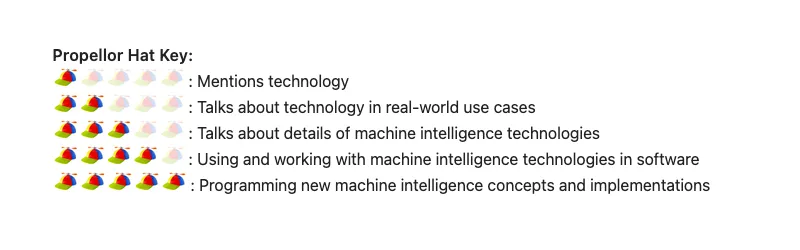
As always, the Quantum Fax Machine Propellor Hat Key will guide your browsing. Enjoy!
Links
Claude Code enables rapid prototyping of programming projects through LLM-assisted development, with the author successfully building ~12 programs by following structured practices: writing clear project specifications upfront, maintaining documentation of project structure and build processes, requesting self-code-review from the agent, and adhering to a personal development guide emphasizing incremental progress, test-driven development, and pragmatic simplicity. Critical to this workflow is manual review and testing of all AI-generated code, as the developer maintains ultimate responsibility for code quality and correctness regardless of how it was produced.
Open Lovable is an AI-powered tool that automatically converts any website into a modern React application by using the Firecrawl web scraping API combined with language models (supporting Gemini, Anthropic, OpenAI, or Groq). The system can deploy generated apps to either Vercel or E2B sandboxes, enabling rapid website cloning and recreation through an AI chat interface built with Next.js.
Coding agents are fundamentally simple—just 300 lines of code running a loop that repeatedly calls an LLM—yet building one yourself is essential 2025 technical knowledge that separates AI consumers from AI producers who can automate tasks. Understanding agent architecture and mechanics is becoming a baseline employment expectation, shifting the industry standard alongside the normalization of concurrent AI-assisted work where agents can execute tasks while you're away from your computer.
UI-TARS-desktop is ByteDance's open-source multimodal AI agent stack comprising Agent TARS (a CLI and Web UI for terminal/browser/computer automation) and UI-TARS Desktop (a native desktop application for local and remote computer/browser control). The system leverages cutting-edge multimodal LLMs integrated with MCP tools to enable human-like task completion through GUI agents and vision capabilities, with recent updates adding streaming support, runtime analytics, and isolated execution environments.
As AI tools democratize access to expertise, the critical challenge shifts from gaining knowledge to exercising judgment about which outputs are reliable—a pattern mirrored historically by technologies like typing, which became commoditized until the underlying skill (writing) separated from the tool. Each generation's baseline competency moves up a layer of abstraction, making previous "essential" knowledge optional, while broader access paradoxically increases both usage and the proportion of poor-quality work, creating a need for new filtering mechanisms to distinguish genuine expertise from plausible-sounding output.
Claude Code IDE for Emacs provides bidirectional integration between Claude AI and Emacs through the Model Context Protocol (MCP), enabling Claude to access Emacs' native capabilities including LSP, tree-sitter, project management, and custom Elisp functions rather than merely wrapping the CLI. The package implements MCP tools that expose Emacs commands, allowing Claude to perform intelligent code navigation, project-wide searches, and context-aware assistance while maintaining awareness of the current file, buffer selection, and workspace state through Flycheck/Flymake diagnostics and diff integration.
Hunyuan-GameCraft is a diffusion-based video generation framework designed for interactive game environments that unifies keyboard and mouse inputs into a shared camera representation space to enable fine-grained action control. The model addresses limitations in dynamics, consistency, and efficiency through a hybrid history-conditioned training strategy and model distillation, trained on over one million gameplay recordings across 100+ AAA games and fine-tuned on synthetic annotated data to improve visual fidelity and controllability. Extensive comparisons demonstrate superior performance in control accuracy, long-term consistency, and dynamic generation compared to existing interactive video generation methods.
The author describes a workflow for using Claude Code effectively by having it generate a plan document as a single source of truth before implementation, rather than relying on back-and-forth conversation exchanges that can become contradictory and exceed context limits. This plan-first approach enables a collaborative design process where the author can validate architectural decisions and iterate on implementation strategy before coding begins, similar to discussing designs with a colleague and catching conceptual errors early.
Claude Code has fundamentally changed the productivity model for individual developers by decoupling code generation from line-by-line writing, enabling the author to complete years' worth of technical debt and major migrations (TypeScript conversion, framework replacements, monorepo migration, etc.) as background projects without sacrificing primary work responsibilities. The author frames this shift as analogous to photography's displacement of hand painting—a fundamental change in how programming work is conceptualized and executed—while acknowledging both the transformative benefits and broader societal concerns around LLM integration in software development.
Production agentic AI systems work best with a two-tier architecture where primary agents maintain context and orchestrate work, while stateless subagents execute single tasks in complete isolation without memory or conversation history. This design enables parallel execution, predictable behavior, and simple caching by treating each subagent call as a pure function with deterministic inputs and outputs. Task decomposition should use vertical sequencing for dependent operations and horizontal parallelization for independent work, with mixed approaches combining both strategies for complex workflows like multi-phase feedback analysis.
Claude Code's output styles modify the system prompt to transform Claude into different types of agents while preserving core capabilities like script execution and file handling. Three built-in styles exist: Default (software engineering tasks), Explanatory (educational insights during coding), and Learning (collaborative mode with human code contributions). Custom output styles can be created as Markdown files with frontmatter metadata and saved at user or project level, with options to retain or exclude coding-specific instructions.
This paper proposes a set of principled design patterns that provide provable resistance to prompt injection attacks on LLM-based AI agents, systematically analyzing security-utility trade-offs and demonstrating real-world applicability through case studies. Prompt injection represents a critical vulnerability in agents with tool access or handling sensitive information, as attackers can exploit the agent's reliance on natural language inputs to manipulate behavior. The work establishes formal frameworks for building secure agents that maintain functionality while defending against these attacks.
The tech industry, built on deterministic software where specific inputs reliably produce specific outputs, is fundamentally shifting as AI systems operate probabilistically, producing statistical distributions rather than guaranteed results. This transition from classical deterministic functions to probabilistic software requires entirely new frameworks for design, engineering, and organizational management—similar to physics' shift from Newtonian mechanics to quantum mechanics. The existing playbooks for building and scaling digital products have become obsolete, forcing companies to develop novel approaches to building, measuring, and deploying AI-powered systems.
Regards,
M@
[ED: If you'd like to sign up for this content as an email, click here to join the mailing list.]
Originally published on quantumfaxmachine.com and cross-posted on Medium.
hello@matthewsinclair.com | matthewsinclair.com | bsky.app/@matthewsinclair.com | masto.ai/@matthewsinclair | medium.com/@matthewsinclair | xitter/@matthewsinclair
Was this useful?