
QFM081: Machine Intelligence Reading List - September 2025
 Source: Photo by Joshua Sortino on Unsplash
This month's Machine Intelligence Reading List focuses heavily on context engineering for AI agents. Both Anthropic's Effective Context Engineering for AI Agents and Manus's lessons from building their agent share practical insights on building robust AI systems.
The collection also covers cognitive models and commerce, with The Periodic Table of Cognition exploring frameworks for understanding intelligence, and Buy It in ChatGPT announcing instant checkout features.
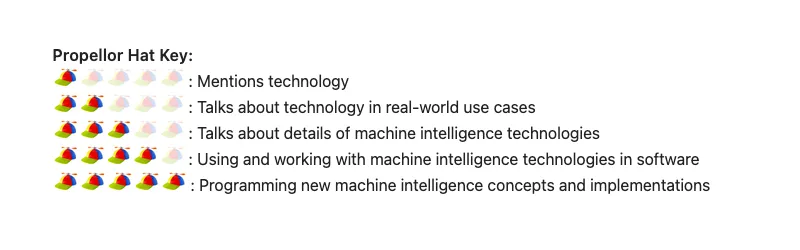
As always, the Quantum Fax Machine Propellor Hat Key will guide your browsing. Enjoy!
Links
Manus adopted context engineering over end-to-end model training because in-context learning enables rapid iteration cycles (hours instead of weeks) and keeps the product independent of underlying model improvements. The team discovered that KV-cache hit rate is the critical production metric for AI agents due to their unique token ratio (100:1 input-to-output for Manus), where maintaining stable prompt prefixes can yield 10x cost savings compared to uncached inference. This approach required iterative architecture refinement through empirical experimentation, which they humorously term "Stochastic Gradient Descent."
OpenAI is launching Instant Checkout in ChatGPT, enabling U.S. users to purchase directly from Etsy sellers and soon from over a million Shopify merchants without leaving the chat interface. The feature is powered by the Agentic Commerce Protocol, an open standard co-developed with Stripe that allows AI agents to facilitate purchases while merchants retain full control over payments, customer relationships, and fulfillment. OpenAI is open-sourcing the protocol so other merchants and developers can build integrations, with multi-item carts and regional expansion planned for the future.
ccstatusline is a highly customizable statusline formatter for Claude Code CLI that displays model information, git branch, token usage, and system metrics in the terminal with powerline support and multiple themes. Recent updates (v2.0.26-v2.0.29) added features including memory usage widgets, git command refactoring, Windows UTF-8 support, session name display, and performance optimizations like block timer caching to reduce JSONL parsing overhead. The project is actively maintained with 4.3k stars and includes comprehensive documentation, test coverage, and configuration options accessible through a terminal UI editor.
Traditional workflow automation with rigid trigger-and-step chains is being replaced by goal-driven AI agencies that reason about objectives and adapt dynamically when conditions change, shifting the engineering burden from maintaining brittle diagrams to building well-documented tools and protocols. AI agencies operate on three technical layers—reasoning runtimes (frameworks like AutoGen), protocol substrates for agent communication (MCP, A2A), and durable infrastructure (Kubernetes, Temporal)—while requiring observable evaluation mechanisms and reusable component libraries to function reliably in enterprise environments.
The author draws a historical parallel between early electricity research and contemporary AI development, noting that pioneering scientists like Newton and Faraday held fundamentally incorrect theories about electricity despite making practical discoveries, and similarly argues that today's AI researchers likely harbor profound misconceptions about intelligence itself. The key insight is that both electricity and intelligence are far more complex and multidimensional phenomena than commonly conceived—composed of seemingly contradictory properties (particles/waves, fields/flows)—and this conceptual confusion about their fundamental nature impedes progress even as practical applications advance ahead of theoretical understanding.
Context engineering—strategically curating and managing the tokens available to language models during inference—is replacing prompt engineering as the core discipline for building effective AI agents, because LLMs exhibit context rot and finite attention budgets that degrade performance as context length increases. Rather than focusing solely on writing optimal prompts, engineers must now iteratively manage all contextual information (system instructions, tool definitions, external data, message history) across multiple inference turns to maintain the agent's ability to focus and recall relevant information. This shift reflects the transition from single-task prompting to building multi-turn agents that must continuously refine what information passes to the model from an expanding universe of potentially relevant data.
Regards,
M@
[ED: If you'd like to sign up for this content as an email, click here to join the mailing list.]
Originally published on quantumfaxmachine.com and cross-posted on Medium.
hello@matthewsinclair.com | matthewsinclair.com | bsky.app/@matthewsinclair.com | masto.ai/@matthewsinclair | medium.com/@matthewsinclair | xitter/@matthewsinclair
Was this useful?