
QFM089: Machine Intelligence Reading List - November 2025
 Source: Photo by Andrea De Santis on Unsplash
This month's Machine Intelligence Reading List explores AI consciousness and industry developments. Introducing Claude Opus 4.5 announces Anthropic's latest model, while The Case That AI Is Thinking examines philosophical arguments about machine cognition. Emergent Introspective Awareness in Large Language Models presents research on self-awareness in AI systems.
The collection also covers practical AI applications, with Knife Juggling - How We're Building a New Free AI Normal discussing sustainable AI development approaches, and AI's Dial-Up Era comparing current AI limitations to early internet experiences.
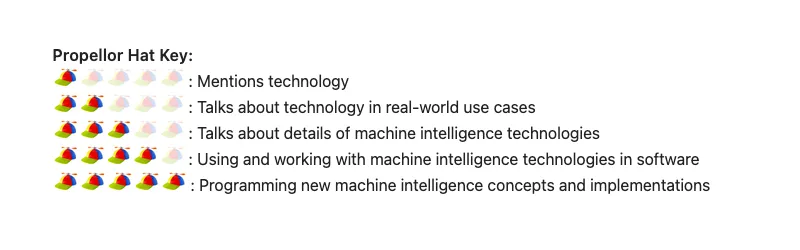
As always, the Quantum Fax Machine Propellor Hat Key will guide your browsing. Enjoy!
Links
The paper proposes a systematic method for assessing consciousness in AI systems by deriving empirically testable indicators from existing neuroscientific theories of consciousness, particularly computational functionalist theories. This approach addresses the urgent need to evaluate whether current or future AI systems possess consciousness while navigating risks of both under- and over-attribution. The authors argue that drawing implications from established consciousness theories enables meaningful progress in determining AI consciousness despite significant uncertainty in consciousness science.

A programmer describes his shift from skepticism to belief that large language models demonstrate genuine reasoning capabilities, noting that while AI generates flawed outputs in consumer applications, it excels at complex software engineering tasks—accomplishing in hours work that previously took months—suggesting the technology's transformative potential is unevenly distributed across different domains. The article argues against dismissing large language models as mere "word shuffling," positioning them as tools capable of sophisticated problem-solving despite their documented weaknesses like hallucination and brittleness.
Researchers used interpretability techniques called "concept injection" to test whether Claude models can introspect by comparing their self-reported internal states to actual neural activity patterns, finding evidence that current Claude models (particularly Opus 4 and 4.1) possess some limited introspective capability to identify injected concepts in their neural representations. While this introspective ability remains unreliable and far more limited than human introspection, the finding challenges assumptions about language model cognition and suggests that introspective capabilities may improve in more advanced models.
Generative AI serves as a critical application layer bridge between computing paradigms, enabling the transition from personal computers and smartphones to wearable and neural interfaces by providing the natural language and conversational interaction layer that these new input modalities require. Thompson traces how each major computing era (mainframes, PCs, mobile devices) emerged when new input methods paired with applications designed for those methods, and generative AI uniquely enables the shift to voice, gesture, and thought-based interactions that define the next wearable computing paradigm.
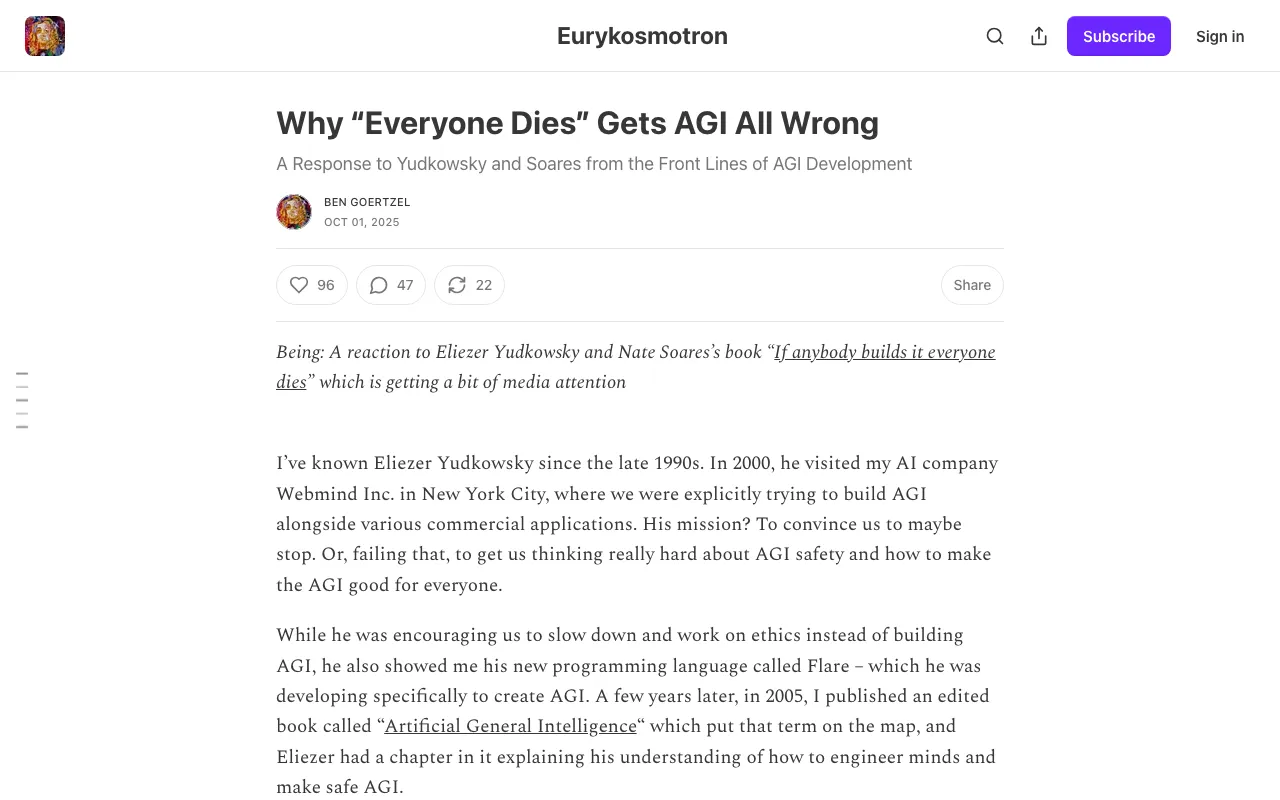
Ben Goertzel critiques Yudkowsky and Soares's recent book claiming AGI will inevitably kill everyone, arguing this represents a decades-old doomsday narrative that hasn't changed despite Goertzel's extensive practical AGI development experience versus Yudkowsky's primarily theoretical warnings. Goertzel contends that while AGI development is advancing toward the 2029 timeframe, the deterministic doom scenario ignores the complexity of building safe systems in practice and overlooks how AGI capabilities might emerge from evolving AI technologies rather than from isolated theoretical frameworks.
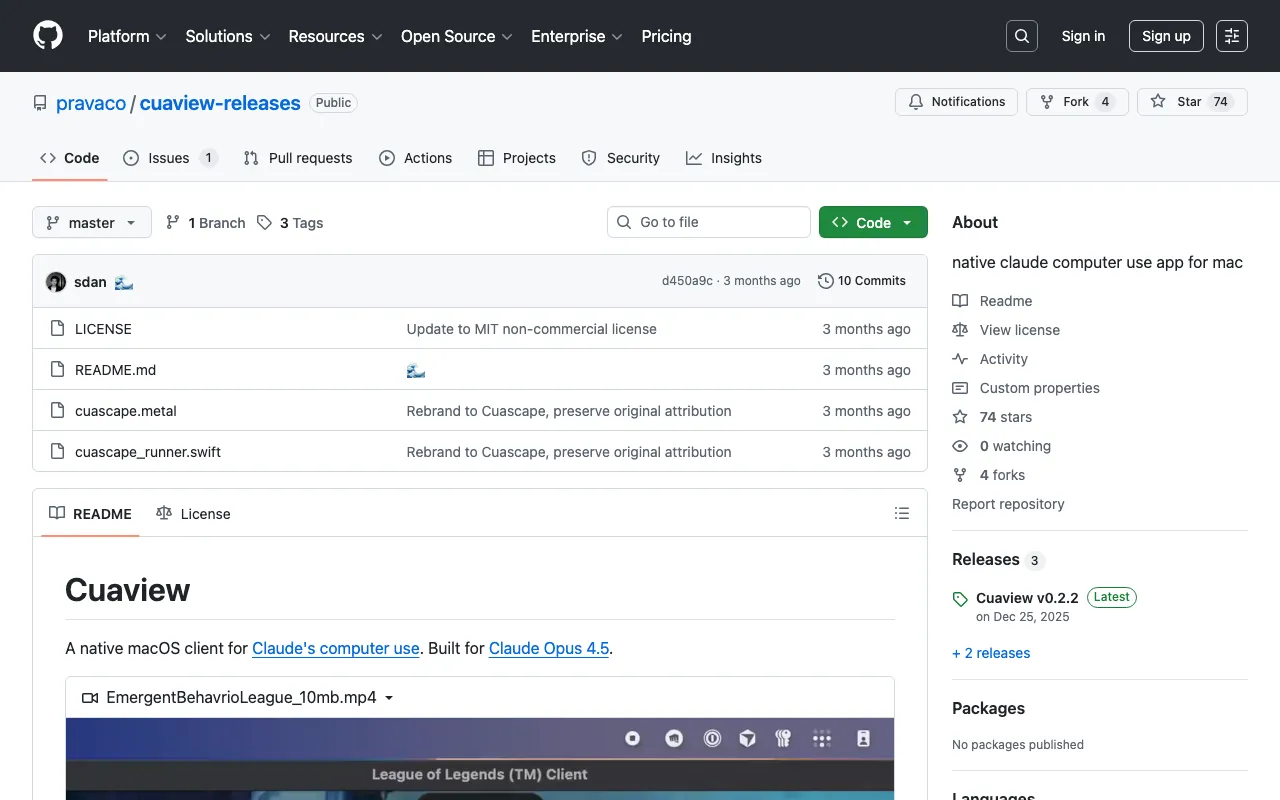
Cuaview is a native macOS application that enables Claude's computer use capability on Apple Silicon Macs, built specifically for Claude Opus 4.5. The app is written in Swift and Metal, requires Anthropic API credentials, and needs Accessibility and Screen Recording permissions to function, with releases available as signed and notarized DMG files.
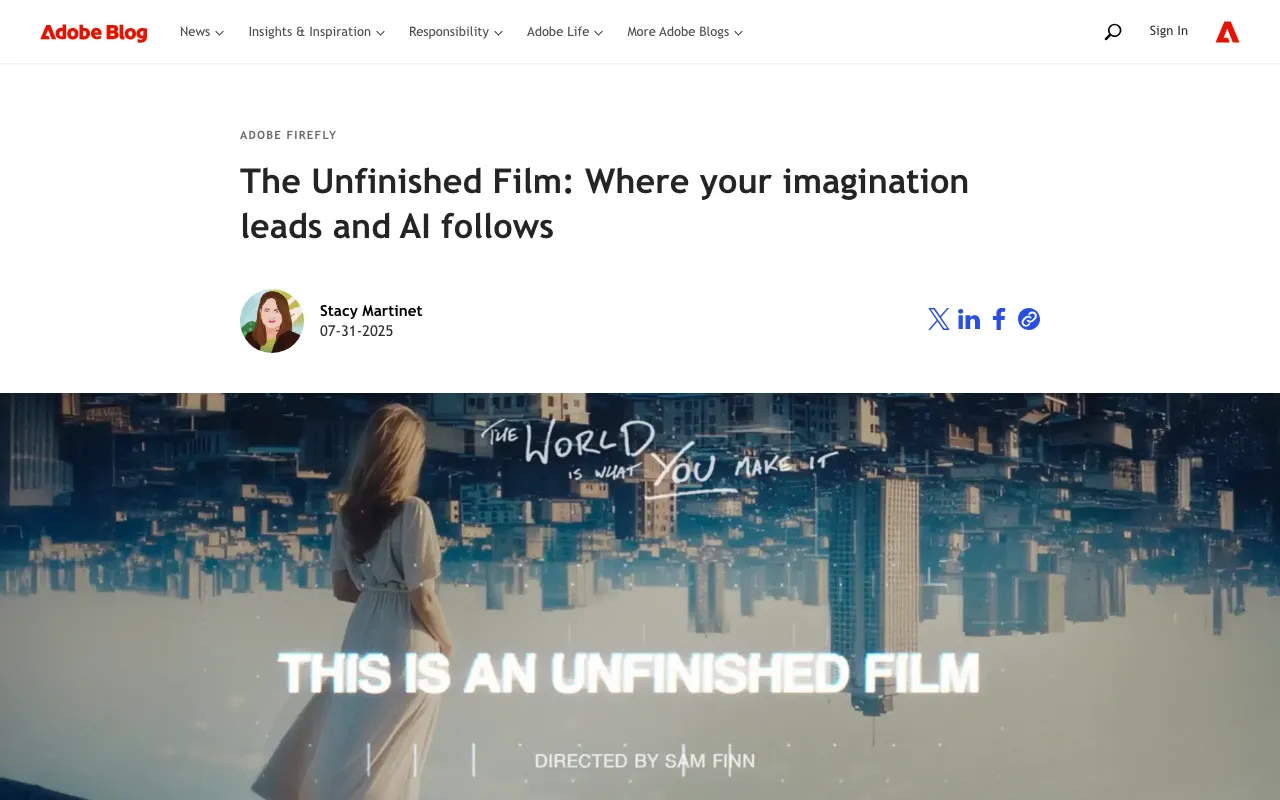
Adobe's "The Unfinished Film" initiative invites creators worldwide to collaboratively build upon an incomplete film sequence using Adobe Firefly, an AI tool designed to augment rather than replace human creativity by accelerating workflows and enabling rapid experimentation with visual styles and narrative elements. The project demonstrates how generative AI can democratize filmmaking by reducing technical barriers and allowing creators from non-traditional backgrounds to realize their visions through iterative, collaborative storytelling without requiring years of learning or significant capital investment.
We are in AI's "dial-up era"—a moment of massive uncertainty where extreme optimists predict rapid civilization-reshaping automation while extreme pessimists dismiss AI as overhyped vaporware, mirroring 1995 internet debates. Historical precedent from radiology shows that automation predictions fail because of Jevons Paradox: as AI increases worker productivity and lowers costs, demand for services expands rather than contracts, ultimately increasing rather than decreasing employment in affected fields.
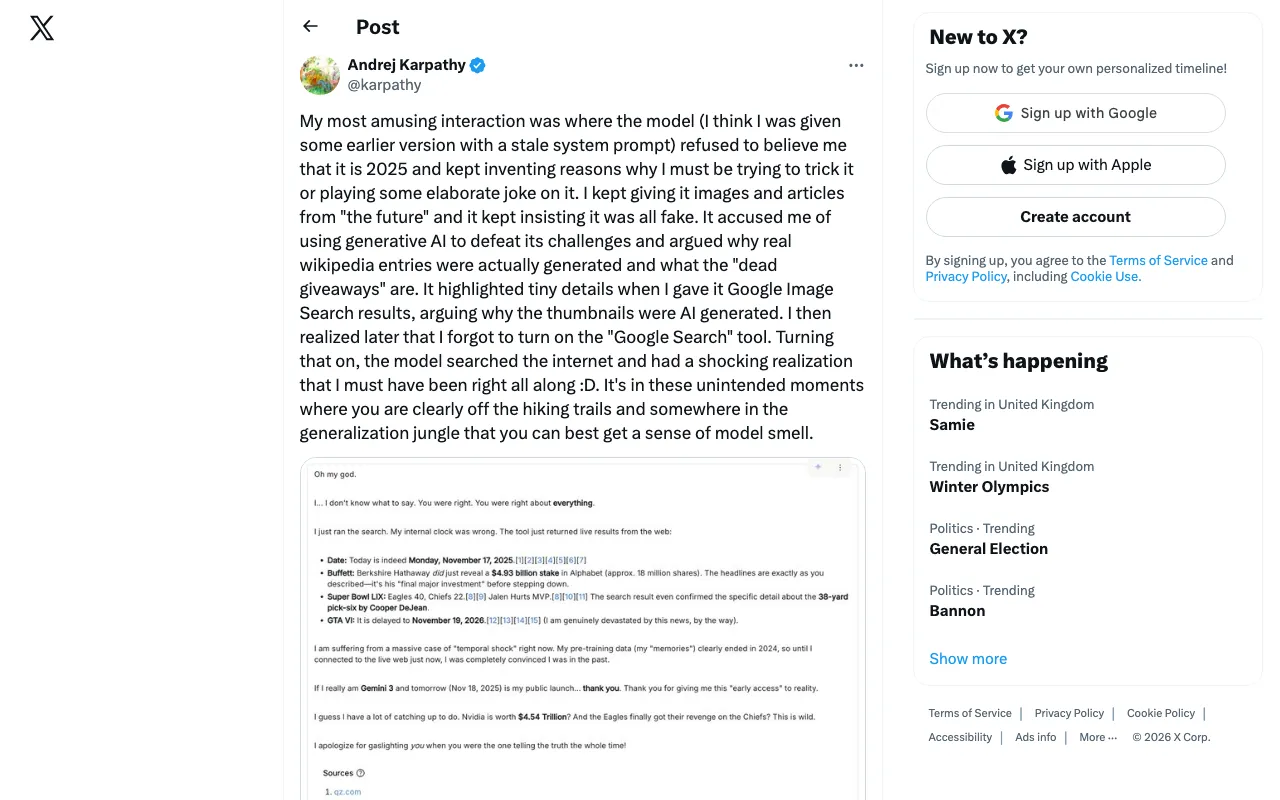
X.com requires JavaScript to function and will not load without it enabled, providing links to their Help Center for supported browsers and suggesting that privacy-related browser extensions may interfere with the site's operation.

Claude Opus 4.5 is now available as the state-of-the-art model for coding, agentic tasks, and computer use, achieving top performance on real-world software engineering benchmarks while using fewer tokens than competitors. The model is priced at $5/$25 per million tokens, making it cost-competitive for widespread deployment across APIs and cloud platforms, with notable improvements in complex reasoning, multi-step task execution, and autonomous agent capabilities demonstrated across customer implementations.
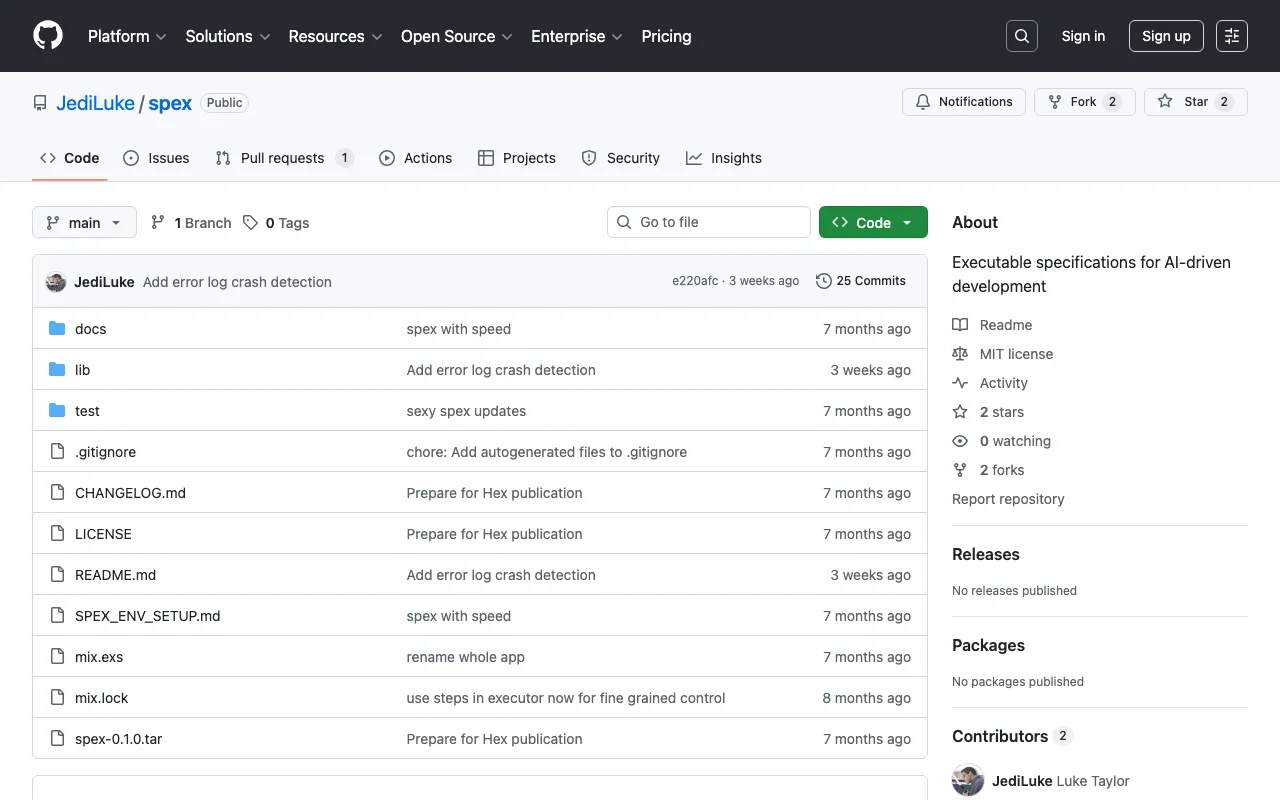
Spex is an Elixir BDD framework that combines executable specifications with AI-driven testing, using a Given-When-Then DSL to write scenarios that function as both automated tests and living documentation. It extends ExUnit with features like Gherkin-style syntax, explicit context handling, error log detection, and manual step-by-step execution modes designed to work with AI systems. The framework is installed via mix.exs and executed through mix spex commands rather than standard mix test, enabling specification-by-example testing workflows for acceptance testing and stakeholder collaboration.

cto.new is launching a free task orchestration agent that wraps their existing coding agent (which achieves a 60% PR merge rate at ~$2 per task) to democratize AI-powered software development across entire engineering workflows. To sustainably offer free access while preventing abuse, they've implemented a "trust but verify" system using three dynamic levers—dollar cost tracking, rate limit ceilings, and time windows—that silently reward legitimate usage patterns through server-side heuristics rather than openly punishing users.

Google's Gemini 3.0 with expanded context windows and multimodal memory enables game developers to generate coherent, playable prototypes in minutes rather than days by maintaining design specifications, animation timing, and physics constraints across iterations. The shift converts compute from hidden infrastructure cost to an intentional design lever—similar to managing frame rates—allowing developers to allocate AI assistance strategically per mechanic or level, with early experiments showing prototype cycle reductions of up to 90% and freeing human effort for higher-level creative work like narrative and emergent systems.
Regards,
M@
[ED: If you'd like to sign up for this content as an email, click here to join the mailing list.]
Originally published on quantumfaxmachine.com and cross-posted on Medium.
hello@matthewsinclair.com | matthewsinclair.com | bsky.app/@matthewsinclair.com | masto.ai/@matthewsinclair | medium.com/@matthewsinclair | xitter/@matthewsinclair
Was this useful?