
QFM093: Machine Intelligence Reading List - December 2025
 Source: Photo by Hitesh Choudhary on Unsplash
This month's Machine Intelligence Reading List covers AI agents and practical development patterns. Effective Harnesses for Long-Running Agents provides engineering guidance on building robust agent infrastructure. AI Agents Are Starting to Eat SaaS examines how autonomous AI is disrupting traditional software business models. Writing a Good CLAUDE.md offers practical tips for effective AI configuration.
The collection also explores AI capabilities and philosophy, with The Space of Minds presenting Andrej Karpathy's philosophical perspective on intelligence, and LLM Anti-Patterns cataloguing common mistakes in AI development.
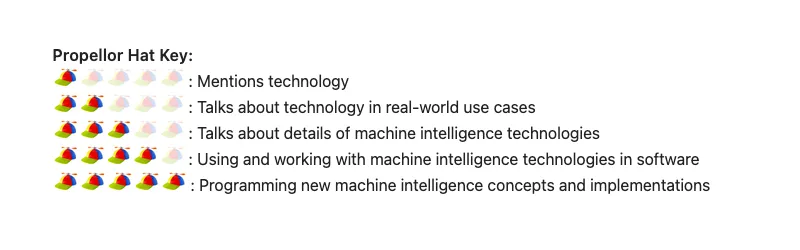
As always, the Quantum Fax Machine Propellor Hat Key will guide your browsing. Enjoy!
Links
GPT CLEAN UP is a tool designed to remove hidden Unicode characters, HTML attributes, and metadata that AI detection software uses to identify AI-generated content, specifically targeting markers left by ChatGPT and similar writing assistants. The tool claims to strip these digital fingerprints while preserving text formatting, making AI-assisted content harder to detect by systems like Turnitin and GPTZero. The service is marketed toward students and professionals seeking to use AI writing assistance while avoiding detection flags in educational and workplace settings.
FLUX.2 is Black Forest Labs' next-generation image generation model designed for production workflows, featuring multi-reference image support (up to 10 simultaneously), improved text rendering, photorealistic detail up to 4 megapixels, and enhanced prompt following with better world knowledge and spatial reasoning. The model family includes FLUX.2 [pro] for state-of-the-art quality, FLUX.2 [flex] for developer control over parameters, and FLUX.2 [dev] as a 32B open-weight model, reflecting Black Forest Labs' "open core" philosophy of pairing frontier capabilities with accessible open-source releases.
Indie game developers are increasingly using "AI-free" certifications and seals as a marketing differentiator, with a golden cog-shaped seal created by developers at Polygon Treehouse becoming a notable example of this trend. This positioning emerged as a direct response to claims by major gaming executives like Nexon's CEO that all modern game companies use generative AI, with indie developers rejecting both the assertion and the ethical foundations of AI training on unlicensed artwork. The anti-AI stance has become both a statement of professional values and a practical sales strategy for indie studios competing in the market.
The space of possible intelligences is vast, with animal intelligence and LLM intelligence representing fundamentally different optimization pressures: animals are shaped by natural selection for survival in embodied, multi-agent, adversarial environments requiring general competence across diverse tasks, while LLMs are optimized through statistical imitation of human text combined with reinforcement learning for user approval and specific task rewards. This difference in optimization pressure—biological evolution for survival versus commercial evolution for problem-solving and engagement—explains why LLMs lack the robust generality of animal intelligence despite operating on entirely different computational substrates, making them humanity's first contact with genuinely non-animal intelligence.
Local RAG systems can be built entirely with open-source components by replacing proprietary SaaS providers across all key layers: vector databases (Postgres+pgvector), embeddings models (Sentence Transformers), LLMs (Llama, Mistral), rerankers (BGE), and document parsing (Docling). Skald's implementation prioritizes self-hosted deployment for privacy-sensitive organizations that need frontier model capabilities without external data sharing, while acknowledging that performance optimization across these component choices requires ongoing benchmarking against proprietary alternatives.
AI agents are beginning to displace SaaS platforms as businesses realize they can use AI coding tools to build custom internal applications faster and cheaper than purchasing off-the-shelf software. The shift is driven by three factors: developers solving simple tasks directly with agents rather than subscribing to services, enterprise customers questioning expensive SaaS renewal quotes and considering building alternatives, and the elimination of unnecessary bloat from single-tenant custom solutions that serve only one organization's actual needs. While maintenance remains a legitimate concern, AI agents themselves reduce maintenance overhead by simplifying traditionally costly tasks like dependency updates, and building internal tools avoids external security risks from third-party data access.
Rovio leverages AWS machine learning services to automate and accelerate asset creation for game development, reducing the time required to produce art and animation resources. The integration of generative AI into their workflow enables the team to transform creative concepts into production-ready assets more efficiently while maintaining creative control and game quality standards.
AI has become the foundational infrastructure of game and media production rather than a standalone tool, with mid-sized studios now shipping AAA-quality games using small human teams augmented by custom multimodal AI models that operate across the entire creative pipeline. The shift from discrete creative artifacts (scripts, textures, audio files) to integrated AI systems that maintain contextual awareness across projects has fundamentally changed workflow efficiency—tasks like concept art that previously required days now take minutes—making AI the operating system rather than a feature. The competitive advantage now belongs to studios that have rebuilt their internal infrastructure around AI-native workflows, not those still negotiating for incremental tool improvements.
LLMs perform poorly when given redundant information, assigned tasks outside their strengths, operating near context limits, handling obscure topics lacking training data, or when developers fail to actively monitor the generated code. Effective LLM usage requires conserving context by eliminating duplicate inputs, delegating to the model's strengths (especially code generation over language tasks), maintaining awareness of accuracy degradation in long sessions, and maintaining active oversight rather than passively accepting output.
Anthropic's Claude Agent SDK addresses the challenge of long-running agents that must work across multiple context windows by implementing a two-part solution: an initializer agent that sets up the environment with clear documentation and structure on the first run, and a coding agent that makes incremental progress in each session while leaving production-ready code artifacts for the next session. This approach mitigates failures where agents either attempt to complete tasks in a single context window and leave half-implemented features, or prematurely declare work complete after seeing partial progress, by enforcing step-by-step feature development and maintaining clear state between sessions.
Artificial Analysis provides an independent intelligence benchmark for AI models across 10 evaluations including reasoning, coding, and knowledge tasks, with Gemini 3.1 Pro Preview (57.18) currently ranking highest, followed by GPT-5.3 Codex and Claude Opus 4.6. The platform offers personalized model recommendations based on three key metrics: intelligence score, output speed (tokens per second), and cost (USD per million tokens), enabling users to select optimal models for their specific use cases.
The author argues that Python is overused in data science due to historical accident rather than inherent suitability, particularly for tasks beyond deep learning like data wrangling, visualization, and statistical modeling. Drawing from two decades of observing competent graduate students in his computational biology lab, he notes that ad-hoc data manipulation requests that take minutes in R consistently require extended problem-solving sessions for Python users, suggesting the issue lies with Python's tools rather than user competence.
LLMs are stateless and only know what's provided in each conversation, making CLAUDE.md essential as the file automatically injected into every agent session to onboard Claude with codebase context covering what (tech stack and structure), why (project purpose), and how (development workflows). However, Claude frequently ignores CLAUDE.md content due to a system reminder instructing it to filter irrelevant information, so effective files should contain only broadly applicable instructions rather than task-specific workarounds to avoid being dismissed as noise.
Regards,
M@
[ED: If you'd like to sign up for this content as an email, click here to join the mailing list.]
Originally published on quantumfaxmachine.com and cross-posted on Medium.
hello@matthewsinclair.com | matthewsinclair.com | bsky.app/@matthewsinclair.com | masto.ai/@matthewsinclair | medium.com/@matthewsinclair | xitter/@matthewsinclair
Was this useful?